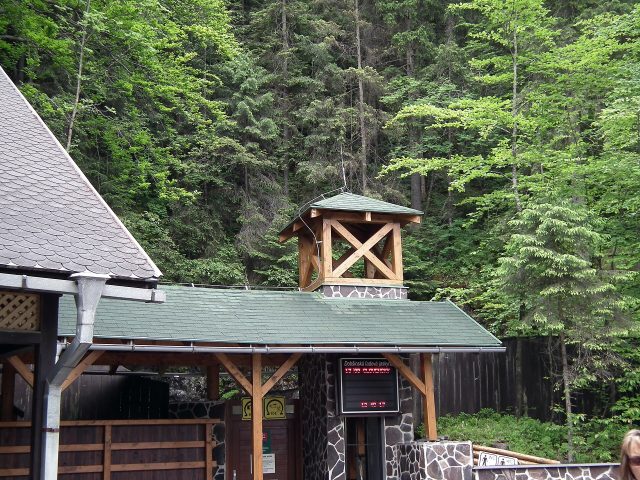
Dobšiná is one of those quiet Slovak towns that rarely appear on tourist maps. It lacks the squares or landmarks that draw crowds, and that’s what makes it worth visiting. Here, away from the usual routes, you might find something unexpected—like the old synagogue on a quiet street in the town center. At first glance, it doesn’t stand out, but if you look closer, you see a building with a story deeper than its modest appearance.
Built in the late 19th century, the synagogue reflects a time when Dobšiná was an industrial hub, drawing people of different backgrounds. The Jewish community here was small but left its mark on the town’s life. The synagogue wasn’t just a place of worship—it symbolized unity and cultural diversity. Its architecture mixes neo-Romanesque elements with local traditions, giving it a distinct character.
The building looks simple from the outside. Arched windows and narrow openings hint at its purpose. Inside, traces of the original decor remain, though time has worn them down. The main hall, where people once gathered, feels empty now. That emptiness makes the atmosphere heavier. It’s as if the past lingers here, a reminder of when this place was the heart of a community’s spiritual life.
The synagogue’s history is tied to the tragedies of the 20th century. During World War II, Dobšiná’s Jewish community was nearly destroyed. Many died in concentration camps, and few survivors returned. The building survived the war but never regained its former role. In the decades that followed, it served as a warehouse, a workshop, and eventually stood abandoned. Restoration efforts began in the early 2000s, pulling it back from ruin.
Today, the synagogue is a historical monument and a memorial. It honors those who lived here, prayed within its walls, and whose lives were cut short. Inside, plaques list the names of the lost, alongside exhibits on Dobšiná’s Jewish community. Visiting feels solemn. The weight of history is impossible to ignore.
The synagogue is slowly reclaiming its place in the town’s life. It now hosts cultural events, concerts, and exhibitions. For many, it’s a bridge between past and present, a reminder of why memory matters.
Dobšiná doesn’t try to attract tourists, and neither does its synagogue. There are no flashy signs or campaigns. The building stands quietly, waiting for those who appreciate its significance.
If you come here, don’t expect grand spectacles. Walk the quiet streets, step inside, and let the history pull you in. This is a place for those who value depth over spectacle, authenticity over crowds.