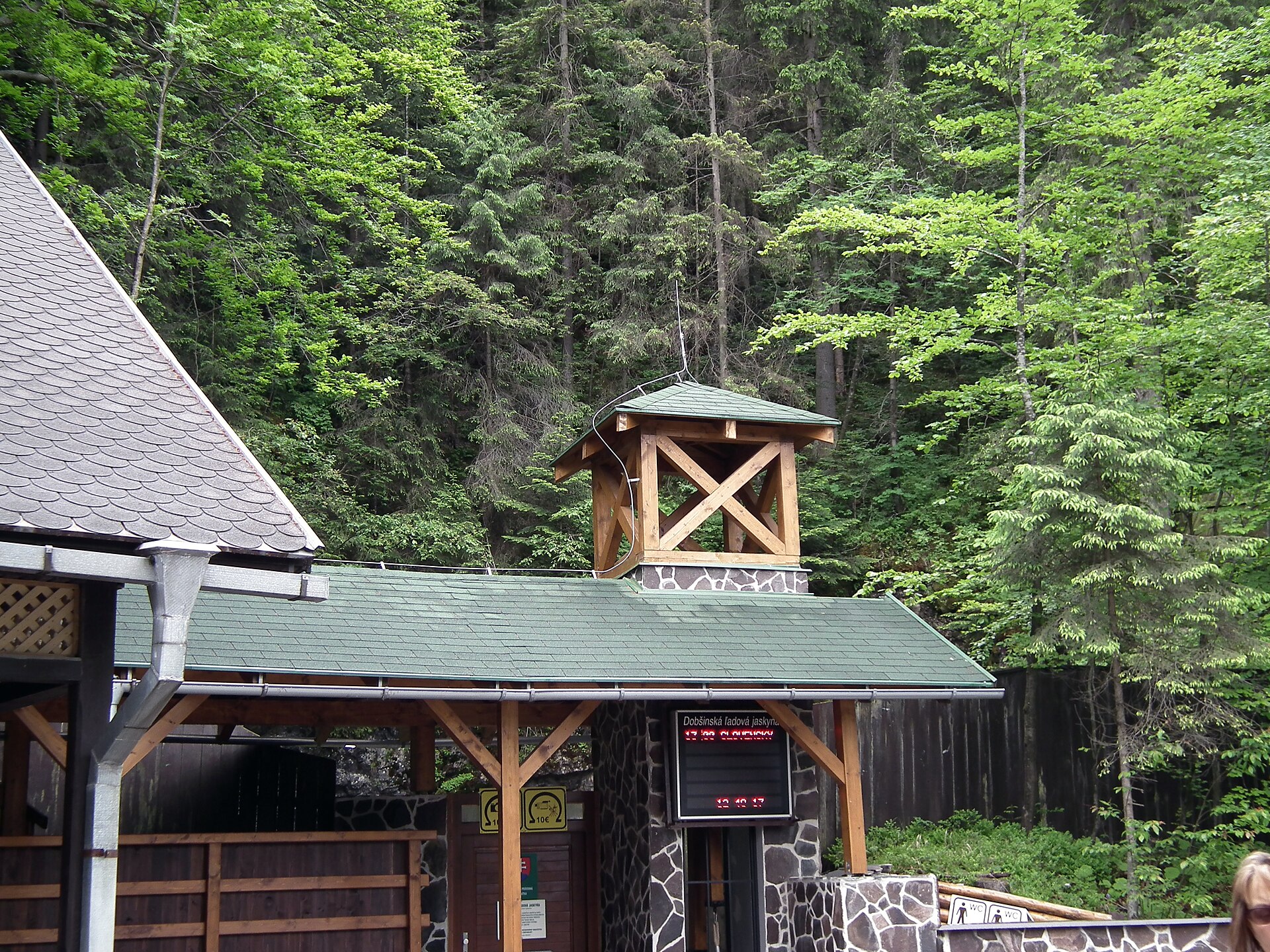
Deep in the heart of Slovakia’s karst mountains, where the air carries the crisp scent of pine and damp stone, lies a place where time seems to stand still. The Dobšiná Ice Cave is one of those rare natural wonders that feels almost otherworldly—a frozen cathedral hidden beneath the earth, where ice has shaped the darkness into something both eerie and magnificent. Tucked away in the Slovak Paradise region, not far from the quiet town of Dobšiná, the cave is a relic of another age, its walls lined with layers of ice that have accumulated over millennia. Even in the height of summer, when the world above is warm and alive, the cave remains a sanctuary of cold, its temperatures hovering just above freezing.
The cave’s discovery was almost accidental, like so many great finds. Locals had long known of its existence, but it wasn’t until the mid-19th century that its true significance was recognized. A mining engineer, exploring the area, stumbled upon the entrance and immediately grasped its potential—not just as a scientific curiosity, but as a place that could captivate the imagination. Word spread, and soon researchers and adventurers began making the journey to see it for themselves. Over time, the cave was adapted for visitors, with walkways and lighting installed to guide them through its icy chambers. Today, it stands as a UNESCO World Heritage Site, a testament to its global importance and the fragile beauty it preserves.
Stepping inside is like entering a different realm. The air is thick with silence, broken only by the occasional drip of water or the distant echo of footsteps. The dim glow of artificial lights reveals a landscape of ice formations that seem to defy logic—towering columns, delicate stalactites, and vast sheets of frozen water that cascade like frozen waterfalls. The most striking feature is the Great Hall, a cavernous space where the ice reaches several meters thick, its surface smooth and reflective, like a mirror stretching into the darkness. The ice here is not static; it breathes, growing thicker in winter and receding slightly in summer, though it never fully disappears. The cave’s climate is a delicate balance, one that has remained unchanged for thousands of years.
The path through the cave winds along wooden walkways and metal staircases, guiding visitors through a fraction of its labyrinthine depths. The public route covers only a small portion of the cave’s total length, which stretches for kilometers beneath the mountain. Some passages are too narrow for exploration, others too dangerous due to the risk of collapses or hidden underground streams. Yet even the accessible sections offer a glimpse into the cave’s complexity, a reminder of how little we truly know about the world beneath our feet. The tour lasts about an hour, but the experience lingers long after, leaving a sense of awe at the forces that shaped this subterranean wonder.
What makes the Dobšiná Ice Cave truly remarkable is not just its beauty, but its role as a living archive of Earth’s history. The layers of ice within its walls are like pages in a book, each one recording shifts in climate over thousands of years. Scientists study these formations, searching for clues about how the planet’s environment has changed and what that might mean for the future. For visitors, the cave is a humbling encounter with something ancient and enduring, a place where the passage of time feels tangible. It’s a reminder that nature operates on a scale far beyond human comprehension, crafting masterpieces in the dark, far from the reach of sunlight.
The atmosphere inside the cave is unlike anywhere else. The cold seeps into your bones, even through layers of clothing, and the silence is so complete that it feels almost oppressive. The ice absorbs sound, muffling the world outside until all that remains is the quiet rhythm of your own breath. It’s a place that invites contemplation, where the weight of centuries presses in from all sides. The formations, shaped by water and time, are constantly evolving, though the changes are imperceptible to the human eye. Each visit feels like a snapshot of a process that began long before humans walked the earth and will continue long after we’re gone.
Beyond the cave, the surrounding landscape is just as compelling. The town of Dobšiná is a quiet, unassuming place, nestled among rolling hills and dense forests. There’s no tourist hustle here, just the slow pace of life in a mountain community. The area around the cave is crisscrossed with hiking trails, leading to waterfalls, rocky outcrops, and viewpoints that offer sweeping vistas of the Slovak Paradise. In summer, the trails are dotted with hikers, many of whom combine a visit to the cave with a day spent exploring the national park. Winter transforms the landscape into a snowy wonderland, attracting skiers and snowboarders to the nearby slopes. The region feels untouched, a place where nature still dictates the rhythm of life.
Visiting the Dobšiná Ice Cave is more than just a tourist stop; it’s an immersion in a world that exists beyond the familiar. There are no crowds, no noise, no distractions—just the quiet majesty of ice and stone. It’s a place that makes you pause, that forces you to confront the vastness of time and the smallness of human existence in comparison. The cave doesn’t just show you something extraordinary; it makes you feel it, deep in your bones. For those willing to venture beneath the surface, it offers a rare chance to step outside of time and witness a piece of eternity, preserved in the heart of Slovakia’s mountains.