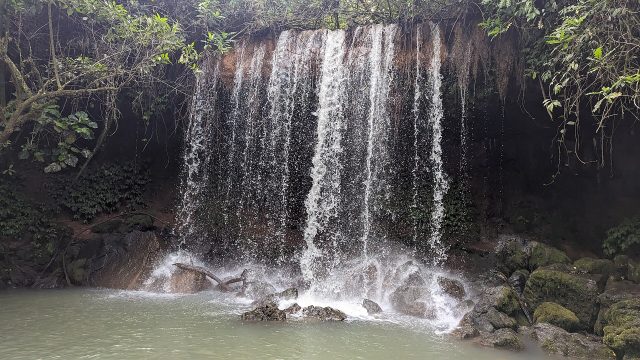
Nestled in western Uganda, where the misty slopes of the Rwenzori Mountains gradually give way to the vast plains of the Congo Basin, Semuliki National Park feels like a forgotten corner of the continent. It’s small by African standards, but its size is deceptive—within its borders, dense rainforests, steaming hot springs, open savannas, and papyrus swamps coexist in a landscape that seems untouched by time. The park is a patchwork of different Africas: humid and dense in one moment, sunbaked and open in the next, always quiet, always wild.
The history of Semuliki is tied to the ancient forests of the Congo, once part of a vast, unbroken wilderness. Millions of years ago, as climates shifted and ecosystems diverged, this area remained a refuge for species that vanished elsewhere. The park is a living archive of Africa’s past, where plants and animals persist as relics of a time when the continent was wilder, more mysterious. For generations, the Batwa and Bakonjo people considered these lands sacred, believing the forest was home to spirits. European explorers like Henry Stanley passed through in the late 1800s, but even then, Semuliki’s remoteness kept it largely untouched by the outside world.
What makes Semuliki special is its raw, unfiltered atmosphere. There are no crowds, no paved trails, no signs pointing the way—just narrow footpaths winding beneath towering trees, the crunch of leaves underfoot, and the damp, earthy scent of rain-soaked soil. The forest here is thick, almost impenetrable in places, with vines draping from branches and moss clinging to rocks. In the wet season, it’s lush and vibrant; in the dry months, it takes on a cooler, more mysterious quality. The savannas, by contrast, are open and expansive, where tall grass sways and buffalo or antelope might appear at any moment.
The park’s hot springs are one of its most striking features. Bubbling up from deep underground, they form small pools of boiling water, steam rising into the air. Locals have long used them for rituals and healing, and today, visitors come to witness this natural phenomenon. The water is scalding—hot enough to cook an egg in minutes—yet life persists around the edges. Ferns grow along the banks, and birds call in the distance, but the springs are a reminder that nature here is still in control. Step too close, and the steam will burn.
Wildlife in Semuliki isn’t as abundant or as famous as in Uganda’s larger parks, but that’s part of its charm. There are no lions or elephants here, but you might spot forest buffalo, pygmy antelopes, or even the elusive leopard. The real draw, though, is the birds. Over four hundred species have been recorded, from the vibrant turacos to tiny sunbirds, and the park is a magnet for birdwatchers. Many of these species are found nowhere else in Uganda, making Semuliki a quiet paradise for those who know where to look.
The Semuliki River, which gives the park its name, is another highlight. Flowing down from the Rwenzori Mountains toward Lake Albert, it’s a lifeline for the region. Along its banks, crocodiles lurk in the reeds, and hippos wallow in the shallows. Local fishermen cast their nets for tilapia and Nile perch, while visitors can take boat trips upstream, gliding through the forest from a different perspective. In the dry season, the river shrinks, revealing sandy banks; in the rains, it swells into a powerful current. Dawn and dusk are the best times to see wildlife here, when the savanna comes alive with movement.
Visiting Semuliki means stepping off the beaten path. There are no luxury lodges or fine-dining restaurants—just simple campsites where you can sleep under the stars, listening to the sounds of the night. The roads are rough, often turning to mud after rain, but that’s part of the experience. Local guides, many of whom grew up in the area, know the park intimately. They’ll point out elephant tracks, identify bird calls, and explain why the hot springs demand respect. Their stories add depth to the landscape, turning a walk through the forest into something richer.
This isn’t a place for those seeking Instagram-worthy moments or easy comforts. Semuliki is for travelers who want to feel the pulse of the real Africa—the quiet rustle of leaves, the distant call of a bird, the sense of being in a world that hasn’t changed in centuries. Time moves differently here, and nature reminds you of its power. That’s why the park remains one of Uganda’s best-kept secrets: it’s not for everyone, but for those who come, it leaves an impression that lasts long after they’ve left.