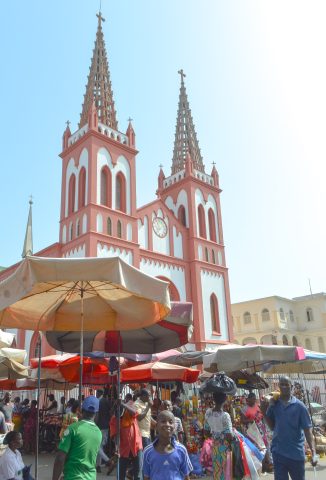
The Sacred Heart Cathedral in Lomé is one of those places that doesn’t immediately demand attention but leaves a quiet, lasting impression. Tucked away in the heart of Togo’s capital, it stands at the intersection of bustling streets where life moves at its own unhurried pace. Its whitewashed walls contrast sharply with the surrounding tropical greenery and dusty roads, as if a piece of Europe had been gently transplanted into West Africa. There are no crowds of tourists here, no hurried footsteps—just a stillness broken only by the occasional steps of parishioners or the rustle of leaves in the breeze.
Built in the early 20th century, when Togo was still under German colonial rule, the cathedral’s architecture bears the unmistakable marks of European influence. Tall, pointed windows stretch toward the sky, supported by sturdy columns, while a slender spire rises above the rooftops. Inside, the space feels airy and bright, thanks to large stained-glass windows that filter the sunlight into a soft, almost ethereal glow. The altar is adorned with simple yet expressive details—wooden carvings and figures that blend local traditions with the cathedral’s religious symbolism. It’s a place where different cultures intertwine, not just as a house of worship but as a living testament to that exchange.
For Lomé, the Sacred Heart Cathedral is more than a spiritual landmark; it’s a piece of the city’s history. It has witnessed the shifts in colonial power, gained independence alongside the nation, and stood as a silent observer to the changes unfolding around it. The area surrounding the cathedral was once the heart of the German quarter, later becoming part of the French colonial district, and now it reflects the layered influences that have shaped Togo. Today, modern buildings stand alongside old colonial villas, while nearby markets buzz with the trade of fabrics, spices, and everyday goods. The cathedral remains a constant, a quiet anchor in a city that has grown and transformed around it.
Visiting the cathedral offers a chance to experience a different side of Lomé—one that feels more intimate and reflective. Early mornings are particularly striking, as the rising sun casts long shadows across the cathedral’s facade, making it appear even more majestic. Locals arrive at this hour, some for prayer, others simply to sit in the quiet. Inside, the scent of wax and aged wood lingers in the air, while footsteps echo softly beneath the high vaulted ceilings. If you’re fortunate, you might hear the organ, its notes filling the space with a timeless resonance, as if the instrument itself has resisted the passage of years.
Outside, the cathedral is surrounded by a small garden where palm trees sway gently and flowering shrubs add splashes of color. It’s one of the few places in Lomé where you can escape the heat and noise, even if just for a moment. Elderly men often gather here, deep in conversation, while younger people seek shade beneath the trees. On feast days, the cathedral grounds come alive with services, hymns, and small gatherings afterward. In those moments, the building transcends its role as a place of worship, becoming a space where people connect, celebrate, and find a sense of community.
The cathedral’s architecture is also a study in adaptation, blending European design with the practical needs of an African climate. Thick walls keep the interior cool, high ceilings allow for airflow, and large windows ensure natural light floods the space during the day. There’s something symbolic in this balance—an attempt to harmonize two worlds without losing the essence of either. The result is a building that feels both familiar and distinctly its own, a quiet dialogue between tradition and environment.
For those interested in Togo’s history, the Sacred Heart Cathedral offers a tangible link to the past. There are no museum displays or explanatory plaques, but the building itself tells a story. Every stone, every carved detail is part of a larger narrative about the country’s evolution. In this way, the cathedral serves as more than a place of worship; it’s an archive of sorts, preserving the memories of the people who have passed through its doors over the decades.
Lomé is a city of contrasts, where modernity and tradition coexist, and where the energy of bustling markets gives way to quiet corners like this one. Visiting the Sacred Heart Cathedral provides a glimpse of the city’s quieter, more contemplative side. It’s a place to sit on a bench, listen to the distant sounds of the city, and reflect on the many layers of history embedded in its walls. Perhaps it’s this very simplicity and stillness that makes the cathedral one of the most memorable spots in Togo’s capital—a reminder that sometimes the most profound experiences are found not in grandeur, but in quiet moments of connection.