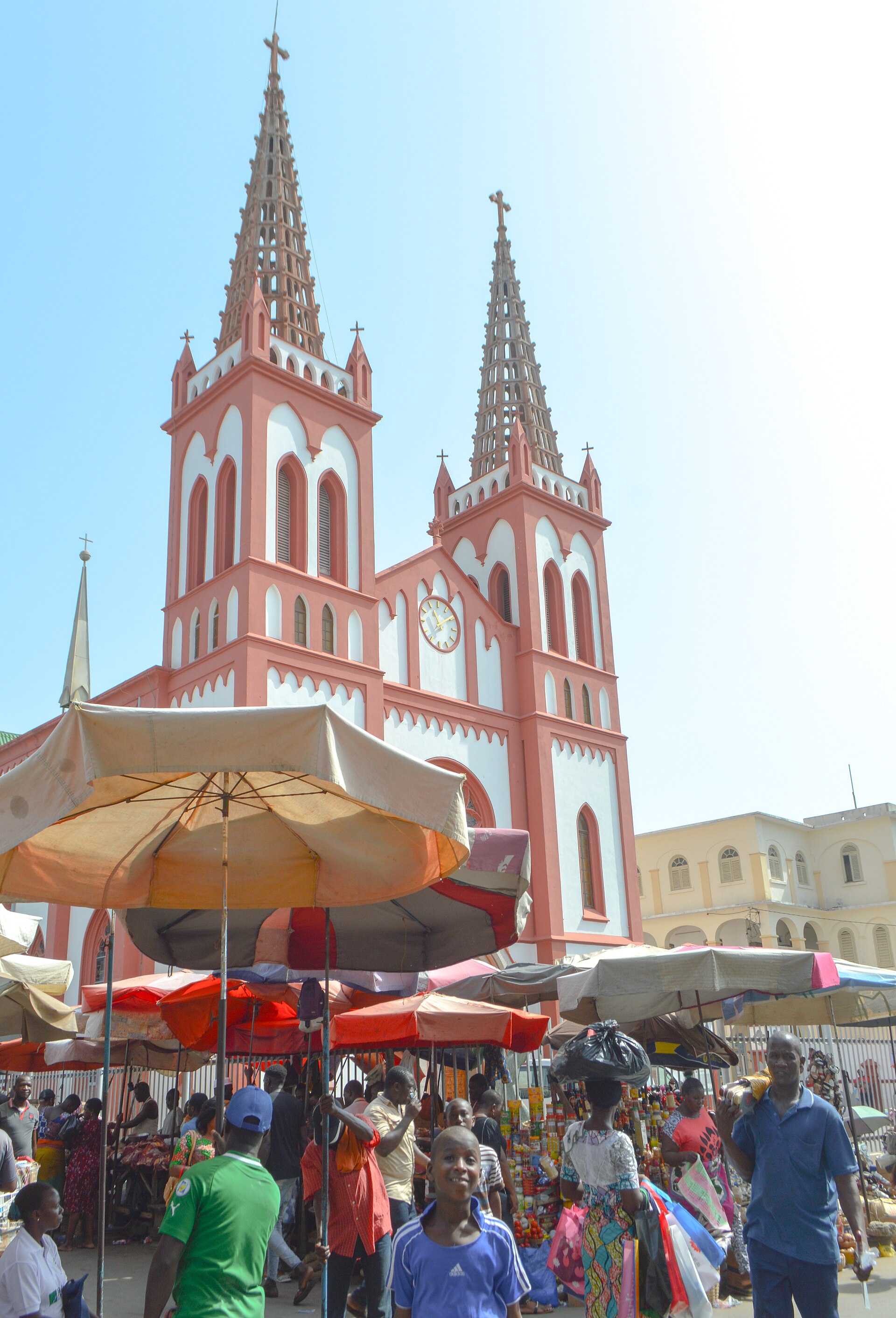
Lomé’s Grand Marché is one of those places where the city’s pulse feels strongest. It’s not just a market—it’s a sprawling, chaotic, and utterly alive slice of West African commerce, culture, and daily life. If you want to understand Togo beyond postcards and guidebook summaries, this is where you start. The market stretches across several blocks near the city center, its labyrinthine alleys packed with stalls, voices, and the scent of spices, fabric, and grilled meat. It’s been here for decades, evolving from a modest trading post into the economic heart of the capital, though its exact origins are as layered as the goods piled on its tables.
Walking into the Grand Marché is like stepping into a different rhythm. The air hums with the chatter of vendors calling out prices, the clatter of plastic basins being stacked, and the occasional burst of laughter from a group of women bargaining over bolts of brightly patterned wax print fabric. These textiles—vibrant, intricate, and often hand-dyed—are one of the market’s defining features. They’re not just sold here; they’re part of the identity of the place, worn by market women who wrap them into headscarves or skirts, turning the market itself into a moving display of color and pattern. The fabric section alone could occupy an entire morning, with sellers unfurling rolls of cloth in every shade imaginable, from deep indigos to electric pinks.
Beyond textiles, the market is a treasure trove of everyday essentials and unexpected finds. One section is devoted entirely to dried fish, stacked in towering piles that release a sharp, briny aroma into the air. Nearby, sacks of rice, millet, and yams spill onto the ground, while pyramids of tomatoes, onions, and chili peppers add splashes of red and green. Spices are sold in small plastic bags, their contents measured by the handful—ginger, grains of paradise, and the smoky heat of piment, Togo’s beloved chili. If you’re curious about local flavors, this is where you’ll find the raw ingredients of the country’s cuisine, though you’ll need a bit of patience to navigate the crowds and the occasional pushy seller.
The market isn’t just about food and fabric, though. It’s also a hub for traditional medicine, with stalls selling roots, barks, and powders used in herbal remedies. Some vendors display bundles of dried leaves tied with string, while others offer small bottles of murky liquids said to cure everything from headaches to bad luck. The line between commerce and belief blurs here, and even if you don’t buy anything, the displays offer a glimpse into the spiritual and medicinal traditions that coexist with modern life in Lomé. Nearby, you might stumble upon a section selling handmade soap, shea butter, or locally produced palm oil, its deep orange hue staining the plastic containers it’s poured into.
What makes the Grand Marché special isn’t just the goods on offer, but the people who keep it running. The market is overwhelmingly run by women, many of whom have worked here for generations. They’re the ones haggling over prices, arranging displays, and keeping an eye on the steady stream of customers. Some sit behind mountains of tomatoes, their hands moving quickly to weigh and bag produce, while others stand in front of their stalls, calling out to passersby in a mix of Ewe, French, and Mina. Their resilience and ingenuity are part of what gives the market its character—this is a place where commerce is personal, where relationships matter as much as transactions.
The architecture of the Grand Marché is as functional as it is unassuming. The main structure is a series of low-slung concrete buildings with corrugated metal roofs, their walls often painted in faded shades of blue or green. Inside, the stalls are divided by narrow walkways, some covered, others open to the sky. The market spills into the surrounding streets, where vendors set up makeshift tables or spread their wares on the ground. There’s no grand design here, no attempt at aesthetic cohesion—just a space that has grown organically to meet the needs of the people who use it. The result is a place that feels both permanent and temporary, as if it could shift and adapt overnight.
Visiting the Grand Marché isn’t always easy. The crowds can be overwhelming, especially during peak hours, and the heat and humidity make the air feel thick. Pickpockets are a risk, and it’s wise to keep an eye on your belongings. But for all its challenges, the market rewards those who take the time to explore it. There’s a sense of discovery in wandering its alleys, whether you’re stumbling upon a stall selling hand-carved wooden masks, a tiny restaurant serving plates of fufu and okra stew, or a group of men playing a game of draughts in the shade. The market doesn’t cater to tourists—it’s a place for locals first and foremost—but that’s precisely what makes it worth experiencing.
Beyond its role as a commercial hub, the Grand Marché is a social space. It’s where people come not just to shop, but to meet, gossip, and catch up on the latest news. In the early morning, the market is already bustling, with women arriving to set up their stalls before the day’s business begins. By midday, the pace slows slightly, and you might see groups of friends sharing a meal or a cup of strong, sweet coffee from one of the many small vendors. In the late afternoon, the market starts to wind down, though some stalls stay open well into the evening, their lanterns casting a warm glow over the remaining shoppers.
The Grand Marché has seen its share of changes over the years. Fires have damaged parts of it, and economic shifts have altered what’s sold and who buys it. Yet it endures, a constant in a city that’s otherwise in flux. It’s a reminder that markets like this aren’t just about trade—they’re about survival, community, and the quiet persistence of daily life. For visitors, it’s an opportunity to step outside the usual tourist experience and see Lomé as it really is: messy, vibrant, and full of stories waiting to be uncovered. You won’t find polished displays or air-conditioned shops here, but you will find something far more valuable—a place that feels authentically, unapologetically alive.