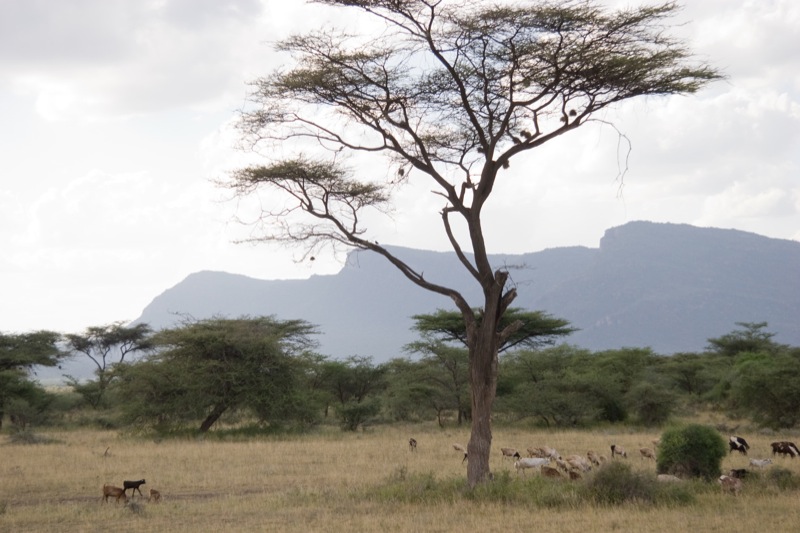
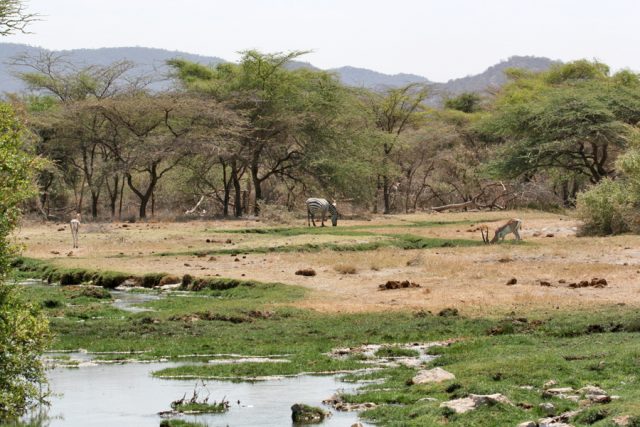
Shaba is one of those places where the raw, untamed beauty of Africa feels almost tangible. Tucked away in northern Kenya, not far from the town of Isiolo, it sits at the edge of the arid savannah, where the landscape shifts dramatically from scorched plains to greener valleys dotted with acacia trees. There are no crowds here, no polished resorts or pushy tour operators—just vast open spaces, silence, and the unmistakable sense that you’ve stepped into the heart of the wild.
This corner of Kenya is part of the larger Samburu ecosystem, but Shaba stands out even within that. The name itself comes from a local word meaning "salty earth," and in places, the ground is indeed coated with a pale, chalky residue—a reminder of ancient lakes that once filled this land. Today, it’s a harsh yet breathtaking environment, where survival is a daily challenge for the animals and plants that have adapted to its extremes.
The history of Shaba is woven into the broader story of the region. For thousands of years, the Samburu and Rendille people have roamed these lands, living as nomadic herders in harmony with the environment. Their way of life remained largely unchanged even through the colonial era, when the area became part of British East Africa, and later, independent Kenya. When the Shaba National Reserve was established in the 1960s, local communities retained their traditions, and traces of their culture can still be seen in nearby villages.
There are no grand cathedrals or palaces here—architecture, in the conventional sense, doesn’t exist in Shaba. Instead, the land itself is the masterpiece. The Ewaso Ng’iro River cuts through the reserve, carving deep canyons and sandy banks that become havens for hippos, crocodiles, and countless birds. During the dry season, the river shrinks but never vanishes, serving as a lifeline for the wildlife that depends on it. Along its banks, doum palms and acacias stretch toward the sky, while low hills rise in the distance, their sparse vegetation clinging to the rocky slopes.
What draws most visitors to Shaba is its wildlife. Elephants, lions, leopards, and buffalo roam here, but the real highlights are the species you won’t find elsewhere. The reticulated giraffe, with its intricate coat pattern, moves gracefully through the trees, while the gerenuk—a slender antelope—stands on its hind legs to reach the highest branches. At dusk, herds of Grevy’s zebras appear, their bold stripes stark against the fading light. As night falls, the savannah comes alive with the calls of hyenas, the distant whoops of jackals, and the rustling of birds settling into their nests.
A visit to Shaba isn’t just a safari; it’s an immersion in the rhythm of the wild. There’s no rigid schedule, no set route—just the open road, the animals you encounter, and the time you choose to spend by the river, watching elephants drink or lions lazing in the shade. Many of the guides here grew up in the area, and their knowledge runs deep. They’ll point out lion tracks under a lone tree or explain how elephants use acacia bark to scratch their backs. Their stories often blend wildlife facts with tales of their own people, offering a glimpse into a way of life that has endured for generations.
The atmosphere in Shaba is one of quiet intensity. By day, the heat forces everything into stillness—animals seek shade, and even the wind seems to hold its breath. But as the sun dips toward the horizon, the land stirs to life. Predators begin their hunts, birds fill the air with song, and the scent of dry grass and dust rises with the cooling breeze. Nights here are profoundly dark, the sky a vast canvas of stars unobscured by city lights. It’s easy to see why these lands have long been considered sacred.
Shaba isn’t for those seeking luxury or constant entertainment. There are no five-star lodges with infinity pools—just simple camps and rustic bandas where you can sleep to the sounds of the savannah at night. But that’s precisely what makes it special. This is a place to disconnect, to step outside of time, and to feel, even briefly, like a small part of something ancient and enduring. In a world where so much of nature has been tamed, Shaba remains one of the last places where the wild still sets the rules.