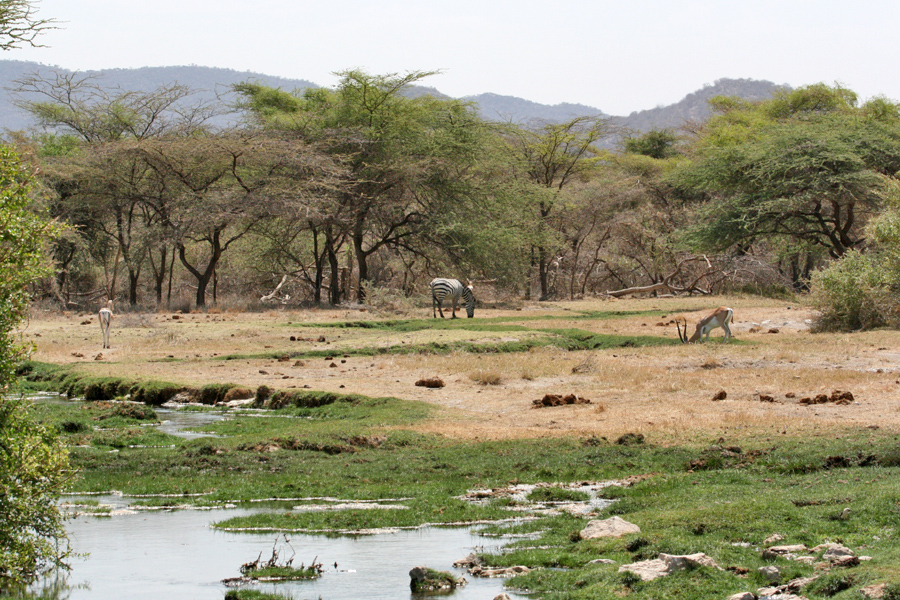
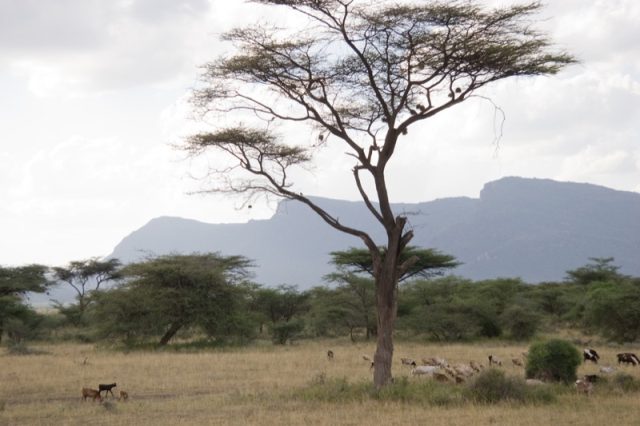
Buffalo Springs feels like a place where time moves differently. The air carries the scent of sunbaked earth and the faint musk of wild animals. The only sounds are the rustle of grass under hooves and the occasional distant call of a lion. This reserve sits in northern Kenya, a few hours from Isiolo, where the land stretches flat until it meets the foothills of ancient ridges. The name comes from the springs that bubble up from underground, rare in a region where water dictates life.
Unlike parks to the south, Buffalo Springs sees few visitors. Animals—elephants, zebras, giraffes—go about their routines undisturbed. The landscape retains a quiet quality. The reserve was once grazing land for the Samburu and Turkana people, who relied on its water and wildlife. British colonial authorities later turned it into a hunting reserve before granting it protected status in 1948. Today, local communities help safeguard the land.
The heart of the reserve is the Ewaso Ng’iro River. Its banks are lined with doum palms and acacia trees, a green ribbon against the savanna. In the dry season, the river shrinks, drawing animals from miles around. Elephants dig in the sandy banks for water. Crocodiles lurk in the shallows. Hippos wallow in deeper pools. When the rains come, the river floods the plains, turning them into meadows.
The wildlife here is diverse. Elephants gather near the springs. Lions and leopards move through the bush, often heard rather than seen. The reserve is home to the reticulated giraffe, its coat patterned like a net, and Grevy’s zebras, with narrow stripes. Antelope range from the dik-dik, barely larger than a rabbit, to the greater kudu. Over four hundred bird species have been recorded, including lilac-breasted rollers and martial eagles.
There are no paved roads or luxury lodges in Buffalo Springs. Visitors stay in simple camps along the river, where tents sit under acacia trees. The accommodations are basic—canvas walls, shared showers, meals cooked over fires. Many camps are run by local Samburu communities. Guides from the area share insights into the land and its wildlife. Safaris here are small, with no rush. The focus is on observation.
When to visit depends on what you want. During the rainy seasons, wildflowers dot the plains. Newborn animals take their first steps. But wildlife scatters, making it harder to spot. In the dry season, animals gather around water sources. The trade-off is the dust—every vehicle kicks up a cloud. Nights are cooler. The stars blaze overhead. The sounds of the bush fill the darkness.
Beyond the reserve, Samburu villages offer a glimpse into a way of life that has endured for centuries. The Samburu are semi-nomadic pastoralists, moving with their herds. Visitors are welcomed with songs and dances. Traditional manyattas—circular huts of branches and mud—stand in clusters. Some communities offer guided walks, tracking animals on foot with a local guide.
Buffalo Springs isn’t for those seeking luxury. It’s for travelers who want solitude and wilderness. Here, you can sit by the river at dusk, watching elephants drink as the sky turns gold. Or wake before dawn to birdsong and the first light over the savanna. It stays with you long after you leave.