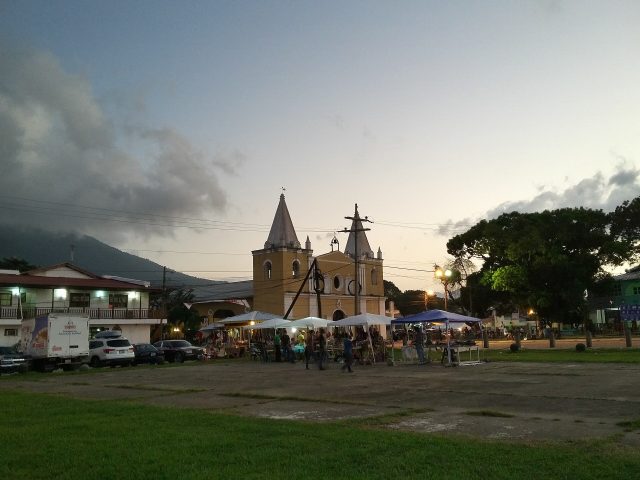
Trujillo’s market is where the city reveals itself without pretense. There are no polished tourist slogans or carefully arranged displays here—just the raw, unfiltered pulse of daily life. The air carries the scent of spices, the murmur of voices, the rustle of banana leaves spread across stalls. Unlike the orderly markets of big cities, where everything follows a schedule, Trujillo’s market operates on its own time, shaped by centuries of tradition. It’s loud, spontaneous, and alive with the kind of energy that can’t be staged.
Nestled in the heart of the city, the market sprawls across several blocks around the central square. Mornings are the busiest time, when farmers from nearby villages arrive with fresh produce, meat, and fish, and locals come to stock up for the day. By midday, the rush slows but never fully stops. Some grab a quick bite at the stalls, while others linger on benches, catching up on news. As evening falls, the market transforms into a gathering place—older men play dominoes, teenagers chat, and the hum of conversation blends with the sounds of the city winding down.
The market’s architecture is simple and practical. Low wooden awnings provide shade from the sun and shelter from rain, while narrow aisles barely accommodate the carts laden with goods. In places, old stone walls remain, a quiet reminder that Trujillo is one of Honduras’ oldest cities, founded in the 16th century. Back then, markets weren’t just places to trade—they were the heart of community life, where disputes were settled, deals were made, and news spread like wildfire.
Here, you’ll find everything needed for daily life. Stalls overflow with mangoes, avocados, pineapples, and other tropical fruits, many of which rarely make it to supermarkets. Fishermen bring in their catch straight from the Caribbean—fresh dorado, shrimp, lobster. Butchers offer beef and pork, while nearby vendors sell spices, local coffee, and cocoa. Handcrafted goods also have their place: woven baskets, clay pottery, and jewelry made from seeds and shells, often crafted using techniques passed down through generations.
More than just a place to shop, Trujillo’s market is a living museum of local culture. You can watch as traditional dishes are prepared—baleadas, the thick tortillas stuffed with beans and cheese, seafood stews, or tamales wrapped in banana leaves. Vendors often offer samples, and refusing is considered impolite—it’s part of the unspoken rules of the market. Conversations with traders can reveal all sorts of insights: where the best fishing spots are, how to pick the right spices, which fruits are in season.
Trujillo itself is nothing like the tourist-heavy destinations elsewhere in Honduras. There are no crowded beach bars or luxury resorts here, just quiet streets, colonial architecture, and a sense that time moves at its own pace. The market mirrors this atmosphere—it doesn’t exist to impress visitors but simply carries on as it has for generations. For travelers, it’s a rare chance to see Honduras without the usual filters, to understand how people live beyond the resort zones.
Of course, the market isn’t perfect. On hot days, the air can feel thick and heavy, and after rain, puddles form along the paths. But these imperfections are part of what makes it special. There are no air conditioners or fluorescent lights, just the unvarnished reality that’s disappearing from modern shopping centers. If you find yourself in Trujillo, don’t rush past. Take an hour to wander, watch, and maybe buy something to try. It’s here, in the midst of the market’s chaos and charm, that you’ll catch the true rhythm of the city.