Ohandja Market in Onitsha isn’t just a place to buy and sell—it’s where Nigeria reveals itself in all its unfiltered, chaotic energy. This isn’t a sanitized tourist attraction or a neatly organized shopping center. It’s a living, breathing organism, pulsing with the rhythms of daily life. The moment you step inside, the noise hits you first: vendors calling out prices, customers haggling in rapid-fire Igbo or pidgin, the clatter of metal bowls and plastic crates being shuffled between stalls. The air is thick with the scent of smoked fish, roasting plantains, and the sharp tang of spices piled high in woven baskets. Children dart between the crowds, their laughter mixing with the hum of generators and the occasional blare of a motorcycle horn. There’s no quiet here, no stillness—just the relentless motion of a place that never stops moving.
The market’s roots stretch back centuries, long before Onitsha became the bustling commercial hub it is today. Situated along the Niger River, the city has always been a crossroads, a place where traders from different ethnic groups—Igbo, Yoruba, Hausa, and others—converged to exchange goods. Even after colonial rule reshaped the region’s economy, Ohandja didn’t just survive; it thrived, expanding to absorb new influences and commodities. Today, it’s one of the largest markets in West Africa, drawing not only locals but merchants from neighboring countries like Benin, Niger, and Cameroon. The sheer scale of it is overwhelming: sprawling over several blocks, the market is a maze of stalls selling everything from handwoven textiles and hand-carved masks to smartphones and secondhand car parts. If something exists in Nigeria, chances are you’ll find it here.
Walking through Ohandja feels like navigating a labyrinth designed by someone who never learned the meaning of straight lines. The paths between stalls are narrow, often barely wide enough for two people to pass, and the overhead tarps block out the sun in patches, casting the market in a perpetual twilight. There’s no grand architectural plan, no symmetry—just a tangle of wooden stalls, corrugated metal roofs, and makeshift awnings held up by whatever materials were available. Yet within this apparent chaos, there’s an order only regulars understand. Many vendors have worked the same spot for decades, their families passing down the space like an inheritance. A stall selling kola nuts might sit next to one hawking imported fabrics, which in turn might be adjacent to a tiny kitchen where a woman fries akara over an open flame. It’s disorderly, but it works.
More than just a marketplace, Ohandja is a cultural institution. For the people who work here, the market isn’t just a job—it’s a way of life. Generations of traders have grown up within these crowded alleys, their lives intertwined with the rhythms of buying and selling. Customers become regulars, known by name, their preferences memorized by the vendors who serve them. The market is a place where tradition and modernity collide: you might find a stall selling intricate beadwork or hand-dyed adire fabric next to one displaying the latest Chinese electronics. It’s a reminder that Nigeria isn’t a monolith—it’s a country where the past and present coexist, sometimes uneasily, but always vividly.
For visitors, Ohandja offers a glimpse of Nigeria that most tourists never see. There are no guided tours here, no neatly printed signs explaining the history of the place. Instead, you’re left to wander, to observe, to get lost in the sensory overload. It can be overwhelming—the noise, the crowds, the sheer intensity of it all—but that’s part of what makes it real. This isn’t a place curated for outsiders; it’s a place that exists for itself, and if you’re lucky, you might be allowed to witness it. The market doesn’t care if you’re comfortable. It doesn’t slow down or adjust itself for visitors. It simply is, and that’s what makes it unforgettable.
The best time to experience Ohandja is on weekends, when the market swells with traders from surrounding towns and villages. The energy is electric, the crowds thicker, the bargaining more intense. But even on weekdays, there’s plenty to see. You could spend hours wandering the textile section, where bolts of brightly patterned ankara fabric are stacked ceiling-high, or lose yourself in the maze of spice stalls, where vendors scoop out heaping piles of dried crayfish, locust beans, and ground pepper. If hunger strikes, there’s no shortage of food—steaming bowls of egusi soup, plates of jollof rice, or skewers of suya, all prepared in plain sight. The food here isn’t just sustenance; it’s part of the experience, a way to taste the market’s vibrancy.
Ohandja isn’t a place you can rush through. To really understand it, you need to slow down, to let the market dictate the pace. Start in one section—perhaps the area where traders sell secondhand clothes, their stalls overflowing with piles of jeans and T-shirts—and then let yourself drift. Follow the sound of a radio playing highlife music, or the scent of fresh bread from a nearby bakery. Stop to watch a group of women sorting through a mountain of dried fish, or a man carefully wrapping a customer’s purchase in old newspaper. Every corner holds something unexpected: a stall selling handmade leather sandals, a tiny shrine tucked between two shops, a group of men playing drafts on a wooden board. The key is to engage, to ask questions, to haggle—not just for the sake of a good deal, but because it’s how you become part of the scene.
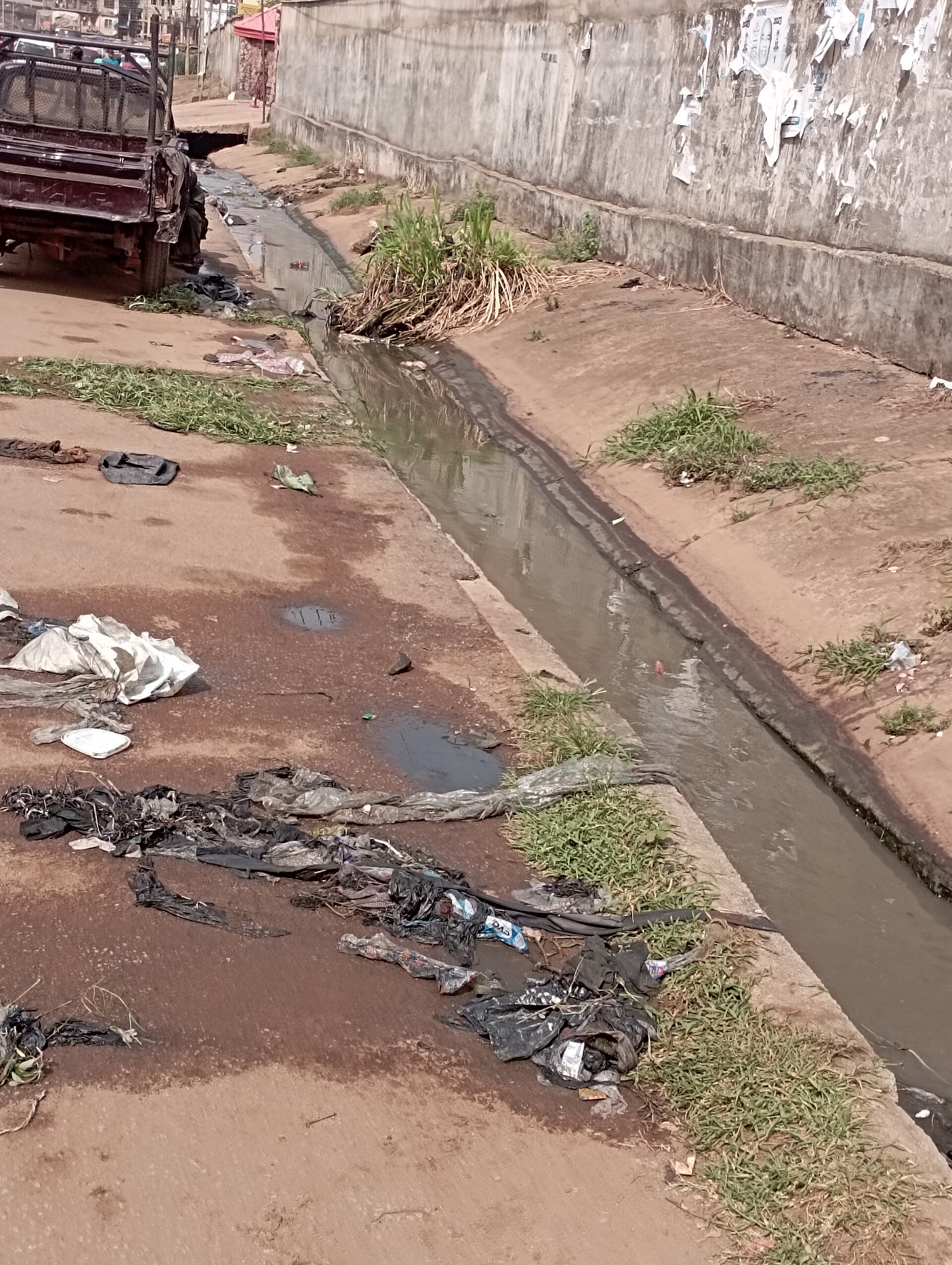
Of course, Ohandja isn’t for everyone. If you’re looking for quiet, for order, for the kind of polished experience you’d find in a shopping mall, this isn’t the place. But if you want to see Nigeria as it truly is—messy, vibrant, unapologetically alive—then there’s nowhere better. The market doesn’t exist to impress; it exists because it has to. It’s where people come to make a living, to feed their families, to connect with one another. The stalls might be ramshackle, the paths uneven, the air thick with dust and exhaust fumes, but none of that matters. What matters is the life that pulses through it, the stories that unfold in every corner, the way it refuses to be anything other than itself. For those who take the time to look, Ohandja isn’t just a market—it’s a microcosm of Nigeria, raw and unfiltered.