La Esperanza is one of those places where Peru reveals itself without pretense, the way Peruvians see it every day. Just a short distance from Trujillo, this quiet town might not appear on most tourist maps, but its Mercado Modelo is the kind of place that feels like the heart of the community. There are no souvenir stalls selling alpaca knits or polished ceramics here—just the raw, unfiltered rhythm of daily life. The air is thick with the scent of fresh fish and spices, voices rise and fall in a steady hum, and the pace of time seems to slow just enough to let you notice the small details that usually slip by unnoticed.
The market’s architecture is simple, almost utilitarian. Long rows of stalls stretch under corrugated metal roofs, connected by narrow passageways that twist and turn like veins. The space is designed for one purpose: to fit as many vendors as possible, with every inch of room put to use. Inside, the light is dim, filtered through gaps in the roof and the occasional flickering bulb. The walls haven’t seen a fresh coat of paint in years, but that only adds to the sense of authenticity. This isn’t a place meant to impress—it just exists, stubbornly and unapologetically, the way markets have for generations.
Mornings at Mercado Modelo start early. Well before dawn, farmers from the surrounding villages arrive, jostling for the best spots to unload their goods. By six, the market is already alive with activity. Piles of fruit dominate the stalls—mangoes, passionfruit, guavas—alongside vegetables that might be unfamiliar to outsiders. There’s *choclo*, the purple corn used in traditional dishes, and *yuca*, a starchy root that looks like an oversized carrot. Then there are the fruits of the *lúcuma* tree, whose sweet, dry flesh is turned into one of Peru’s favorite desserts. The meat section offers more than just beef and chicken; you might spot *cuy*, the Andean guinea pig, or game brought in from the jungle. It’s not for the squeamish, but it’s a reminder of how closely food here is tied to the land.
Spices take up their own corner of the market, sold in bulk from large sacks or tied in bundles. The air is so thick with their aromas that it’s almost overwhelming. You’ll find the usual suspects—cumin, paprika—but also ingredients that define Peruvian cooking. *Ají* peppers, fiery and bright, are a staple in sauces, while *chili paste* blends them with garlic and salt for an instant kick. Vendors are generous with samples, happy to explain how to use each spice or even share a family recipe if you’re lucky. It’s the kind of knowledge passed down through generations, not something you’d find in a cookbook.
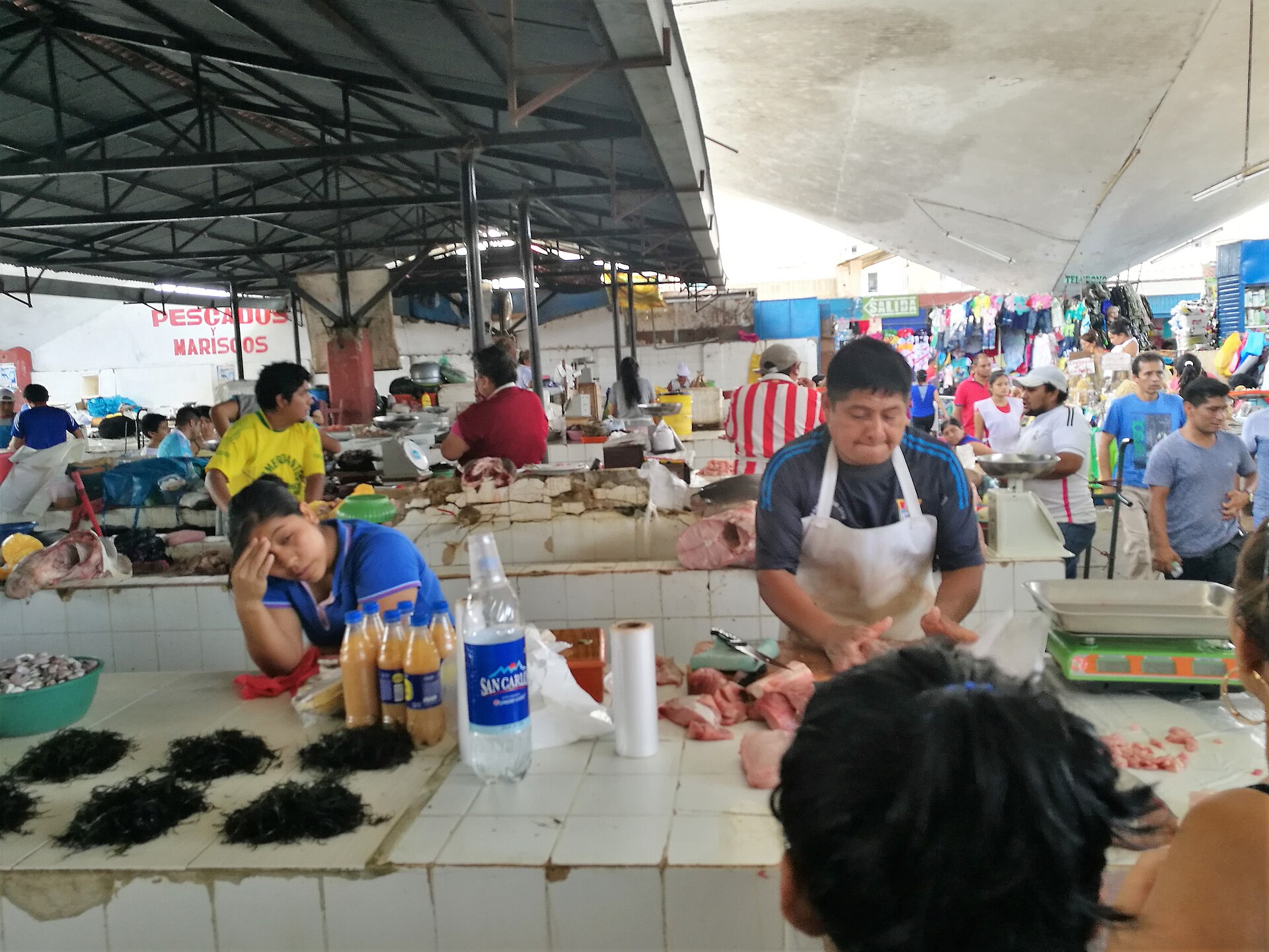
The fish section is where the market’s connection to the coast becomes impossible to ignore. Peru’s Pacific waters are rich, and the catch here is always fresh. Merluza, corvina, lobsters—vendors call out their offerings, sometimes throwing in rarer finds like sole or sea urchin. The fish is sold whole, un-gutted, and buyers inspect each one carefully before making their choice. Buckets of shellfish, shrimp, and crabs line the stalls, their briny scent mixing with the salt in the air. Some vendors even prepare *ceviche* on the spot, marinating raw fish in lime juice with onions and peppers. It’s the perfect snack to eat standing up, watching the market’s daily dance unfold around you.
Beyond food, Mercado Modelo is a place where you can find almost anything. Household goods, tools, clothing, even building materials—if it’s needed in daily life, it’s probably sold here. Tucked between the stalls are small eateries serving cheap, hearty meals. A cup of strong coffee or a bowl of noodle soup costs next to nothing, and the tables are always full. Workers take breaks over plates of food, elderly women gossip over steaming mugs, and teenagers linger over empanadas. The atmosphere is unhurried, almost familial. If you sit long enough, you might hear stories that don’t make it into guidebooks—tales of the town, its people, and the small dramas that play out in its streets.
What makes Mercado Modelo special isn’t just what’s sold here, but what it represents. This is a place where indigenous traditions still hold strong, woven into the fabric of daily life. You’ll hear Quechua spoken alongside Spanish, see women in traditional dress, and taste dishes prepared the same way they have been for centuries. The market is a living archive of the region’s history, where the past isn’t preserved in museums but carried forward in the way people cook, trade, and interact. It’s a reminder that some things don’t need to change to remain relevant.
For visitors, Mercado Modelo offers a glimpse of Peru that’s often overlooked. There are no tourist traps here, no polished facades—just the unvarnished reality of a small Peruvian town. It’s not always comfortable. The crowds can be overwhelming, the noise relentless, and the smells—whether intoxicating or overpowering—are impossible to ignore. But that’s part of the experience. This is a place that doesn’t try to charm you; it simply exists, and in doing so, it reveals something true about the people who rely on it. If you’re willing to look past the chaos, you might find that the market’s greatest appeal lies in its refusal to be anything other than itself.