Perched on the arid coastal plains of northern Peru, Chan Chan feels like a whisper from a forgotten empire. Unlike the towering stone citadels of the Incas or the dramatic mountain fortresses that dominate Peru’s archaeological narrative, this vast adobe metropolis sprawls across the desert with a quiet, almost melancholic grandeur. Once the beating heart of the Chimú Empire, one of the most sophisticated pre-Columbian civilizations, Chan Chan was a city of sun-baked clay and intricate designs, where every wall told a story of power, faith, and daily life. Today, its crumbling ruins stretch over nearly twenty square kilometers, a labyrinth of palaces, plazas, and passageways that offer a rare glimpse into a society that thrived here long before the Spanish set foot on these shores.
The city rose to prominence around the ninth century, flourishing until the late fifteenth century when it fell to the expanding Inca Empire. At its height, Chan Chan was more than just a capital—it was a bustling urban center, home to as many as a hundred thousand people. Its name, which translates to Sun-Sun, hints at the reverence the Chimú held for the sun, a deity central to their cosmology. The city was divided into nine massive citadels, each a self-contained world belonging to a different ruler and their lineage. These sprawling complexes, encircled by towering walls, served as both royal residences and administrative hubs, where trade, religion, and governance intertwined. The Chimú were master planners, and their city reflected a society that valued order, hierarchy, and connection to the natural world.
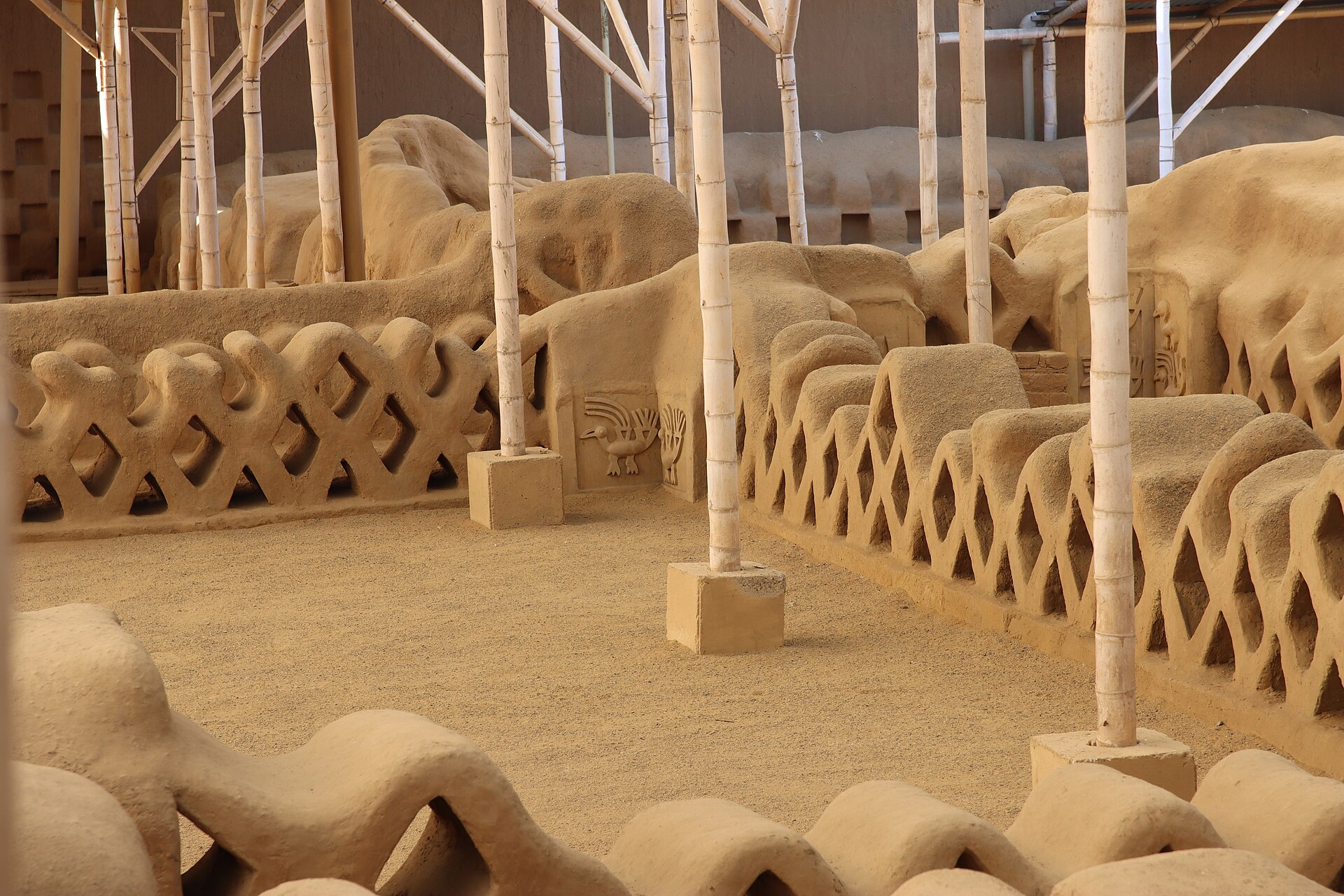
What sets Chan Chan apart is its architecture, a testament to the Chimú’s ingenuity in a harsh environment. Built entirely from adobe—sun-dried clay bricks—the city’s structures were both monumental and ephemeral. Walls soared up to twelve meters high, their surfaces adorned with intricate reliefs depicting fish, seabirds, waves, and mythical creatures. These weren’t mere decorations; they were a language, a way of encoding the Chimú’s relationship with the ocean, their primary source of sustenance and spiritual inspiration. Inside the citadels, narrow corridors led to living quarters, storerooms, and temples, while reservoirs captured rare rainfall, sustaining the city in a region where water was scarce. The Chimú’s mastery of hydraulic engineering allowed them to thrive in this arid landscape, a feat that still impresses visitors today.
Walking through Chan Chan today, it’s hard not to feel the weight of its history. The most intact section, the citadel of Nik-An, offers a glimpse into the city’s former glory. Here, the walls still bear traces of faded murals and geometric patterns, while the remains of royal chambers and ceremonial spaces hint at the rituals that once took place within. The Throne Room, where the ruler is said to have held court, stands as a reminder of the city’s political power. Nearby, smaller plazas may have hosted gatherings of nobles or religious ceremonies, their purpose now lost to time. The absence of grand pyramids or towering temples makes Chan Chan feel more intimate, as if the city’s true legacy lies not in its scale, but in the everyday lives of its inhabitants.
The city’s relationship with the ocean is impossible to ignore. Perched just a few kilometers from the Pacific, Chan Chan was shaped by the rhythms of the sea. The Chimú relied on the ocean for food, trade, and cultural identity, and their art is filled with marine motifs. Fishermen ventured out in reed boats, returning with catches that fed the city’s population. Even today, the sound of waves crashing against the shore carries through the ruins, a reminder of the deep connection between the Chimú and their environment. The play of light on the adobe walls at sunset creates a mesmerizing effect, as if the city itself is breathing in the salt-tinged air.
Chan Chan’s decline began long before the Spanish arrived. The Incas, who conquered the Chimú in the late fifteenth century, dismantled parts of the city, absorbing its people and traditions into their own empire. Later, colonial settlers unknowingly used adobe bricks from the ruins to build their own homes, erasing layers of history in the process. It wasn’t until the twentieth century that archaeologists began to uncover the true significance of the site, revealing Chan Chan as the largest adobe city in the world. Today, it stands as a fragile monument to a civilization that once dominated this stretch of the Peruvian coast.
Visiting Chan Chan is a different experience from the crowded tourist trails of Machu Picchu or Cusco. Here, the ruins feel more personal, less polished. The absence of large tour groups allows for a slower, more contemplative exploration. As the sun dips below the horizon, casting long shadows across the clay walls, it’s easy to imagine the city as it once was—alive with the sounds of merchants, artisans, and fishermen going about their daily routines. The wind carries the scent of the ocean, and for a moment, the centuries melt away.
Yet Chan Chan is not just a relic of the past; it’s a site in peril. The same elements that shaped it—wind, rain, and salt from the ocean—are now eroding its walls at an alarming rate. Recognizing its vulnerability, UNESCO designated Chan Chan a World Heritage Site in Danger, prompting efforts to preserve what remains. Archaeologists and conservators work tirelessly to stabilize the structures, using modern techniques to protect the adobe from further decay. For Peruvians, Chan Chan is more than an archaeological site; it’s a symbol of resilience, a reminder that even the mightiest civilizations can fade, but their stories endure in the land they once called home.