Mercado Municipal, or simply Mercado, is the kind of place where São Tomé’s daily life unfolds in its most unfiltered form. Tucked near the waterfront in the island’s capital, this market has been the city’s commercial heart for generations, though its exact origins are lost in the rhythm of everyday trade. Unlike the polished tourist markets found in other parts of the world, Mercado feels lived-in, a space where necessity and tradition dictate the pace. Here, the air is thick with the scent of fresh fish, ripe plantains, and the earthy aroma of dried spices, all mingling with the hum of conversation in Portuguese and Forro, the local creole language.
The market’s structure is modest but functional, a low-slung building with corrugated metal roofs that provide shade from the tropical sun. Inside, stalls are arranged in a loose grid, their wooden tables piled high with whatever the island’s farmers, fishermen, and artisans have brought that day. The produce is unmistakably São Toméan—small, knobby breadfruits, glossy cocoa pods split open to reveal their seeds, and bunches of bananas so green they seem to glow. Fish, often still glistening from the morning’s catch, are laid out in neat rows, their scales catching the light as vendors call out prices to passing shoppers. The selection changes with the seasons, but the market’s energy remains constant, a testament to the island’s reliance on what the land and sea provide.
Beyond food, Mercado is a place where the island’s craft traditions are kept alive. Women weave baskets from palm leaves, their fingers moving with practiced ease as they shape the fibers into sturdy, functional designs. Nearby, stalls display handmade soap wrapped in banana leaves, a nod to the island’s history of small-scale production. There are also stacks of brightly patterned fabrics, some imported, others dyed locally using techniques passed down through generations. These items aren’t just souvenirs; they’re part of the island’s economic fabric, sold to locals who use them in their daily lives.
The market’s social role is just as important as its commercial one. It’s where neighbors catch up over cups of strong, sweet coffee, where fishermen haggle over the day’s best catch, and where children dart between stalls, sent on errands by parents who’ve shopped here for decades. The rhythm of Mercado is unhurried, even when the midday heat presses down. Transactions are sealed with a handshake or a nod, and bargaining is expected but never hostile. There’s a sense of community here, a shared understanding that this place belongs to everyone who relies on it.
Historically, Mercado has mirrored the island’s broader story. São Tomé and Príncipe’s economy has long been tied to agriculture, first under Portuguese colonial rule, when sugar and later cocoa dominated, and later as an independent nation navigating its own path. The market has adapted to these shifts, reflecting the island’s changing fortunes. During the colonial era, it was a place where enslaved people and later contract laborers would gather, their presence shaping the market’s early character. Today, it remains a space where the island’s past and present intersect, though the weight of that history is often felt more in the quiet persistence of tradition than in overt reminders.
For visitors, Mercado offers a rare glimpse into São Tomé’s everyday reality. There are no grand monuments or curated exhibits here, just the raw, unvarnished life of the island. It’s not a place for those seeking pristine photo opportunities or sanitized experiences. Instead, it rewards those who take the time to observe, to listen, and to engage. The market’s charm lies in its authenticity—its refusal to perform for outsiders. If you’re lucky, a vendor might offer you a taste of *cocada amarela*, a sweet coconut treat, or explain how to prepare *calulu*, a traditional dish of dried fish and okra. These small moments are the ones that linger, far more than any souvenir.
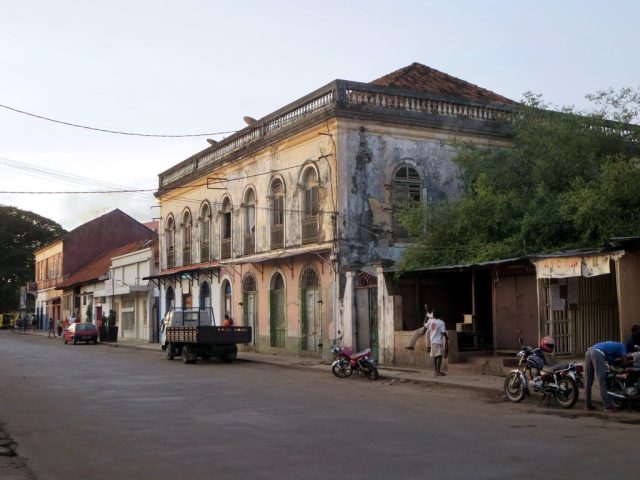
The market’s location near the waterfront also makes it a natural starting point for exploring the rest of São Tomé city. After wandering its aisles, you can step outside and follow the narrow streets toward the old colonial buildings that line the bay, their faded facades hinting at the island’s layered past. Or you might head toward the port, where fishing boats bob in the harbor, their hulls painted in bright, weathered colors. Mercado isn’t just a destination in itself; it’s a gateway to understanding the island’s rhythms, a place where the pulse of São Tomé is most tangible.
There’s something quietly defiant about Mercado’s persistence. In a world where markets are increasingly replaced by supermarkets and online shopping, this place endures, stubbornly analog in its approach. It’s a reminder that commerce doesn’t always need to be efficient or streamlined to be meaningful. Here, the act of buying and selling is as much about connection as it is about exchange. The market’s future isn’t guaranteed—rising costs, shifting economies, and the pressures of modernization all pose challenges—but for now, it remains a vital part of São Tomé’s identity, a place where the island’s past and present continue to meet.