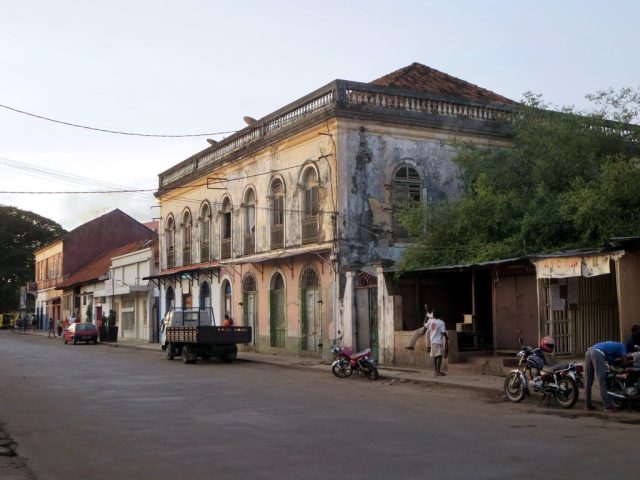
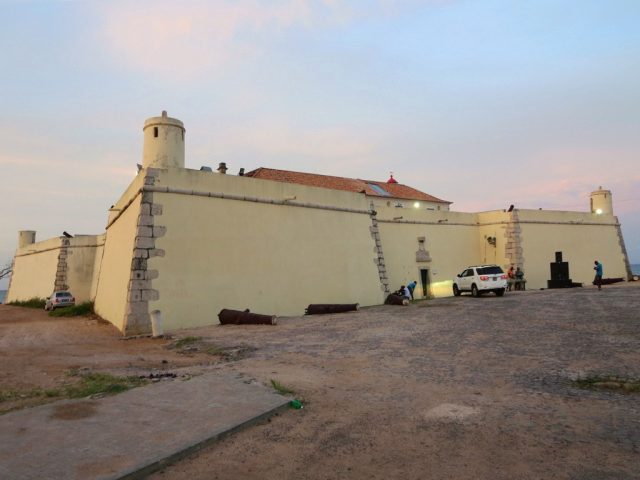
Our Lady of Conception Church in São Tomé is one of those quiet places that seem suspended in time, holding within its walls not just the echoes of faith but the weight of an island’s colonial past. Built in the 16th century, it was among the first Catholic churches in this remote corner of the Atlantic, where Portuguese navigators established their foothold. The architecture is unassuming—whitewashed walls, clean lines, and a simplicity that carries its own understated elegance. Inside, the wooden pews, aged crucifixes, and faded frescoes speak of an era when the church was more than a place of worship; it was the heart of the community.
São Tomé and Príncipe, like much of the Gulf of Guinea, played a grim role in the transatlantic slave trade, and this church bore witness to its share of sorrow. Enslaved people were baptized here before being shipped to the Americas, and those who perished under the brutal conditions of the island’s plantations were laid to rest within its walls. The building stands as more than just an architectural relic; it is a silent testament to a history where devotion and suffering were intertwined, where hope and despair walked the same path. Today, the names of those who passed through its doors linger only in the pages of old parish records.
Over the centuries, the church has been altered and restored, though its core remains unchanged. In the 17th century, a bell tower was added, and in the 19th, the facade was updated with neoclassical touches, lending it a more solemn, dignified appearance. Yet despite these changes, it has never lost its original purpose. It remains an active place of worship, where locals gather for Mass, baptisms, and weddings. This continuity is part of its charm—it is not a museum frozen in time but a living space where history is still being written.
The church is set within a small square, a shaded refuge from the island’s relentless equatorial sun. Elderly men often sit beneath the trees, exchanging stories, while children dart between the weathered gravestones in games of hide-and-seek. The atmosphere is peaceful, almost village-like, even though the city center is just a short walk away. São Tomé moves at its own unhurried pace, and places like this church offer a way to settle into its rhythm.
For visitors, the church is more than just a historical landmark; it’s a window into the island’s daily life. There are rarely crowds here, so it’s easy to sit on a bench and watch as women in vibrant dresses hurry to services or as the priest in his white cassock prepares for Mass. On feast days, the church comes alive—adorned with flowers, its bells ringing more frequently to call the faithful to celebration. The contrast between the ordinary and the sacred is subtle but striking.
Architecturally, the church doesn’t compete with the grandeur of Europe’s cathedrals, and that’s precisely what makes it special. It fits naturally into São Tomé’s landscape, where low-slung buildings, lush greenery, and the distant ocean create a sense of quiet harmony. The white walls stand out against the vivid foliage, while the church’s modest size gives it an intimate, almost homely feel. In many ways, it mirrors the island itself—small but rich in life and history.
Today, Our Lady of Conception remains an important part of São Tomé and Príncipe’s cultural heritage. It serves as a reminder of how different cultures and destinies intersected on this tiny island, leaving behind traces that time has not erased. For those who visit, it offers more than just a glimpse into the past; it invites reflection on how fragile and enduring human memory can be. After all, it’s often the quiet places like this church that reveal history not as a series of dates and events, but as the collective story of people—their dreams, their struggles, and the legacies they leave behind.