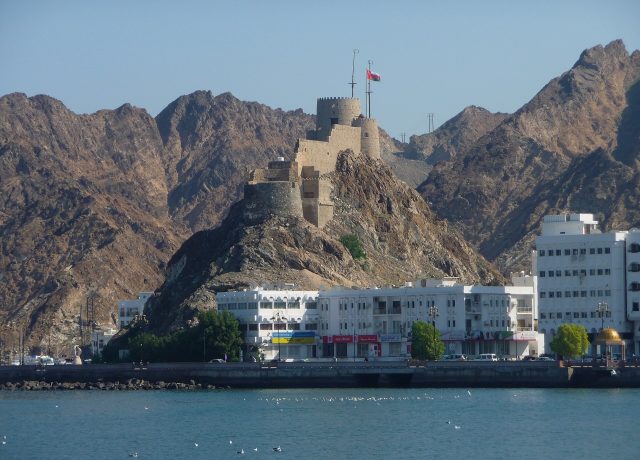
Muttrah Souq is one of those rare places where Oman reveals itself without pretense, a living fragment of old Arabia tucked into the heart of Muscat. Once the center of a separate port town, Muttrah has long since been absorbed into the capital, yet its souq retains the unhurried rhythm of a bygone era. The narrow lanes, shaded by wooden awnings, wind between stalls where the air is thick with the scent of spices, the murmur of bargaining voices, and the occasional cry of a vendor calling out his wares. There are no fluorescent lights or air-conditioned corridors here—just the slow, deliberate pulse of a marketplace that has existed for centuries.
Muttrah’s history as a trading hub stretches back to the Middle Ages, when merchants from India, East Africa, and Persia converged on its shores. The port was a vital link in the Indian Ocean trade network, its shipyards producing the iconic wooden dhows that carried Omani sailors across vast distances. The souq was the beating heart of this activity, where deals were struck, news was exchanged, and cultures intertwined. Though the days of dhows laden with exotic goods are long past, the souq still carries echoes of that legacy. The architecture itself tells the story—low-slung buildings with carved wooden balconies and latticework windows, their stone facades weathered to a warm, golden hue by the sun and sea air.
What makes Muttrah Souq distinct is its unpolished authenticity. Unlike the sanitized shopping malls that have sprung up in modern Muscat, this is a place where commerce unfolds at its own pace. The stalls spill over with goods that reflect Oman’s trading past: mounds of spices in vibrant hues—turmeric, saffron, cardamom, and cinnamon—whose aromas linger in the air. Vendors will often invite you to taste a pinch or explain how a particular spice is used in Omani cooking. Nearby, sacks of dried fruits and nuts—dates, figs, almonds, and pistachios—sit alongside stacks of incense, from frankincense to myrrh, which remains an integral part of daily life here, used in everything from religious rituals to home fragrances.
Textiles are another highlight, with bolts of fabric in every imaginable shade and texture. Lightweight cotton for everyday wear contrasts with rich silks reserved for special occasions, some adorned with intricate hand-embroidery passed down through generations. You’ll find ready-made garments too—the flowing white dishdashas worn by Omani men, the elegant black abayas favored by women, and brightly colored scarves that shimmer in the sunlight. The shopkeepers take pride in their craft, often demonstrating the quality of a fabric or offering to tailor something to your measurements.
For those drawn to traditional craftsmanship, the souq’s silver shops are a treasure trove. Silver has long been the metal of choice for Omani jewelry, and the pieces here reflect both practicality and artistry. Heavy bracelets, rings engraved with geometric patterns, and pendants shaped like fish or palm trees are common sights. Then there are the khanjars—ornate daggers that are a symbol of Omani heritage. The curved blades are sheathed in leather or silver, their hilts often inlaid with semi-precious stones. Even if you’re not in the market for one, admiring the craftsmanship is worth the time.
Beyond the goods for sale, the souq is a place to observe the rhythms of daily life. Mornings begin early, with the first light spilling over the rooftops as vendors arrange their wares. By midday, the heat drives a lull in activity, with many shopkeepers retreating indoors for a rest. But as the sun dips lower, the souq comes alive again. Lanterns flicker to life, the hum of conversation grows louder, and the scent of grilled fish drifts from small eateries tucked into the corners. Locals come not just to shop but to linger—over a cup of strong Omani coffee, a plate of fresh dates, or a quick meal of shuwa, the slow-cooked lamb that’s a specialty of the region.
There’s no rush here, no pressure to buy. The best way to experience Muttrah Souq is to wander without a fixed plan, letting curiosity guide you. Step into a spice shop and let the vendor explain the difference between varieties of saffron. Pause at a jewelry stall and listen to the story behind a particular piece. If something catches your eye, don’t hesitate to bargain—it’s expected, even encouraged, though it’s done with a smile and a sense of mutual respect. Many shopkeepers speak English and are happy to chat, whether about their goods, the history of the souq, or life in Oman today.
What lingers after a visit to Muttrah Souq isn’t just the memory of what you saw or bought, but the feeling of having glimpsed something timeless. This is Oman as it once was—a place where trade, culture, and community intersect without the gloss of modernity. The sea is never far away, its breeze carrying the salt tang of the Gulf, a reminder of the souq’s maritime roots. In a world where so many places feel interchangeable, Muttrah stands apart, a living museum of tradition where the past isn’t preserved behind glass but woven into the fabric of everyday life.