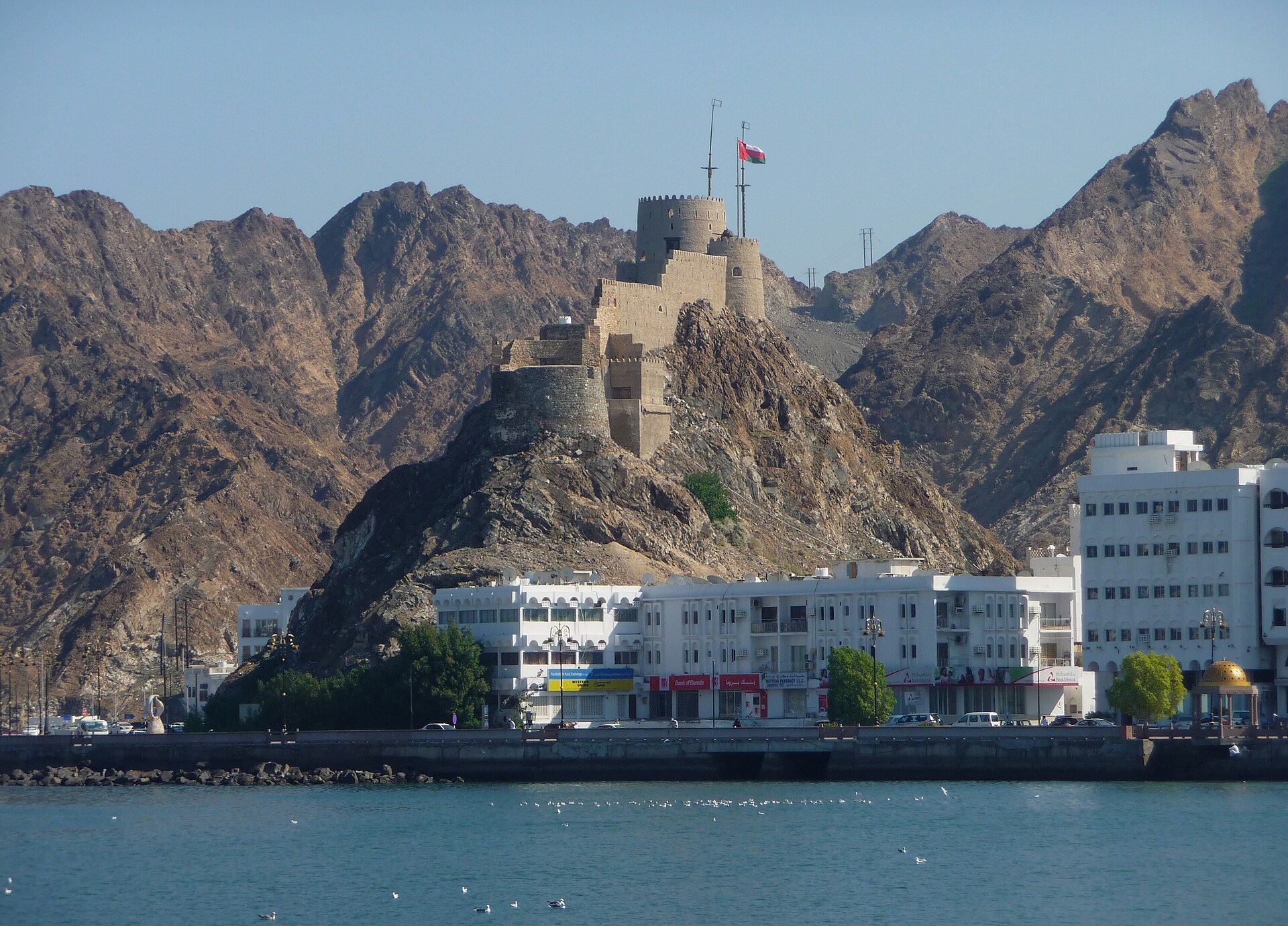
Al-Jalali Fort stands guard over Muscat’s harbor, its pale stone walls rising sharply from the water like the edge of a blade. Built in the 16th century by the Portuguese, it was originally named São João, a strategic stronghold meant to secure their foothold along the Indian Ocean trade routes. The fort’s narrow gun slits and thick ramparts were designed to repel attacks from Ottoman fleets and local tribes unwilling to accept foreign rule. For decades, it served as both a military outpost and a symbol of dominance, its cannons trained on the horizon, ready to defend the port from any threat.
When the Portuguese were eventually driven out, the fort passed into Omani hands and was renamed Al-Jalali. The new rulers preserved much of its original structure, blending their own architectural touches with the existing design. Inside, the vaulted ceilings and deep water cisterns still bear the marks of its Portuguese past, while the heavy iron cannons lining the battlements remain pointed toward the sea, silent witnesses to centuries of shifting power. The fort was never the site of major battles, but its presence alone was enough to deter would-be invaders, reinforcing the idea that control of Muscat’s harbor meant control of the region’s trade.
Access to Al-Jalali is restricted, which only adds to its mystique. Unlike many historic sites that have been turned into crowded tourist attractions, this fort remains largely untouched by mass tourism. Its courtyards and halls are only open to the public during occasional guided tours or government events, making a visit feel like stepping into a private museum. Those who do get inside will find intricately carved wooden ceilings adorned with traditional Omani patterns, as well as wide terraces offering sweeping views of the harbor and the modern city beyond. The fort’s isolation gives it an almost timeless quality, as if it exists outside the rush of the present day.
Perched on a rocky outcrop, Al-Jalali offers one of the best vantage points in Muscat. On clear days, the view stretches across the harbor, where fishing boats and cargo ships glide in and out of the port, their wakes dissolving into the deep blue of the Arabian Sea. At sunset, the fort’s walls glow with a warm, golden light, their rough texture softened by the fading sun. It’s easy to imagine the scene centuries ago—sailors returning from distant voyages, merchants haggling over spices and silks, and sentries keeping watch for any sign of danger. The fort’s location makes it feel like a bridge between land and sea, a place where the rhythms of trade and travel have always converged.
Despite its military origins, Al-Jalali was never a site of prolonged conflict. Instead, it functioned more as a deterrent, a visible reminder of authority that discouraged attacks before they could begin. The fort’s dungeons, where prisoners were once held, are a stark contrast to the rest of its grand design, hinting at the less glamorous side of its history. Over time, it evolved from a purely defensive structure into an administrative center, a place where rulers could oversee the comings and goings of ships and caravans. Today, it stands as a testament to Oman’s ability to absorb outside influences without losing its own identity, a physical record of the country’s resilience.
The area around Al-Jalali is just as steeped in history as the fort itself. The old quarter of Muscat, with its narrow streets and traditional houses, feels like a living extension of the past. Wooden balconies overhang the alleys, their intricate carvings worn smooth by time, while the scent of frankincense and spices lingers in the air from nearby souks. The fort is not an isolated monument but part of a larger tapestry, one that includes mosques with whitewashed minarets, crumbling watchtowers, and the occasional glimpse of a dhow being repaired on the shore. Together, these elements paint a picture of a city that has always been defined by its relationship with the sea.
Al-Jalali remains one of Muscat’s most recognizable landmarks, its silhouette instantly familiar to anyone who has seen a postcard or travel brochure. Yet no photograph can capture the way the fort feels when you stand at its base—the weight of its history, the solidity of its stone, the way the wind carries the salt of the sea. It’s a place where the past isn’t just preserved; it’s still present, woven into the fabric of the city. The fort no longer guards against invaders, but it continues to stand watch, not over a harbor, but over the memory of all those who passed through these waters—traders, sailors, and rulers who shaped Oman into the country it is today.