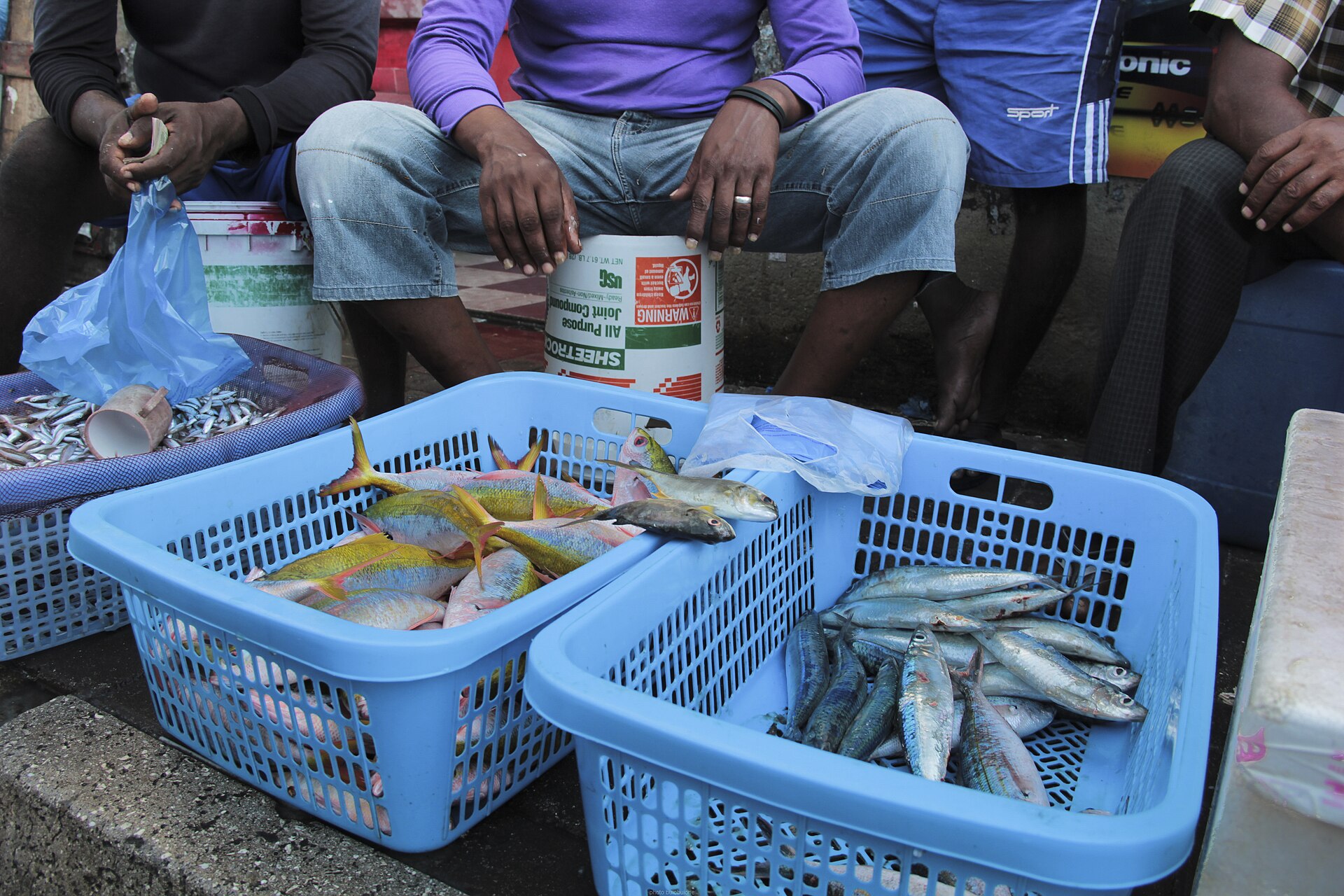
Malé’s Fish Market is where the city’s pulse meets the rhythm of the ocean. There’s no tourist gloss here, just the daily reality of life on an island where fish isn’t just food—it’s livelihood, tradition, and a way of being. By dawn, the docks are already alive with activity. Boats glide in from the night’s fishing trips, their hulls heavy with the day’s catch, and within minutes, the market stalls are piled high with glistening tuna, mahi-mahi, and barracuda. The air hums with purpose, but there’s no rush—just the quiet efficiency of people who’ve done this for generations.
The market sits near the harbor, in the dense heart of Malé, where space is so scarce that every inch of the island seems claimed by concrete and commerce. Yet here, among the narrow lanes and the salt-stained walls, the old Malé still lingers. This isn’t a place for postcards or staged authenticity. It’s where fishermen unload their boats with calloused hands, where housewives haggle over prices in Dhivehi, and where the scent of the sea mixes with the sharp tang of fresh fish. The market is one of the few places left where the city feels like itself, unfiltered and unpolished.
The best time to visit is early morning, when the market is at its liveliest. By six, the stalls are already crowded, the concrete floors slick with seawater and scales. Fishermen sort their catch with practiced ease, arranging the fish by size and species—yellowfin tuna stacked like cordwood, mahi-mahi with their iridescent skins catching the light, smaller reef fish glinting in the morning sun. There’s no hard sell here. The vendors don’t shout or wave you over; they simply stand by their wares, ready to weigh a purchase or answer a question. The language barrier doesn’t matter much—prices are scribbled on scraps of paper, and a nod or a smile does most of the talking.
The market building itself is unassuming, designed for function over form. Low ceilings keep the heat at bay, and the concrete walls help maintain a cool temperature, though modern refrigeration has started to replace the old methods of ice and shade. Still, many vendors stick to tradition, relying on speed and instinct to keep their fish fresh. By mid-morning, the frenzy slows. Most of the catch is sold, the crowds thin, and the market settles into a quieter rhythm until the next day’s boats arrive.
For locals, the fish market is more than a place to buy dinner. It’s a social hub, a spot where neighbors catch up over the day’s news, where fishermen swap stories about the night’s haul, and where kids dart between stalls, wide-eyed at the strange shapes and colors of the ocean’s bounty. The chatter is constant, a mix of Dhivehi, English, and the occasional burst of laughter. In this tangle of voices and movement, you can sense the deeper currents of island life—how closely work, family, and the sea are intertwined.
If you’re curious about how the fish ends up on a plate, the market’s surroundings offer a glimpse. Just steps away, small cafés and food stalls serve up meals made from the morning’s catch. A plate of fried tuna with rice, a bowl of spicy fish curry, or a simple salad of smoked fish and coconut—nothing fancy, just food that tastes like it was pulled from the water hours ago. The cooks work quickly, turning whole fish into meals in minutes, and the smell of frying oil and spices drifts through the air, drawing in hungry customers.
This isn’t a place you’ll find in most guidebooks. There are no signs pointing the way, no guided tours, no souvenir stands hawking trinkets. The fish market doesn’t exist for tourists—it exists for Malé, for the people who depend on it. That’s what makes it worth visiting. It’s a rare chance to see the city as it really is, not as a backdrop for luxury resorts but as a working island where life revolves around the ocean. The market doesn’t put on a show. It doesn’t need to.
If you come, arrive early, before the sun climbs too high. Bring a camera if you like, but don’t forget to put it down sometimes. Stand to the side, watch the way the fishermen handle their knives, listen to the rhythm of the bargaining, breathe in the salt and the fish and the diesel fumes from the boats. There’s no script here, no curated experience—just the raw, unvarnished reality of a place where the sea provides, and the people know how to take what it gives. That’s what makes Malé’s Fish Market more than just a market. It’s a piece of the island’s soul.