
Malé
Maldives · 12 places
Photo: Wikimedia Commons, Public domain
Male is unlike anywhere else in the Maldives. There are no endless stretches of powdery white sand, no overwater bungalows swaying gently above turquoise lagoons. Instead, the air hums with the energy of a real capital city—narrow streets packed with scooters, the scent of spices and fresh fish drifting from the market, the constant murmur of voices in Dhivehi and English. This is where the country’s pulse beats strongest, far from the polished resorts that most visitors imagine when they think of the Maldives.
The entire city occupies a single island, barely eight square kilometers in size, yet home to over two hundred thousand people. It’s one of the most densely populated places on earth, where everything is within walking distance—mosques, government buildings, schools, hospitals, and the small shops and cafés that line every street. You could explore the main sights in a few hours, but the real charm lies in the details: the way laundry flutters from balconies, the faded paint on old coral-stone houses, the way locals weave through traffic without a second thought for crosswalks or traffic lights.
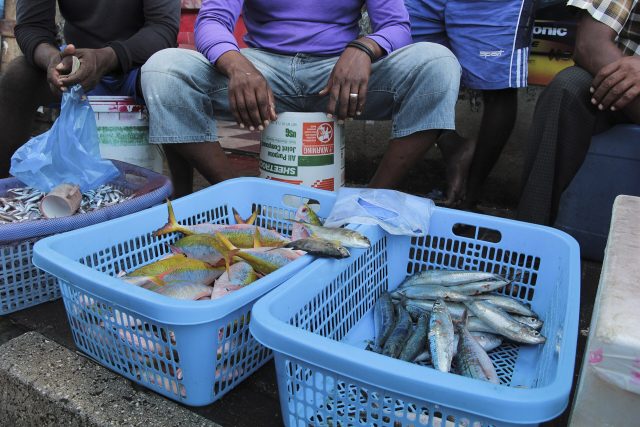
At the heart of Male stands the Grand Friday Mosque, its golden dome gleaming against the skyline. It’s one of the largest in the Maldives, and visitors are welcome inside, provided they dress modestly. Nearby, the National Museum offers a quiet contrast, with its collection of pre-colonial artifacts, ancient coral carvings, and everyday objects that tell the story of the islands’ past. But the liveliest spot in the city is the local market, where the day’s catch—tuna, barracuda, dorado—is laid out on tables in gleaming piles. Vendors call out prices, bargaining is expected, and the air is thick with the briny tang of the sea. Next to the fish stalls, fruit sellers display mangoes, bananas, and other tropical produce, some of which you won’t find in the resort supermarkets.
Male is a city of contrasts. Sleek modern office buildings stand beside crumbling houses with peeling paint, their balconies draped in drying clothes. Along the waterfront, small cafés serve up Maldivian staples—tuna curry, grilled fish skewers, roshi flatbread, and sweet milky tea. In the evenings, the promenade comes alive as locals gather to chat, listen to music, or simply watch the sun dip below the horizon. The water in the lagoon isn’t the crystal-clear blue of the resort islands, but that’s part of the appeal. Here, you see the Maldives as it really is: fishermen unloading their boats at dawn, children playing on the shore, old men casting lines from the rocks.
This isn’t a place for lazy beach days. Male is where you come to understand the country beyond the postcard images. It’s a practical stopover for those heading to nearby islands, where you can visit traditional villages, schools, or even the prison on a separate atoll. Most travelers spend only a day or two here, just enough to soak in the rhythm of daily life before retreating to the seclusion of a resort. There are no five-star hotels, but a handful of decent guesthouses offer clean, comfortable rooms at reasonable prices. Don’t expect relaxation—Male moves fast, loud, and a little chaotic, but that’s exactly what makes it worth experiencing.
See & Do
All of them
Places on the map
Marker colour follows the categoryClimate and weather
Detailed weather: Malé- Average temperature
- 29 °C
- Precipitation per year
- 1883 mm
- Sunshine hours per day
- 7.6 h
Average air temperature
°C
29
29
30
30
30
30
29
29
29
29
29
29
Jan
Feb
Mar
Apr
May
Jun
Jul
Aug
Sep
Oct
Nov
Dec


