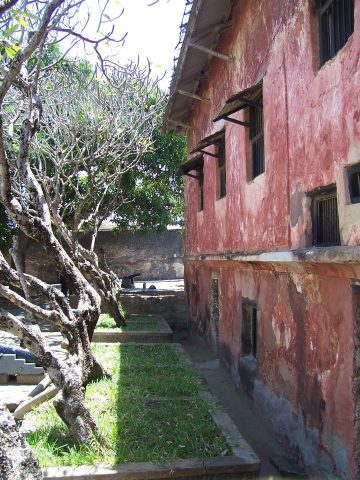
Mombasa moves at its own pace, a city where the weight of history presses gently against the rush of daily life. On Kenya’s eastern coast, where trade routes once connected Africa to Arabia, India, and beyond, the past isn’t just remembered—it’s lived. And if there’s one place where that living history feels most tangible, it’s Makeni Market. More than just a place to buy and sell, it’s a microcosm of the city itself, a space where the rhythms of commerce, culture, and community collide in a way that’s both chaotic and deeply human.
Tucked into the heart of Old Mombasa, Makeni Market sits where the city’s narrow streets twist between coral-stone buildings, their walls worn smooth by time. The name traces back to the late 19th century, when a British trader named John Makeni set up shop here, though the site’s significance stretches much further. Centuries before, this was a crossroads for merchants moving spices, ivory, and textiles between continents. The market grew from that legacy, absorbing the energy of generations who passed through, haggling over goods under the same sun that still beats down today.
Walking into Makeni is like stepping into a maze of stalls, canopies, and narrow alleys where every inch is claimed by something for sale. The air is thick with the scent of ripe fruit—mangoes, pineapples, passionfruit—piled high in vibrant heaps. Nearby, mounds of spices rise like miniature dunes: turmeric, cardamom, cinnamon, and chili peppers, sold by the handful after a quick negotiation. The fish section is a world of its own, where the day’s catch from the Indian Ocean—barracuda, tuna, octopus—lies glistening on ice, ready to be grilled on the spot if you ask. It’s a place where food isn’t just sold; it’s celebrated, with vendors quick to offer a taste or a story about how it’s best prepared.
But Makeni isn’t just about what you can eat. It’s also where you’ll find the kind of handmade goods that tell a story of their own. Wooden masks carved with intricate patterns, beaded jewelry in bold colors, leather sandals stitched by local artisans—these are the things that carry the soul of the region. Some stalls even demonstrate the craftsmanship right there, with weavers or carvers working as they chat with customers. Of course, not everything is locally made. Alongside the traditional crafts, you’ll find cheap knockoffs and mass-produced trinkets, a reminder that even in a place like this, globalization has left its mark.
The market’s atmosphere is as much a part of the experience as the goods themselves. In the early morning, when the heat is still bearable, locals trickle in—some for their daily shopping, others just to catch up with neighbors. The shouts of vendors blend with the cries of gulls and the hum of motorbikes weaving through the nearby streets. By midday, the place is alive in a different way: the air grows heavier with the smell of grilled fish, sweat, and spices, and the alleys fill with bodies moving in every direction. It’s easy to get turned around, but that’s part of the charm. Time seems to stretch here, bending to the market’s own unhurried logic.
For visitors, Makeni offers a glimpse of Kenya that’s unfiltered and unpolished. There are no curated displays or scripted tours, just the raw, unvarnished reality of daily life. You might see women in bright kikoys haggling over a bunch of bananas, children helping their parents unload crates of tomatoes, or elders sitting in the shade, debating the news of the day. The chaos has its own order, and if you let yourself sink into it, you start to feel like a temporary part of something much larger.
That said, Makeni isn’t a place for the overly cautious. Some vendors will quote prices that are wildly inflated for foreigners, and not every deal is what it seems. But if you approach it with patience and a sense of humor, the market can be rewarding in unexpected ways. A little bargaining isn’t just expected—it’s part of the culture, a dance that can lead to laughter, a good story, or even an invitation to share a cup of tea. The key is to engage, not just observe. Refusing to play along might be seen as dismissive, while jumping in with curiosity can open doors.
The market is open from dawn until dusk, but the best time to visit is in the morning, when the light is soft and the produce is freshest. Weekends bring an extra buzz, with traders from nearby villages setting up stalls, but even on quieter weekdays, the place never loses its energy. Crowds come and go, but the market’s pulse remains steady, a constant in a city that’s always changing.
Mombasa is a place of contrasts—where modern life brushes up against tradition, where the roar of traffic gives way to quiet courtyards. Makeni Market embodies that duality. It’s a place where you can pick up a souvenir, sure, but it’s also where you can sit on a bench and watch the world go by, realizing that the real magic isn’t in the things for sale, but in the life unfolding around them. In the end, that’s what makes it worth the visit.