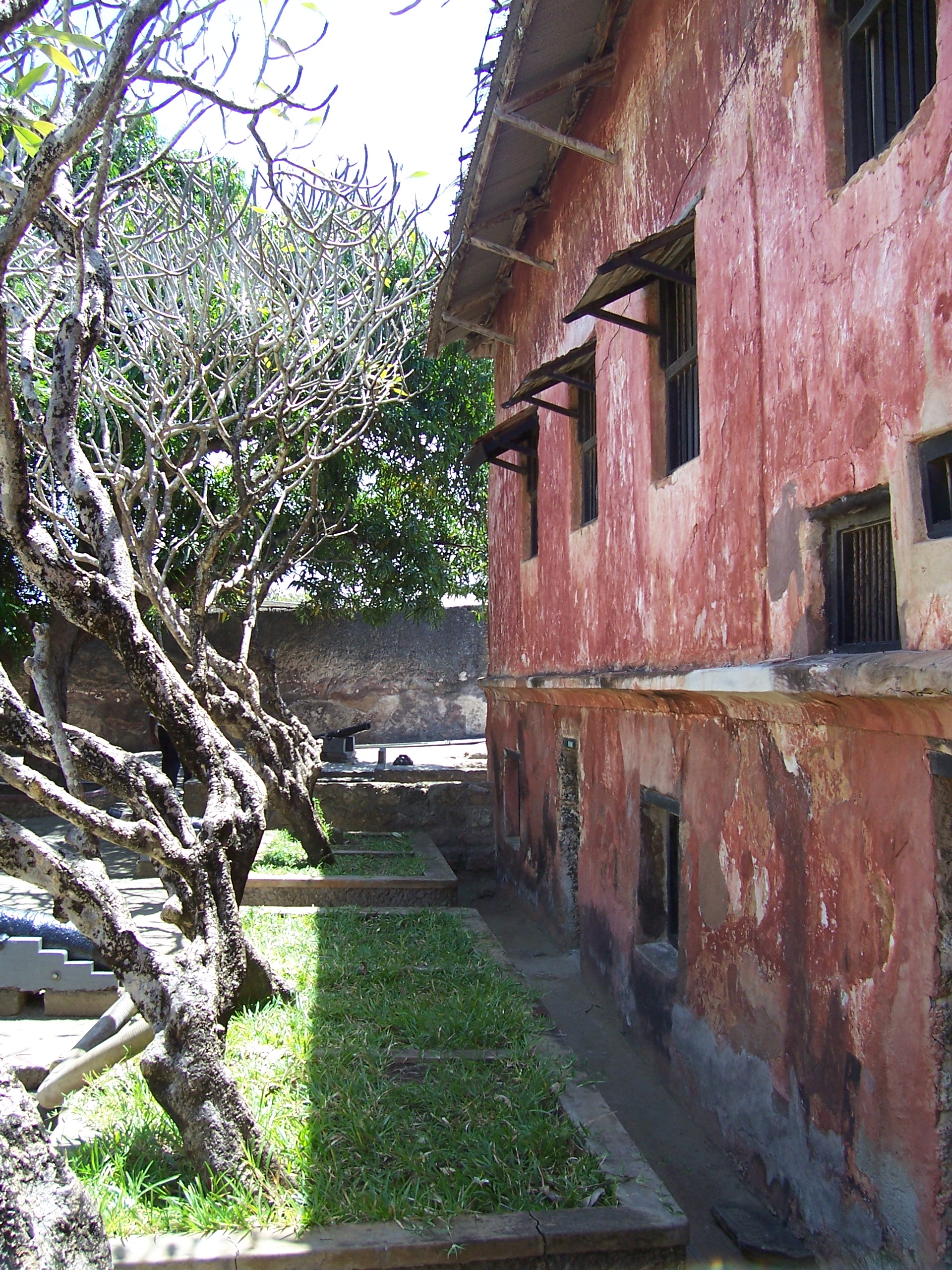
Fort Jesus is one of those rare places where history isn’t just preserved in stone—it breathes through the walls. Perched on Mombasa Island at the mouth of the old harbor, the fort has stood for centuries as a silent witness to wars, trade, and the shifting tides of power. Built by the Portuguese in the late 16th century, when East Africa was a battleground for control over maritime routes, it remains one of the few surviving examples of Renaissance military architecture in the region. Unlike many fortifications of its time, Fort Jesus endured sieges, changing hands between empires, and even earthquakes, emerging today not just as a museum but as a living monument to the collision of Europe, Asia, and Africa on this small stretch of land.
The fort’s design reflects both European military ingenuity and local building traditions. Commissioned by the Portuguese and designed by Italian architect Giovanni Battista Cairati, it follows the principles of Renaissance fortification, with thick coral limestone walls, star-shaped bastions, and narrow gun ports designed to withstand prolonged sieges. Over time, however, the structure evolved. When the Omani Arabs captured it in the 17th century, they added their own touches, including a mosque within its walls. Later, the British repurposed it as a prison, leaving behind rusted bars and grim cells that still hint at its darker past.
Walking through Fort Jesus is like stepping into another era. The courtyard is dotted with cannons, their iron bodies now rusted under the relentless sun, once used to defend the harbor. In one bastion, Portuguese inscriptions carved into the walls by long-gone soldiers offer a quiet testament to their presence. Nearby, the remnants of Arab baths speak of the merchants and warriors who once washed here. The underground chambers, cool and dimly lit, were used to store gunpowder and supplies, and in times of danger, they sheltered people. Today, the silence is broken only by the occasional echo of footsteps, but it’s easy to imagine the voices that once filled these spaces.
Beyond its military role, Fort Jesus was a strategic hub on the trade route between Europe and India. Mombasa’s harbor saw ships laden with spices, ivory, gold, and enslaved people, and the fort was a key prize for those who sought to control this crossroads. The Portuguese, Omanis, and British all fought for dominance here, and the fort bore witness to some of the most dramatic moments in the region’s history. The most famous siege, in the late 17th century, lasted nearly three years, with Omani forces blockading the fort by land and sea. The defenders held out until reinforcements arrived, a story still recounted in historical accounts. Standing on the ramparts today, looking out at the ocean where enemy sails once appeared, it’s not hard to picture the tension of those long-ago battles.
What makes Fort Jesus unusual as a museum is its lack of glass cases and sterile displays. Instead, visitors wander the same corridors where soldiers once marched, touching walls that have seen centuries of conflict. Some rooms house artifacts uncovered during excavations—pottery, coins, weapons—each piece offering a glimpse into the daily lives of those who lived and died within these walls. One of the most striking collections is the Chinese porcelain, brought here on trading ships. These delicate cups and plates, now faded with time, are a reminder of how distant cultures intersected on Africa’s coast.
The fort’s atmosphere shifts with the time of day. In the early morning, when the sun rises over the Indian Ocean, the coral walls take on a soft pink hue, and the shadows stretch long across the courtyard. Few people are around at this hour, making it the perfect time to explore quietly, listening to the cries of gulls and the distant crash of waves. By midday, the fort comes alive with tourists, school groups, and the occasional wedding photoshoot against the backdrop of ancient cannons. But as the heat fades in the late afternoon, the crowds thin, and the last rays of sunlight filter through the gun ports, casting long, slanted beams across the stone. It’s then that the fort feels most timeless, as if the centuries between its past and present have momentarily dissolved.
Fort Jesus isn’t just a relic—it’s a living part of Mombasa’s identity. The city itself is a tapestry of cultures, languages, and traditions, and the fort reflects that diversity. Just beyond its walls lies the old port, where traditional dhows still dock, their wooden hulls creaking as they unload goods just as they have for generations. Nearby, markets overflow with spices, fabrics, and jewelry, echoing the trade that once made Mombasa a vital link between continents. The fort acts as a bridge between past and present, a reminder that this city has always been a meeting place of worlds.
For some, Fort Jesus is merely an old fortress; for others, it symbolizes resilience and survival. But for the people of Mombasa, it holds deeper meaning. It’s where children first learn about their history, where elders gather in the shade of its walls, and where festivals and celebrations bring the community together. In recent years, the fort has become a cultural hub, hosting concerts of traditional music, contemporary art exhibitions, and even open-air theater performances. It’s no longer just a museum—it’s a space where history isn’t confined to the past but continues to unfold, shaped by the people who walk its ramparts today.