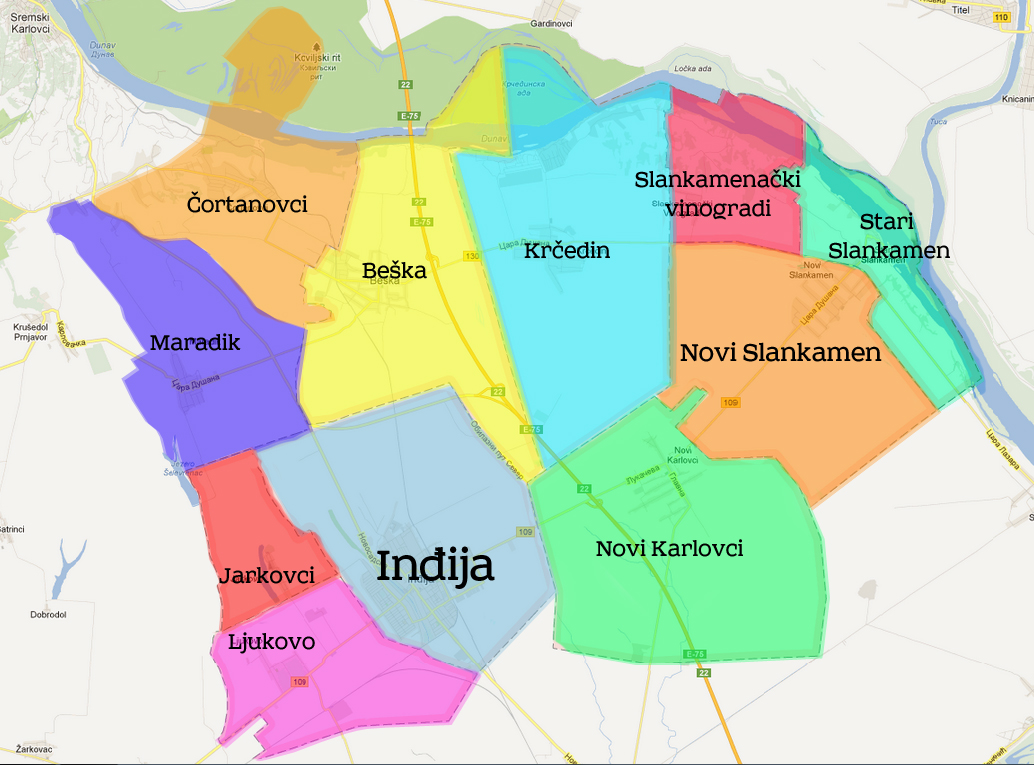
Inđija’s market is where the real Serbia reveals itself, stripped of tourist facades and polished charm. This isn’t a place designed for visitors—it’s where locals go about their daily lives, where the rhythms of trade and tradition unfold without pretense. The market sits in the heart of Inđija, a small northern town not far from Novi Sad, and though it may look like any other open-air bazaar at first glance, it carries the weight of something far more enduring. It’s less a marketplace and more a living archive of the region’s agricultural roots, a place where the past and present coexist in the simplest of exchanges.
The market’s origins are humble, born from the need of farmers and traders to gather in one place. What began as an informal gathering of vendors selling whatever they had grown or made gradually took shape into something more permanent. Today, it sprawls across an open space, a patchwork of stalls and tables under the sky. In summer, the air is thick with the scent of ripe fruit—peaches, watermelons, tomatoes—and the smoky tang of grilled meat drifting from makeshift barbecues. The crowds swell with people from nearby villages, their baskets filling with produce that tastes of the earth it came from.
Food is the heart of the market, and here, Serbia’s agricultural identity is on full display. The country has long been known for its fertile lands, and Inđija’s farmers bring the fruits of that labor to the stalls. In season, you’ll find peppers, eggplants, and zucchini piled high, their colors vibrant against the worn wooden tables. Winter brings its own bounty—pickled cabbage, salted cucumbers, jars of preserved vegetables that have been prepared the same way for generations. Dairy products hold a special place, too: fresh cheese, kaymak (a rich, creamy dairy spread), and sheep’s milk cheese, often made using methods passed down through families. Some vendors will tell you how their grandmothers used to make kaymak over a wood-fired stove, the process slow and deliberate, the way it’s been done for decades.
The meat section is another world entirely. Here, the focus is on fresh cuts, sausages, and smoked meats, all sold with the kind of straightforward pride that comes from knowing exactly where the food came from. Grills sizzle with čevapi—small, spiced minced meat sausages—served with onions and flatbread, their aroma mingling with the smoke from the coals. Nearby, you might find pljeskavica, a Serbian-style burger, or sarma, cabbage rolls stuffed with minced meat and rice. The vendors cook as they sell, and the scent of grilling meat is inescapable, drawing people in like a magnet. If you’re hungry, you can eat standing up, tearing into a warm pljeskavica slathered with ajvar, the smoky red pepper relish that’s a staple of Serbian cuisine.
Beyond food, the market offers a mix of practical goods—clothing, shoes, household tools, and the occasional oddity. You might stumble upon a stall selling handmade embroidery, old coins, or clay pottery, remnants of a time when such things were more common. But these are secondary to the market’s true purpose: it’s a place where people connect. Bargaining is part of the ritual, a dance of offers and counteroffers that can stretch into long conversations. Vendors know their regulars by name, and customers trust them implicitly, returning week after week for the same familiar faces and products. The market is a social hub, where friends meet, news is exchanged, and recipes are shared over cups of strong Turkish coffee.
The best time to visit is early in the morning, when the market is at its liveliest. By six or seven, the stalls are already bustling, and by ten, many are starting to pack up. Weekends are particularly busy, with people from surrounding villages making the trip to stock up on supplies, while locals stop by after church. If you arrive late, you might miss the best of it—the freshest produce, the liveliest conversations, the sense of urgency that comes with knowing the day’s trade won’t last forever.
There’s a rhythm to the market that’s hard to describe unless you’ve experienced it. Elderly women linger by the herb stalls, debating the merits of different remedies for a cough or an upset stomach. Groups of friends gather near the food stands, sampling bites of this or that, their laughter rising above the general hum. Young people, less bound by tradition, might try something new—a strange fruit, an unfamiliar spice—while their parents stick to what they know. The market doesn’t just sell goods; it sells stories, passed down through generations or shared in the moment.
For anyone curious about life in Serbia beyond Belgrade’s cafes and museums, Inđija’s market offers a glimpse into the country’s soul. There are no guided tours here, no carefully curated experiences. Just the raw, unfiltered reality of daily life—the noise, the smells, the occasional chaos of too many people in too small a space. You can spend an hour wandering the aisles or lose half a day watching the ebb and flow of trade and conversation. If you’re lucky, you might even feel, for a little while, like you belong. Not as a visitor, but as someone who’s stumbled into a place where life is lived simply, honestly, and without apology.