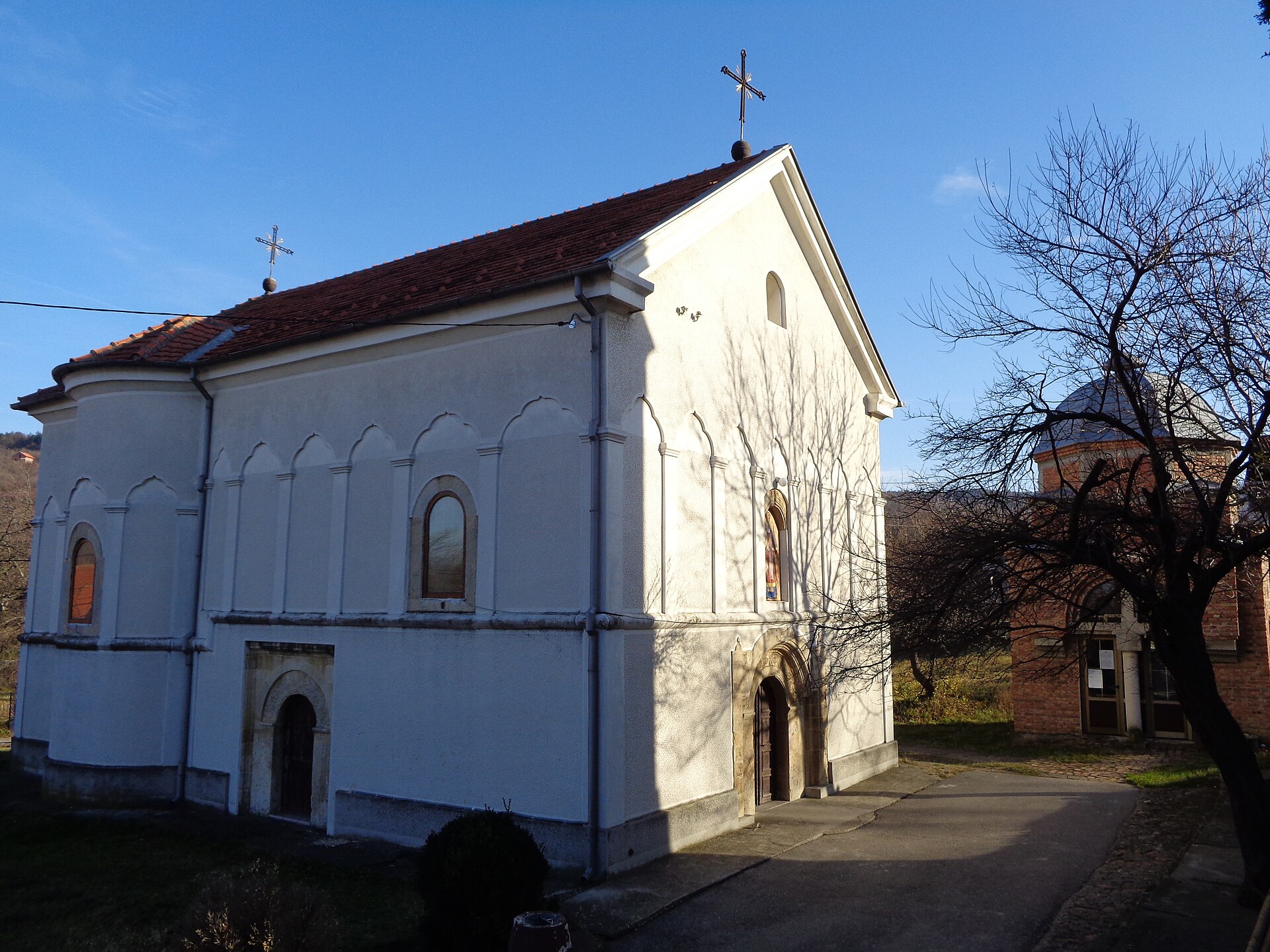
Saint Nicholas Church doesn’t call for attention, yet it stays with you. It sits in the center of this northern Serbian town, on a small square lined with low houses and tiled roofs. The building is plain—whitewashed walls, a simple gabled roof, a bell tower with a cross. No ornate details, no grand domes, just the quiet weight of years spent in prayer.
The church’s history is tied to Inđija’s own story. The first records of an Orthodox church here are from the 18th century, when the region was under Habsburg rule. Serbia wasn’t yet independent, and the local population lived under Austrian authority. For them, churches like Saint Nicholas were more than places of worship—they were symbols of resilience, a way to hold onto faith when borders changed.
The architecture is late Baroque, shaped by Austrian influence. It’s a single-nave basilica with a semicircular apse, a common design for Serbian Orthodox churches of the time. Inside, the space feels close and warm. The iconostasis, darkened by age, holds icons painted by local hands—not with precision, but with sincerity. The frescoes tell stories from Scripture in a way that feels direct, almost spoken.
For Inđija’s residents, the church has always been part of life. It’s where baptisms, weddings, and funerals happen. During wars, it became a refuge, a place to gather not just for prayer but for comfort. Even now, as the town grows with factories and shops, the church remains a constant. People visit on holidays, but also on ordinary days—lighting a candle, sitting in silence.
The square around the church has its own quiet charm. The old parish house stands nearby, once home to priests. A few old trees shade the area, their branches offering a place to rest. In summer, linden blossoms scent the air, and the sound of bells carries through the streets. Winter covers the white walls in snow, and smoke rises from the parish house chimney.
This isn’t a place for tourists. No crowds, no guided tours, no souvenir stands. If the doors are open, you can step inside and sit on a wooden bench. Sometimes, services fill the space with the sound of a choir—amateur, but full-hearted. Locals will tell you stories if you ask, about the church’s past, its survival through wars and changes. There’s no rehearsed script, just the quiet pride of people who know its value.
What makes this church different is its lack of pretense. It wasn’t built to impress, but to serve. The walls remember the hands that built them and the voices that filled them. For some, it’s a brief stop. For others, it’s a reminder of what lasts: faith, community, the small moments that matter.
Saint Nicholas Church is still part of life here. In a world that moves quickly, it offers stillness. Whether you come for the history, the quiet, or simply to sit, it leaves a mark—not with spectacle, but with its steady presence. It’s a piece of Serbia as it has always been: unassuming, enduring, human.