Garissa Market is one of those rare places where a city reveals itself without pretense—no polished facades, no staged exoticism, just the raw, unfiltered rhythm of daily life. Here, the pace is unhurried, the conversations genuine, and the air thick with the scent of spices, woodsmoke, and fresh produce. Garissa itself is a city of contrasts, perched near Kenya’s eastern edge, closer to Somalia than to Nairobi. It’s a place shaped by history, trade, and the constant movement of people, yet the market has always been its beating heart, a space where traditions collide and coexist.
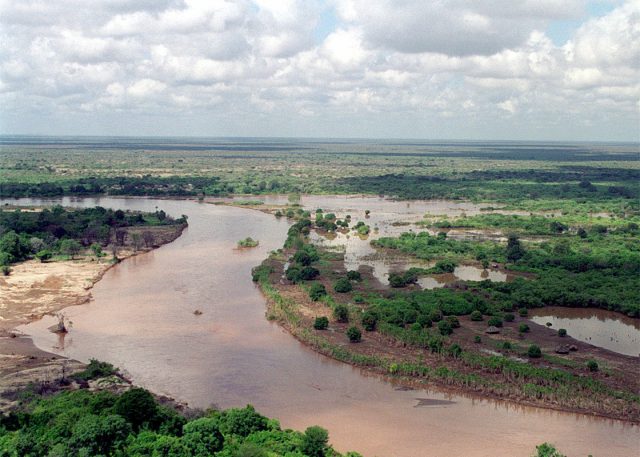
The day begins before dawn, when the first vendors arrive to set up their stalls under a sky still cool from the night. The market stirs slowly, with the crackle of charcoal fires and the murmur of early risers haggling over prices. By sunrise, the air is alive with the aroma of flatbreads sizzling on griddles and the sharp tang of cardamom in sweet chai. The produce is as varied as the people who sell it: mangoes and bananas from the fertile banks of the Tana River, sacks of rice and maize from inland farms, and, occasionally, camel milk fresh from the herds of nomadic pastoralists. Meat is a cornerstone of the market—goat, beef, and sometimes camel—often butchered and cooked on the spot, grilled over open flames or simmered in rich stews with potatoes and chili.
The market’s layout is practical, almost austere. Low corrugated iron roofs provide shade from the relentless sun, while wooden stalls, some held together by rope, line the narrow pathways. There’s no grand design here, just an efficient system built around necessity. The busiest section is usually the fabric quarter, where bolts of brightly patterned kikois and kangas are stacked high. These textiles are more than just clothing; they’re a language of their own, with colors and motifs that hint at a person’s origins—whether from the coast, the highlands, or the arid north. Women drape them as shawls, wrap them as skirts, or even use them to carry babies, the fabric’s weight and texture telling a story of its own.
Garissa is a predominantly Muslim city, and the market reflects that in its weekly rhythm. Fridays are quiet, with many stalls shuttered for midday prayers. But the rest of the week, the market hums with activity, even as the heat builds toward noon. Locals know the best times to visit—early morning, when the light is soft and the air still holds a trace of coolness, or late afternoon, when the sun dips low and casts long shadows across the dusty ground. These are the moments when the market feels almost poetic, the play of light and shadow turning the simplest scenes into something fleeting and beautiful.
The market’s history is intertwined with Garissa’s own evolution. Long before it became a town of any significance, this was a stopping point for caravans moving between the Kenyan interior and the Swahili coast. Traders would pause here to rest, bartering goods with local communities and the Somali nomads who roamed the surrounding plains. Over time, the market grew, absorbing influences from the different groups that passed through—Oromo herders, Pokomo farmers, Somali merchants, and Swahili traders. Today, that legacy is visible in the languages spoken, the foods sold, and the way people interact. A conversation might start in Swahili, shift to Somali, and end in a mix of both, with gestures filling in the gaps.
For outsiders, Garissa Market offers a glimpse of Kenya that’s far removed from the postcard images of safaris and white-sand beaches. There are no lions here, no luxury lodges—just the unvarnished reality of a town that exists on its own terms. Visitors who make the journey often find themselves surprised by the warmth of the people. Vendors aren’t pushy; instead, they’re curious, eager to explain the origins of their goods or share a recipe for a dish they’ve been cooking for decades. It’s not uncommon to be offered a cup of spiced tea, a small but meaningful gesture in a culture where hospitality is deeply valued.
This isn’t a place that caters to tourists. There are no glossy brochures, no guided tours, no signs in multiple languages. What you’ll find instead is something far more valuable: authenticity. The market doesn’t perform for visitors; it simply exists, a living, breathing organism that adapts to the needs of the people who rely on it. For those willing to step off the beaten path, it can be a revelation—a chance to see Kenya not as a destination, but as a place with its own pulse, its own stories, and its own way of moving through the world.
The beauty of Garissa Market lies in its ordinariness. It’s not a monument or a museum, but a place where life unfolds in real time. The conversations, the transactions, the quiet moments of connection—these are the things that make it special. In a world where so many experiences are curated and commodified, the market offers something rare: the chance to witness a community as it truly is, without filters or facades. And perhaps that’s the real reason to come here—not for the sights, but for the sense of being, however briefly, a part of something larger than yourself.