Ahar’s bazaar is one of those rare places where time seems to slow, where the rhythm of city life follows a pace set centuries ago. Tucked into the heart of this small northwestern Iranian town, the market is far more than a place to buy and sell—it’s a living organism where history, culture, and daily life intertwine. There’s no rush here, no blaring advertisements or the frantic energy of a big city. Instead, the air hums with the quiet cadence of vendors’ conversations, the scent of fresh bread and spices, the rhythmic tapping of craftsmen at work right before your eyes.
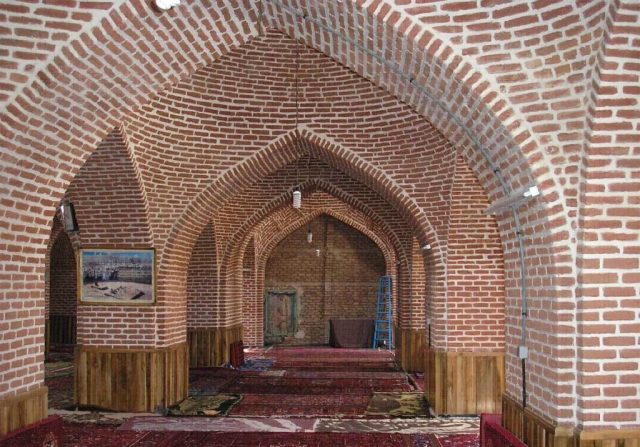
The architecture is classic for traditional Iranian bazaars, yet it carries a distinct local character. Narrow, covered passageways built from brick and stone create a play of light and shadow, especially at midday when the sun filters through small openings in the vaulted ceilings. Some sections are adorned with simple but elegant patterns, a testament to the skill of local builders who designed these spaces not just for beauty, but for practicality—shade from the scorching summer sun and shelter from winter’s chill. In places, you’ll notice old wooden beams darkened by time, as if holding the memories of those who walked these paths generations ago.
Unlike the sprawling markets of Tehran or Isfahan, Ahar’s bazaar is small, and that’s part of its charm. There are no endless rows of identical stalls here; instead, every corner has its own purpose and story. In one section, you’ll find handwoven carpets—thick, heavy, and rich with patterns, crafted using techniques passed down through families. Nearby, spices are piled into neat mounds: saffron, sumac, and barberries, their sharp and sweet aromas mingling in the air. There are stalls selling dried fruits—dates, figs, apricots—sun-dried until they become almost translucent. Deeper in the bazaar, small workshops produce intricately patterned knives or carve wooden utensils and ornaments, the craftsmen often pausing to explain their work to curious visitors.
Food is a cornerstone of the market’s life. Fresh *lavash* bread is baked right in front of customers in traditional *tandoors*, still steaming and smelling of woodsmoke. Local cheese, salty and crumbly, is sold in blocks and best eaten with herbs and flatbread. In season, the stalls overflow with pomegranates—huge, juicy, their ruby seeds bursting with tart sweetness. Vendors often offer samples, and refusing is considered impolite; it’s a small gesture of respect, a way to acknowledge the care put into their goods.
But the bazaar is more than just a marketplace—it’s the social heart of Ahar. Neighbors meet here to catch up on news, share gossip, or arrange weddings and funerals. In the shade of the galleries, elderly men play backgammon or sip tea from small glass cups. Children dart between the stalls, while women in bright headscarves move slowly through the aisles, chatting as they shop. The atmosphere is warm, almost familial, and even a stranger can begin to feel like part of the rhythm after just a little while.
The bazaar’s history stretches back centuries, though no one knows exactly when it first took shape. Ahar has long been a crossroads between the Iranian plateau and the Caucasus, and the market played a vital role in the region’s economy. Caravans laden with silk, spices, and metals once passed through, while local artisans supplied travelers with everything they needed. Over time, the town’s strategic importance faded, but the bazaar endured, becoming a symbol of resilience and continuity.
Today, the market remains a living part of Ahar’s modern life. The vendors are locals, not middlemen, and many stalls have been in the same families for generations. Of course, some things have changed—old scales have been replaced by digital ones, and plastic packaging has crept in where paper once sufficed. But the essence of the bazaar remains untouched. In an age where globalization erases so many traditional spaces, Ahar’s market stands as a rare survivor, a place where the past and present coexist.
For travelers, the bazaar offers a glimpse of the Iran that rarely makes it into guidebooks. There are no tourist traps here, no pushy guides demanding exorbitant fees. Just the town, its people, and their everyday lives, unfolding at their own unhurried pace. You could spend hours wandering the galleries, watching a craftsman carve a wooden spoon or a baker pull fresh bread from the oven. Every visit reveals something new—a forgotten spice blend, a hidden workshop, or simply the smile of a vendor eager to share the story behind their goods.
In the end, Ahar’s bazaar is more than just a place to shop. It’s where you can feel the pulse of the town, understand its soul, and perhaps even catch a glimpse of why life here moves the way it does. In a world that changes faster every day, such places are becoming increasingly rare—and that’s precisely why they matter.