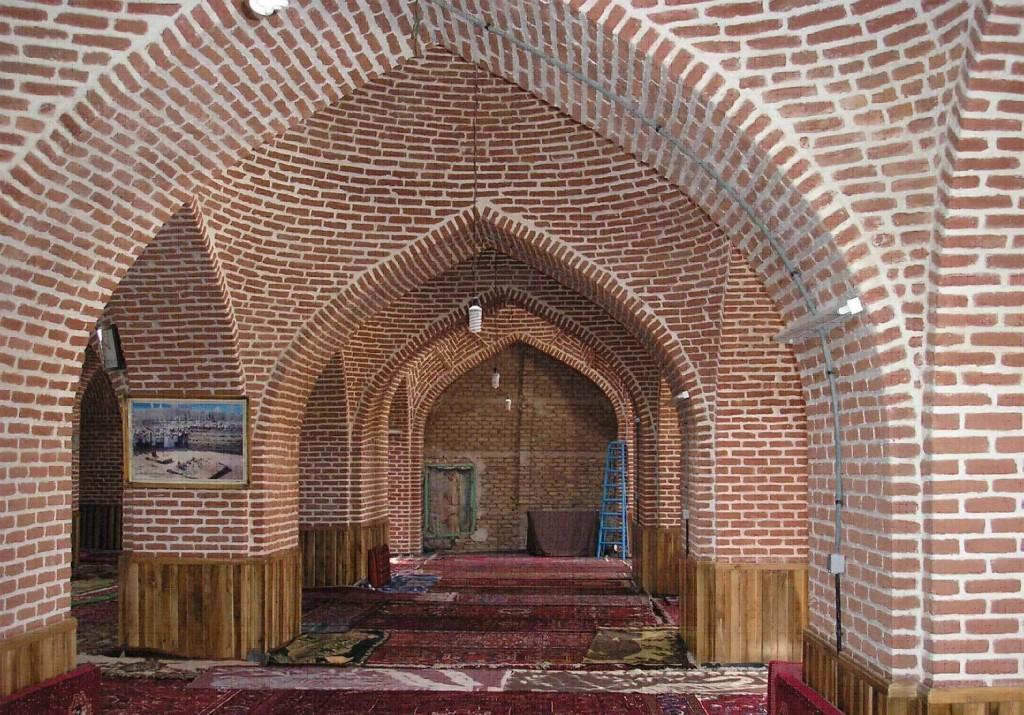
Jameh Mosque of Ahar sits quietly in the heart of a small city where the Alborz Mountains ease into the arid plains of Azerbaijan. It doesn’t dominate the skyline like the grand mosques of Isfahan or Shiraz, nor does it demand attention from passersby. Instead, it blends into the fabric of Ahar, as if it has always been part of the town’s rhythm. The mosque isn’t just a structure; it’s a presence, woven into the daily lives of the people who live around it, long before travelers ever take notice.
The history of the mosque is inseparable from that of Ahar itself. For centuries, the city served as a crossroads between Tabriz and Ardabil, a place where trade routes intersected and cultures mingled. The mosque’s origins trace back to the Safavid era, a time when Ahar flourished under the empire’s influence. Yet, like many historical sites, its exact beginnings are debated. Some historians place its construction in the 16th century, while others argue that later renovations may have altered its original form. What remains certain is that the mosque has endured earthquakes, wars, and shifting powers, each time emerging as a steadfast symbol of the city’s resilience.
Architecturally, the Jameh Mosque reflects the style common to northwestern Iran, though it carries its own subtle distinctions. The main entrance is marked by a towering arched portal, its surface once adorned with vibrant tilework that has since faded into muted tones. Inside, the courtyard is framed by colonnaded galleries, their vaulted ceilings providing shade from the region’s intense sun. The prayer hall, located to the south, is unadorned compared to the ornate mosques of central Iran. There are no elaborate mosaics or gilded calligraphy here—just a quiet simplicity that feels authentic, untouched by the heavy-handed restorations that sometimes strip historical sites of their character.
The mosque’s minaret stands as a silent sentinel over Ahar. It isn’t particularly tall, but its proportions suit the scale of the city perfectly. In earlier times, it served a dual purpose: calling the faithful to prayer and acting as a lookout for approaching caravans or threats. Today, it remains a focal point, especially at dusk, when the setting sun casts long shadows across its brickwork, and the city below begins to settle into the evening. The minaret’s presence is understated, yet it carries a sense of timelessness, as if it has always been there, watching over the changing world below.
For the people of Ahar, the Jameh Mosque is far more than a historical monument. It’s a living space where daily prayers, Friday gatherings, and religious festivals unfold. Unlike the more tourist-oriented mosques, where visitors come primarily for photographs, this one hums with the routines of everyday life. In the mornings, elderly men sit in the courtyard reciting the Quran, while in the evenings, children dart between the columns, their laughter echoing under the vaulted ceilings. During Ramadan, the mosque becomes the heart of the community, a place where iftar meals are prepared, food is shared with those in need, and people linger long after prayers to talk and connect.
The atmosphere of the mosque is shaped by its surroundings. Ahar isn’t a city that caters to tourists. There are no souvenir stalls or crowded plazas, just a quiet old quarter where single-story mud-brick houses line narrow alleys. Small shops sell spices, dried fruits, and fresh bread, their wares displayed with an unhurried simplicity. Walking through these streets offers a glimpse of Iran as it once was—before mass tourism, before the rush of modern life—where time moves at its own pace, and the past feels close enough to touch.
The significance of the Jameh Mosque extends beyond its architectural or religious role. It stands as a reminder of how history can endure not just in museums or preserved ruins, but in the lives of ordinary people. The mosque has weathered invasions, wars, and natural disasters, yet each time, it has been rebuilt, reinforcing its place as a symbol of continuity. Today, it remains a bridge between past and present, where the same walls that sheltered generations of worshippers still echo with the voices of those who come to pray.
Visiting the Jameh Mosque isn’t about ticking off a landmark or capturing the perfect photograph. It’s about stepping into the rhythm of a small Iranian city, where life unfolds without fanfare. There are no strict rules for visitors, but there are unspoken customs: shoes are left at the entrance, and during prayers, silence is observed. If you’re fortunate, you might hear the call to prayer rising from the minaret, its melody drifting over the rooftops. That moment, when the voice of the muezzin fills the air, is a reminder that time here isn’t measured in hours, but in centuries. And perhaps that’s the mosque’s greatest gift—it doesn’t try to impress, yet it leaves an impression that lingers long after you’ve left.