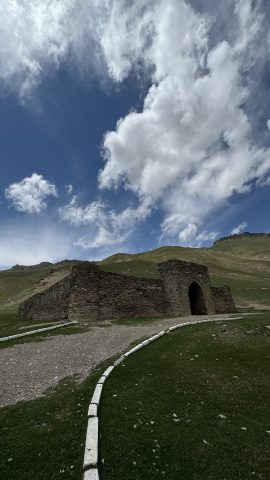
The At-Bashi market is where Kyrgyzstan reveals itself without pretense—no tourist traps, no staged performances, just the quiet rhythm of daily life in a highland town. Nestled in a valley between the Tian Shan ranges, At-Bashi is a small place with a long memory, sitting along an ancient caravan route that once connected Central Asia to China. The town moves at its own pace, untouched by the rush of modern cities, and the market is its beating heart.
Unlike the bustling bazaars of Osh or Bishkek, this one is unassuming. There are no towering stalls draped in bright fabrics, no vendors shouting over each other. Instead, low brick and concrete shops line the rows, their wide awnings offering shade from the sun or shelter from sudden rain. The market sells everything a mountain town needs: groceries, clothes, tools, and spare parts for cars and motorcycles. But the real draw is livestock—cows, sheep, horses, sometimes camels—brought in from surrounding villages. Trading here is a slow, deliberate affair, more about conversation than haggling. Deals are sealed with handshakes, not just for the sale but as part of a tradition passed down through generations.
Mornings start before dawn, when herders arrive on foot, horseback, or in weathered trucks, driving their animals from distant pastures. The air fills with the lowing of cattle and the murmur of negotiations. Everyone knows each other here, and prices are named upfront—no aggressive bargaining, just a quiet understanding that if today’s offer doesn’t work, tomorrow might bring a better one. It’s a way of doing business that feels rooted in the old nomadic code, where trust matters more than quick profit.
Beyond livestock, the market supplies the essentials of mountain life. Stalls sell flour, rice, sugar, tea, and spices—goods that can’t be grown in the thin highland soil. There are rows of warm wool socks, thick shawls, and sheepskin coats called *ton*, practical clothing for nights that turn cold even in summer. Saddles, bridles, and leather goods fill another section; horses are a necessity here, not a luxury, and a well-made saddle can be worth more than the animal itself, handed down through families like an heirloom.
Food is where the market truly comes alive. Freshly butchered meat hangs in the open, beside wheels of homemade cheese, clay jugs of *ayran* and *kumis*, and flatbreads pulled hot from the *tandoor*. The scent of woodsmoke, herbs, and spices lingers in the air, a reminder that food here is more than sustenance—it’s culture. Locals prefer the market over shops, trusting that everything is fresh, unprocessed, and fairly priced. In season, wild berries—sea buckthorn, barberry, rose hips—appear in large basins, scooped by the handful into bags or pockets.
The market is also a social hub, where people catch up on news, gossip, and the latest from neighboring villages. Who got married, who lost their flock to wolves, where the best pastures are this year—all of it gets discussed over cups of tea. For outsiders, it’s a rare glimpse into how life really works in Kyrgyzstan’s highlands. There are no English menus, no souvenir stalls, just the unfiltered reality of a place where people rely on each other and the land.
The architecture is simple, built for function rather than beauty. Shops are made from whatever materials were available—brick, concrete, corrugated metal—with no frills or decorations. The awnings provide relief from the elements, and a small central square offers a place to sit and talk. The market blends seamlessly into the surrounding neighborhoods, with no clear divide between commerce and daily life. In a town this size, everyone knows everyone, and the market is as much a part of the community as the homes around it.
On weekends, the market transforms. People pour in from nearby villages, turning the usually quiet rows into a lively scene. Vendors appear with rare goods—Chinese electronics, Turkish shoes, Indian spices—and the air buzzes with activity. Children dart between stalls, elders sip tea on benches, and the occasional trader offers old coins or silver jewelry. It’s less a market than a gathering, a chance to spend hours watching the ebb and flow of mountain life.
Winter changes everything. Snow dusts the rooftops, frost clings to the stalls, and people bundle up in layers. Trade slows but doesn’t stop. This is when locals stock up for the long cold months, buying dried meat, frozen fish from Issyk-Kul, and sacks of flour. Livestock huddle in pens, wrapped in blankets to keep warm. Despite the chill, the atmosphere stays warm—people greet each other, share news, and invite neighbors for tea. The market becomes a lifeline, a place of connection in a season that can feel isolating.
For first-time visitors, the At-Bashi market might feel stark, even harsh. There’s no exotic charm, no postcard-perfect scenery. But that’s the point. This is Kyrgyzstan without filters—proud, self-sufficient, and unapologetically real. There’s no room for illusions here, just the quiet dignity of a place where life moves to its own rhythm, indifferent to those who come to watch. If you’re lucky, you might even feel like part of it, if only for a little while.