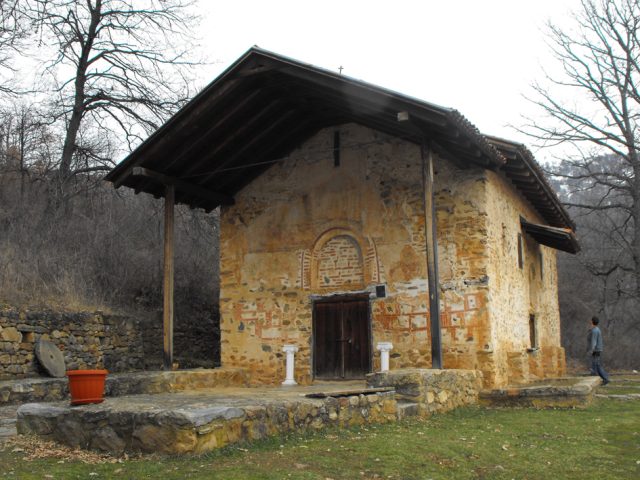
Perched on a hill overlooking the quiet town of Dečani, the ruins of this medieval fortress carry the weight of centuries in their weathered stones. From this vantage point, the landscape unfolds in layers—rooftops of the town below, the winding river cutting through the valley, and the distant ridges of the mountains fading into the horizon. The location was no accident. In an era when control of the land meant survival, this hill offered a clear advantage: any approaching threat would be visible long before it reached the walls. The fortress wasn’t just a military stronghold; it was a statement, a symbol of power etched into the very terrain.
Little is known for certain about its origins, but historians agree it likely dates back to the 14th century, when this region was part of the Serbian Empire. The Balkans were a turbulent place then, with shifting borders and constant conflict. Fortresses like this one served as both shield and declaration—places of refuge, but also assertions of authority. Dečani’s position made it strategically vital, and the fortress would have been central to the defense of the area. Who built it remains unclear. It could have been local nobles, or perhaps even the Serbian rulers themselves, reinforcing their hold on this corner of the empire. The lack of definitive records only adds to the mystery, leaving room for imagination to fill in the gaps.
What remains today is a skeleton of the past—crumbling walls, the stubs of towers, and the faint outlines of what might have been storerooms, barracks, or living quarters. The stones, rough-hewn and moss-covered, blend into the hillside as if nature has slowly reclaimed them. In places, shrubs and wildflowers push through the cracks, softening the harsh lines of the ruins. Time has worn the fortress down, but it hasn’t erased its presence. The ruins still command the landscape, a silent witness to the centuries that have passed. The best times to visit are in the quieter seasons—autumn, when the surrounding forests turn gold and red, or spring, when the valley bursts into green.
Reaching the fortress is part of the experience. The path begins in the heart of Dečani, winding upward through the town’s narrow streets and past old stone walls that enclose vineyards and gardens. The climb isn’t steep, but it takes a good twenty minutes, and the higher you go, the more the world below seems to shrink. By the time you reach the top, the air feels crisper, the wind stronger. The view alone makes the effort worthwhile, but there’s something else here—a sense of stillness, as if time moves differently on this hill.
There are no signs, no guides, no ticket booths. The fortress isn’t a museum; it’s a place for those who want to explore on their own terms. You can wander through the ruins, climb the remnants of the towers, or try to piece together the layout of the old walls. Occasionally, you might encounter other visitors, but they’re usually the kind of travelers who seek out places like this—quiet, unpolished, and rich with history. Most of the time, though, you’ll have the ruins to yourself, free to let your imagination wander through the past.
Dečani itself is a small town, but it holds a significant place in Serbian history. Just a short distance away stands the Visoki Dečani Monastery, one of the most important Orthodox monastic sites in the Balkans. The monastery and the fortress, though separated by time and purpose, are connected by the same thread of history. If the monastery was the spiritual heart of the region, the fortress was its guardian, standing watch over the valley for generations. Together, they paint a picture of medieval Serbia—a world where faith, defense, and daily life were intertwined.
Today, the fortress is more than just a historical relic. It’s a place where the past feels tangible, where the absence of crowds and commercialization allows for a deeper connection to the land and its history. There’s no noise here, no distractions—just the wind, the stones, and the occasional call of a bird. To some, it might look like nothing more than a pile of old ruins, but for those who listen, the fortress has stories to tell. Stories of the people who once lived within these walls, who fought, hoped, and dreamed. Their names are long forgotten, but their presence lingers in the very fabric of the place.
Visiting the fortress doesn’t require much preparation—just comfortable shoes, some water, and a willingness to step away from the usual tourist path. Early morning or late afternoon are the best times to come, when the light is softer and the shadows stretch long across the ruins. If you’re lucky, you might catch a moment when mist rolls in over the valley, transforming the fortress into something almost otherworldly, as if the centuries between then and now have momentarily dissolved.
The area around Dečani has plenty more to offer, and the fortress makes a good starting point for exploration. You could wander through the town’s quiet streets, stopping at a café for strong coffee and fresh pastries. Or you could venture further—to the monastery, the nearby mountains, or the river that once served as a natural barrier against invaders. But even if you never leave the hilltop, the fortress leaves a lasting impression. It doesn’t just show you history; it makes you feel it, in the rough texture of the stones, the whisper of the wind, and the quiet weight of the past.