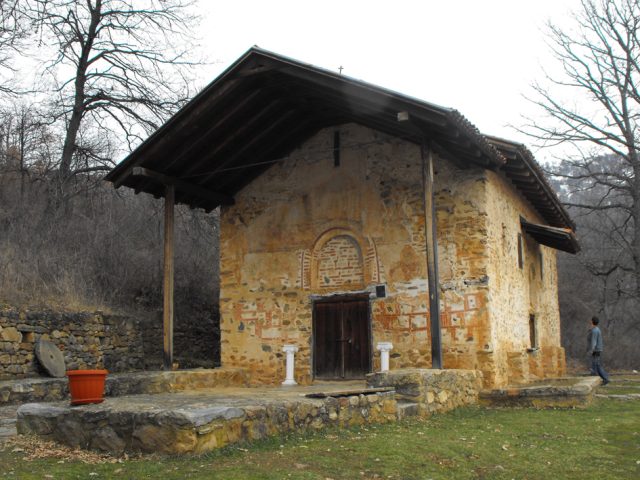
The library at Dečani is one of those rare places where books are more than just words on paper—they are vessels of memory, carrying the weight of centuries. Tucked within the walls of the Visoki Dečani Monastery in western Serbia, it sits in a landscape of quiet mountains and dense forests, where the stillness feels almost tangible. The monastery itself, founded in the 14th century by King Stefan Dečanski, is a masterpiece of medieval architecture and a living testament to the region’s spiritual heritage. The library is not just a part of it; it is a thread woven into the very fabric of its history.
This is a place where the past breathes. The library’s collection is not merely an assembly of books but a repository of knowledge painstakingly preserved by generations of monks, scholars, and scribes. Among its shelves are rare manuscripts, liturgical texts, chronicles, and scientific works, many of them one-of-a-kind. Some date back to the 13th and 14th centuries, when the monastery was first established. There are Gospels, psalters, hagiographies, and even treatises on medicine, astronomy, and philosophy, all meticulously copied by hand onto parchment. Each volume tells a story not just of its content, but of the hands that created it and the time it has endured.
Architecturally, the library does not stand out against the monastery’s stone walls, but its significance is immeasurable. It occupies an inner chamber where light filters through narrow windows, casting a soft glow over the shelves. The air is thick with the scent of aged paper and beeswax, and the thick stone walls maintain a cool, steady temperature, protecting the fragile manuscripts from the ravages of time and humidity. The books are not displayed for casual browsing—access is carefully controlled, as many of the volumes require delicate handling. This is not a place for hurried visits; it demands reverence.
Visoki Dečani Monastery, home to the library, has long been more than a spiritual center. It is a place where the fates of different peoples and cultures have intertwined over centuries. Founded by a Serbian king, it has remained a bastion of Orthodoxy in a region where empires and religions have risen and fallen. During Ottoman rule, the monastery faced repeated attacks but survived, its library intact. In the 20th century, as the Balkans were once again torn by conflict, the monastery found itself at another historical crossroads. Yet, through it all, the books endured.
Today, the library is open to researchers and pilgrims, though it is not a museum in the conventional sense. There are no crowds here, no tourist traps—only those who come seeking quiet reflection or a connection to something authentic. The monks tend to the collection with care, occasionally guiding small groups through the monastery’s history and its treasures. For many, a visit to the library is less about sightseeing and more about encountering a living tradition, one that has weathered the storms of time.
The surroundings of Dečani are as compelling as the monastery itself. The complex sits in the valley of the Dečani Bistrica River, framed by the rugged peaks of the Prokletije Mountains, which are dusted with snow in winter and cloaked in green forests in summer. The local way of life moves at a slower pace, shaped by old customs and the rhythms of nature. Nearby villages still feature stone houses with wooden balconies, and the forests are home to wildlife that thrives in this untamed landscape. Together, these elements create an atmosphere where the monastery and its library feel not like relics of the past, but like integral parts of a world that still breathes.
The library at Dečani is not just a collection of books—it is a place where time moves differently. Here, hours can slip by unnoticed as you trace the spines of ancient volumes, listen to the monks’ stories, or simply sit in silence. This is not a destination for those seeking spectacle, but that is precisely why it lingers in the memory. In an age where everything seems to change too quickly, such places remind us that some things remain constant. The books, written centuries ago, still speak to those who are willing to listen.