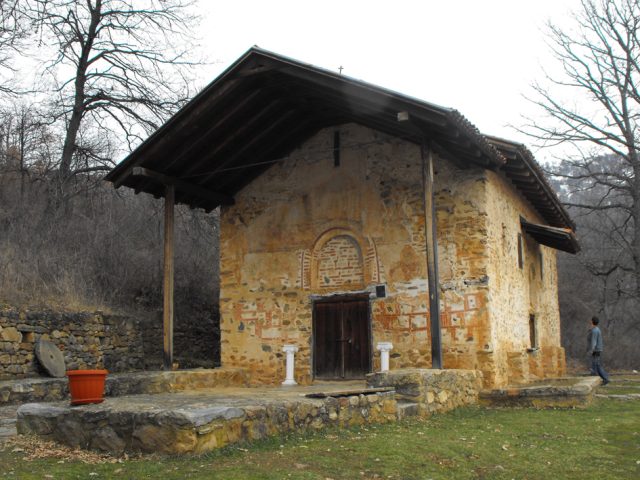
Saint Nicholas Church in Dečani is one of those quiet places where history lingers in the air like the faint scent of old incense. Tucked away in a small town in western Serbia, far from the usual tourist trails, it stands as a modest yet enduring witness to centuries of faith, struggle, and everyday life. The church isn’t grand or imposing, but its walls hold stories that connect the past to the present in ways that feel almost tangible.
Built between the late 13th and early 14th centuries, the church is a fine example of medieval Serbian architecture, though it rarely appears in guidebooks alongside the more famous monasteries of the Raška or Metohija schools. Its design follows the classic Byzantine cross-in-square plan, with a central dome and thick stone-and-brick walls adorned with arched friezes and shallow niches. Inside, fragments of frescoes remain, their faded colors hinting at scenes from the Bible and the lives of saints. Time has worn them down, but even in their partial state, they offer a glimpse into the artistry and devotion of the era.
For centuries, Saint Nicholas Church was more than just a place of worship—it was the heart of the community. In medieval times, it served as a gathering point where villagers discussed matters of importance, stored documents, and marked significant events. During the Ottoman period, when foreign rule threatened to erase local traditions, the church became a sanctuary of identity. Services were held in Slavic, and the frescoes, though sometimes defaced, kept the memory of Orthodox heritage alive. The Ottomans tried to suppress such symbols, but places like this endured, becoming quiet acts of resistance through faith and remembrance.
When Serbia began to reclaim its independence in the 19th century, the church was restored after years of neglect. Some of the early repairs were clumsy, damaging parts of the frescoes, but the building was brought back to life. Today, it remains an active place of worship, though services are less frequent than in the bustling cathedrals of Belgrade or Novi Sad. For the locals, it’s not just a historical monument but a living part of their spiritual life.
The architecture of Saint Nicholas reflects the transitional period in Serbian church design. The dome, a hallmark of Orthodox tradition, is smaller and simpler than those in the grand monasteries of Kosovo. The bell tower, added later, carries the influence of Baroque, a reminder of how styles evolved over time. This blend of elements tells a story of a country shaped by different eras, each leaving its mark on the landscape.
Inside, the light filters softly through narrow windows, illuminating the worn stone floor and the wooden iconostasis. The air is cool and still, carrying the weight of centuries. In one corner, an old lectern holds a weathered Gospel, its pages yellowed with age. The remaining frescoes—faces of saints, fragments of biblical scenes—are barely visible in places, but their presence is undeniable. There’s no opulence here, just a quiet authenticity that feels more profound than any gilded ornament.
Dečani itself is a quiet town nestled in a valley surrounded by mountains. Its rhythm is slow, its streets unhurried. The town’s history is closely tied to the nearby Visoki Dečani Monastery, but Saint Nicholas Church has its own place in the local imagination. It doesn’t draw pilgrims from around the world, but for those who live here, it’s a familiar and cherished landmark. In summer, festivals honor Saint Nicholas, filling the streets with music and laughter. In winter, the church offers a quiet refuge from the outside world.
Visiting Saint Nicholas isn’t like stepping into a museum. There are no explanatory plaques or guided tours lingering at its doors. It doesn’t demand attention or try to impress. It simply exists, as it has for centuries, holding within its walls the echoes of prayers, the hopes of generations, and the quiet resilience of a community. If you find yourself in this part of Serbia, take a moment to step inside. Stand in the dim light, listen to the silence, and let the past speak for itself.