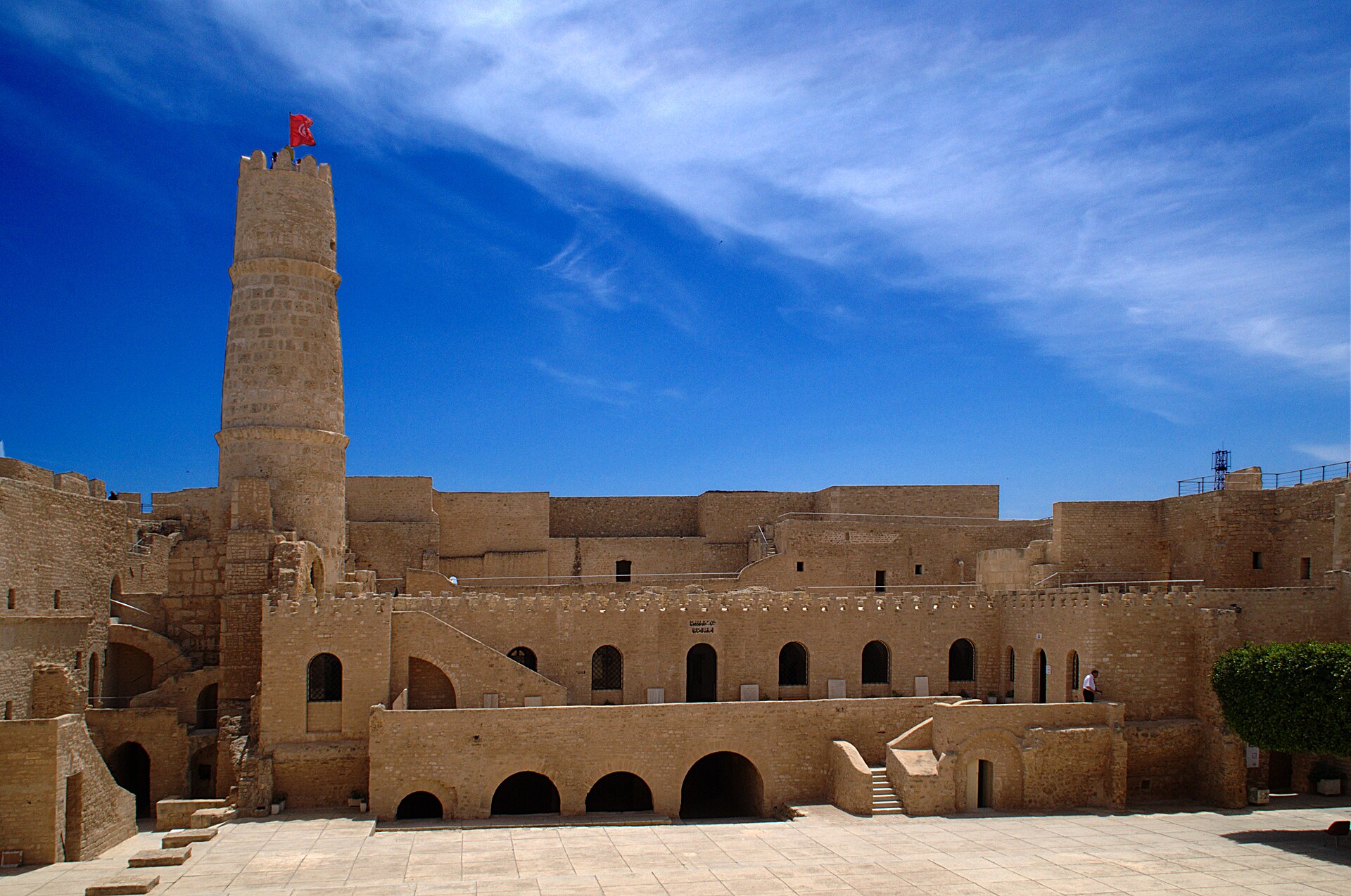
Monastir’s ribat is one of those places where history feels almost tangible, as if the stones themselves remember the footsteps of the people who once walked here. Perched on the edge of the Mediterranean, this fortress-monastery has stood for over a thousand years, watching the sea and the city change around it. Built in the 8th century, it was part of a network of ribats—fortified Islamic monasteries—along the North African coast, where warrior-monks kept watch for invaders and prayed in equal measure. Over time, it grew from a simple defensive outpost into a sprawling complex, its walls absorbing layers of history from the Aghlabid dynasty to the Ottoman era.
The architecture of the ribat is a quiet testament to its dual purpose. The thick, high walls and square towers were designed to repel attacks, their rough-hewn stone giving the place a stern, unyielding appearance. Yet inside, the courtyards and arcades soften the harshness, with columns and arches arranged in a way that feels almost meditative. The main courtyard, with its central well, was where the garrison would gather, but it also served as a place of reflection. The prayer hall, tucked away in one corner, is simple and unadorned, its mihrab pointing toward Mecca with a quiet certainty. From the top of the tower, the view stretches over the city and the sea, a reminder of why this place was built—to see and be seen.
What makes Monastir’s ribat unusual is how well it has survived the centuries. Unlike many of its counterparts along the coast, which were either abandoned or repurposed beyond recognition, this one has remained largely intact. Part of that is due to its location—Monastir was never as heavily contested as some of its neighbors, so the ribat escaped the worst of the sieges and reconstructions. But it’s also because the city grew around it, integrating the fortress into its daily life rather than pushing it aside. Even today, the ribat isn’t just a relic; it’s a living part of Monastir, a place where locals and visitors alike come to wander its ramparts or sit in the shade of its arches.
The ribat has also played a role in more recent history. In the 20th century, it became a filming location for *Monty Python’s Life of Brian*, its ancient walls standing in for the Holy Land. The choice wasn’t arbitrary—there’s something about the ribat’s weathered stone and open courtyards that feels timeless, as if it could belong to any era. That sense of continuity is part of what draws people here. You can stand on the same spot where a medieval monk once scanned the horizon for ships, and then look out at the modern city sprawling toward the sea. The contrast isn’t jarring; it feels natural, as if the past and present are simply different layers of the same place.
Walking through the ribat, it’s easy to imagine the lives of the men who once lived here. They were a mix of soldiers and ascetics, trained to fight but also to pray. The ribat wasn’t just a fortress; it was a spiritual retreat, a place where discipline and devotion went hand in hand. The cells where they slept are small and austere, with narrow windows that let in just enough light to read the Quran. The communal spaces—like the refectory and the baths—speak to a life of routine, where every action had its time and place. Even the well in the courtyard, which still holds water, hints at the self-sufficiency of the place. Rainwater was collected, food was stored, and for months at a time, the ribat could function entirely on its own.
Beyond its military and religious significance, the ribat has always been a landmark. For centuries, sailors used its tower as a navigational aid, its silhouette against the sky guiding them safely to shore. Pilgrims traveling to Mecca would stop here, seeking blessings before continuing their journey. And for the people of Monastir, it has long been a symbol of the city’s resilience. The ribat has seen empires rise and fall, from the Aghlabids to the Ottomans to the French colonial period, yet it has endured. That endurance is part of its appeal—it’s not just a monument to the past, but a reminder that some things last.
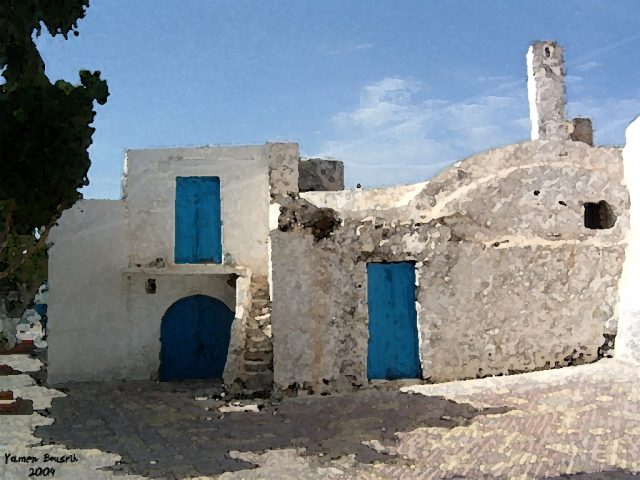
Today, the ribat is one of the first things you notice when approaching Monastir. Its massive walls and tower rise above the low-slung buildings of the medina, a stark contrast to the whitewashed houses and narrow streets below. Inside, the atmosphere is peaceful, almost serene. The sound of the sea carries over the walls, mixing with the occasional call to prayer from a nearby mosque. There are no crowds here, no pushy vendors—just the quiet rhythm of a place that has seen countless visitors come and go. Some come for the history, others for the views, but most leave with the sense that they’ve stepped into a story much larger than themselves.
The ribat’s location makes it a natural starting point for exploring Monastir. From its ramparts, you can see the Bourguiba Mausoleum, another of the city’s landmarks, as well as the marina and the long sweep of the beach. The medina is just a short walk away, its labyrinthine alleys offering a glimpse into a way of life that has changed little over the centuries. But even if you never leave the ribat, you’ll have seen something essential about Tunisia—a place where the past isn’t just preserved, but still very much alive. The stones here have witnessed a thousand years of history, and they’re not done telling their story yet.