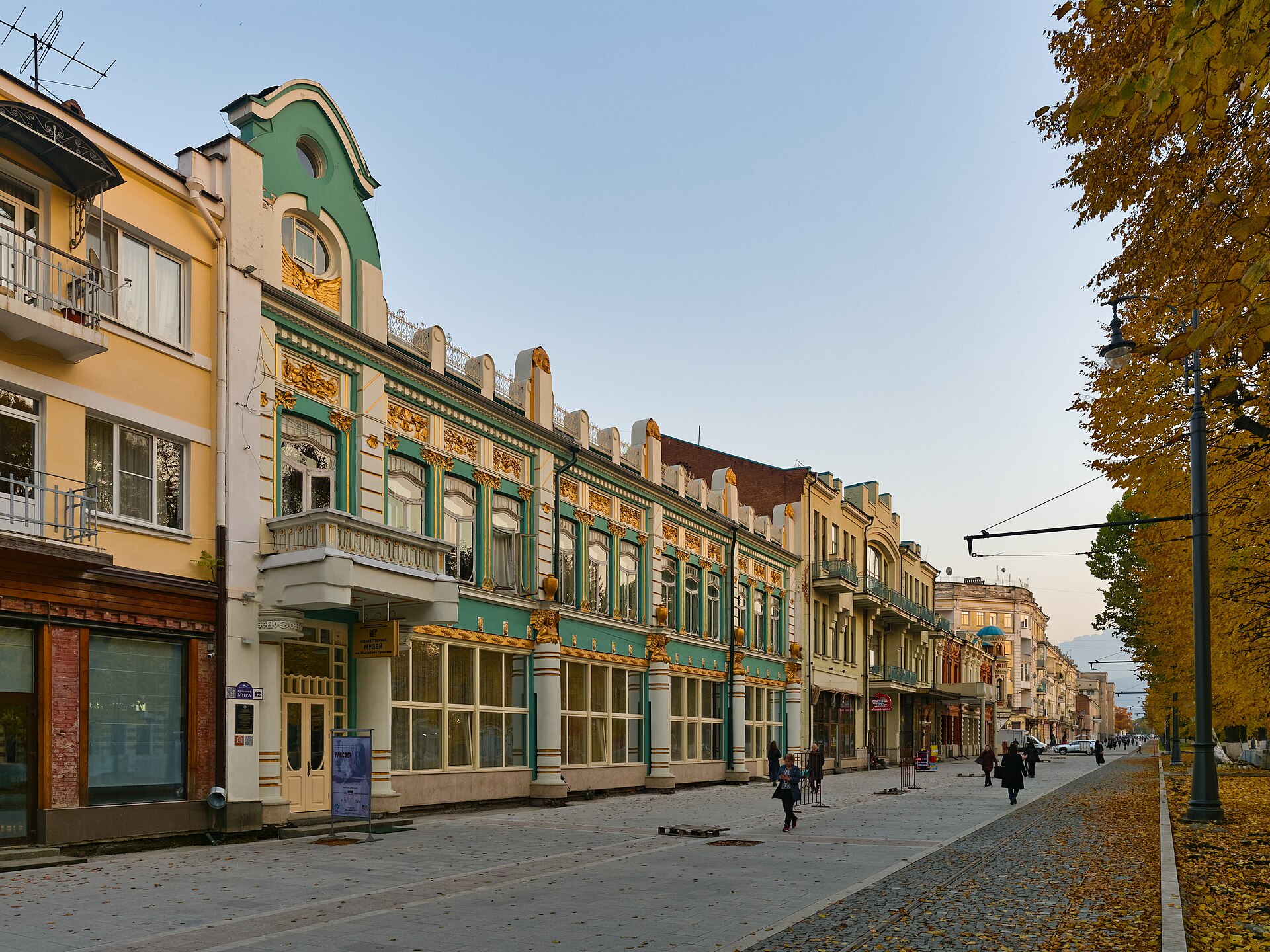
Vladikavkaz is a city where time feels layered, where the past lingers in the details of daily life. The M. Tuganov Republican Art Museum stands as one of those quiet places where history isn’t just remembered—it’s still alive. Named after Makharbek Tuganov, a painter whose work became inseparable from the spirit of North Ossetia, the museum holds more than just art. It holds stories of a land where mountains shape both the landscape and the people who live among them.
The building itself tells its own story. Built in the late 19th century, it was once the home of a merchant before becoming a space for culture. The architecture carries the weight of its age—high ceilings, tall windows, and ornate stucco work on the facade. Inside, the rooms are arranged not for spectacle, but for contemplation. There’s no rush here. Visitors can move from one piece to the next, letting their attention settle where it will, whether on a sweeping landscape or a quiet portrait.
The collection spans centuries and styles, but its heart lies in the art of Ossetia. Tuganov’s paintings are the most personal part of the museum, capturing the rhythms of mountain life with a rare intimacy. His subjects—shepherds resting on sunlit slopes, women in traditional dress, the play of light on stone—feel less like posed scenes and more like moments plucked from memory. Beyond his work, the museum also features Russian artists from the 19th and 20th centuries, some of them well-known, others less so. But the real draw is seeing how these different traditions intersect, how the same land inspired different voices.
What makes the museum special isn’t just its permanent collection, but the way it stays in motion. Temporary exhibitions bring in new perspectives, whether showcasing contemporary artists from the region or revisiting the work of masters through a fresh lens. Some shows focus on history, others on the everyday, but all of them share a sense of connection—to place, to people, to the way art can hold onto things that might otherwise slip away. It’s not about grand statements; it’s about the quiet power of seeing something familiar in a new light.
The art of the North Caucasus has a language all its own, shaped by the meeting of cultures and the weight of shared history. Some pieces here depict pivotal moments, others the small, unremarkable details of life. But together, they form a kind of conversation—one that spans generations. Walking through the galleries, you get the sense that the museum isn’t just preserving the past; it’s keeping that conversation alive. The respect for tradition is palpable, but so is the awareness that art must keep moving forward.
For those who want more than just to look, the museum offers workshops, lectures, and educational programs. These aren’t just for artists or experts; they’re for anyone curious enough to pick up a brush or listen to a story. It’s a way to make art feel less like something distant and more like something that belongs to everyone. For younger visitors, especially, these programs can turn abstract ideas into something tangible, something that feels like part of their own world.
Vladikavkaz is a city of contrasts—where Soviet-era buildings stand beside older structures, where the hum of modern life mixes with the echoes of the past. The Tuganov Museum fits right into that rhythm. It doesn’t demand attention; it earns it. You might spend an hour here or the better part of a day, depending on how much time you want to give it. There’s no pressure, no scripted experience. Just the chance to wander, to notice, to let the art work on you in its own time.
Leaving the museum, the city feels different. The streets, the people, even the distant mountains—everything seems to carry a little more weight. That’s the thing about places like this: they don’t just show you art. They change the way you see the world around you. The Tuganov Museum isn’t just a stop on a map. It’s one of those rare places where the past isn’t just remembered—it’s still speaking.