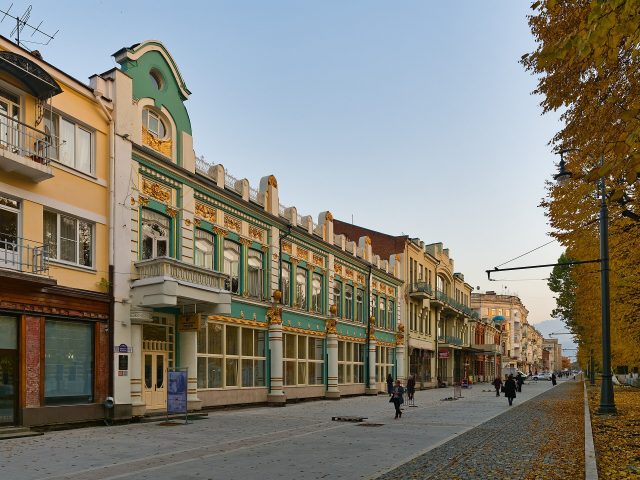
Karmadon Gorge is one of those places in the Caucasus where nature seems to have gathered its most vivid colors and shapes, as if to prove just how breathtaking it can be. Starting just outside Vladikavkaz, where the Genaldon River carves its way through the mountains, the gorge forms a narrow passage between towering cliffs. The road here winds through villages where time moves slower, where flat-roofed houses with carved shutters speak of people who have always lived with the mountains—not just as a backdrop, but as part of their existence.
The gorge is known for more than its beauty. In 2002, the Kolka Glacier collapsed here, burying the village of Nizhny Karmadon and claiming dozens of lives. Today, a modest but striking memorial stands at the site—a cross made of stones and a plaque bearing the names of those lost. It serves as a quiet reminder of how fragile the line is between nature’s grandeur and its destructive power. Locals say the gorge changed after the disaster, becoming quieter, as if the land itself was mourning.
Stretching for dozens of kilometers, the gorge is a long canyon where the landscape shifts with every turn. In its upper reaches, accessible only to experienced hikers, the views open up to glaciers and snow-capped peaks, the air so crisp it feels like breathing in the essence of the mountains. Lower down, near the road, the Genaldon River rushes over boulders, while the slopes are covered in dense forests that hide wild berries in summer and blaze with red and gold in autumn. It’s easy to imagine shepherds guiding their flocks along these paths or travelers resting in sheltered valleys, just as they have for centuries.
There aren’t many architectural landmarks here, but the few that exist carry a special weight. The small church in the village of Staraya Saniba, built in the early 20th century, stands on a hill as if watching over the gorge. Its white walls contrast sharply with the dark cliffs around it. Inside, the cool dimness and icons painted by local artisans feel alive, almost as if the past lingers in the air. Nearby, old gravestones with inscriptions in Ossetian serve as silent witnesses to those who lived here long before.
This isn’t a place for rushing. To truly experience Karmadon Gorge, you need to spend a day or two wandering its trails, listening to the river, and reflecting on how much here remains unchanged despite the passage of time. In summer, visitors come to bathe in the thermal springs near Verkhny Karmadon, where hot, sulfur-scented water bubbles up from the earth—a welcome relief after a long hike. Winter transforms the gorge into a world of snow and ice, where only the most determined venture.
The locals treat the gorge with deep respect, almost reverence. They understand that the mountains can be generous but also unforgiving. That’s why visitors are expected to tread lightly—no loud noises, no litter, no sense of entitlement. Instead, those who come here feel like temporary guests, privileged to witness one of the Caucasus’ most stunning and severe landscapes.
Unlike typical tourist spots with carefully planned routes and viewpoints, Karmadon Gorge has no signs, no crowds, no souvenir stalls. There are only the mountains, the river, the wind, and a silence so profound it can feel louder than any noise. That’s why people return—because some places aren’t just visited; they’re felt.