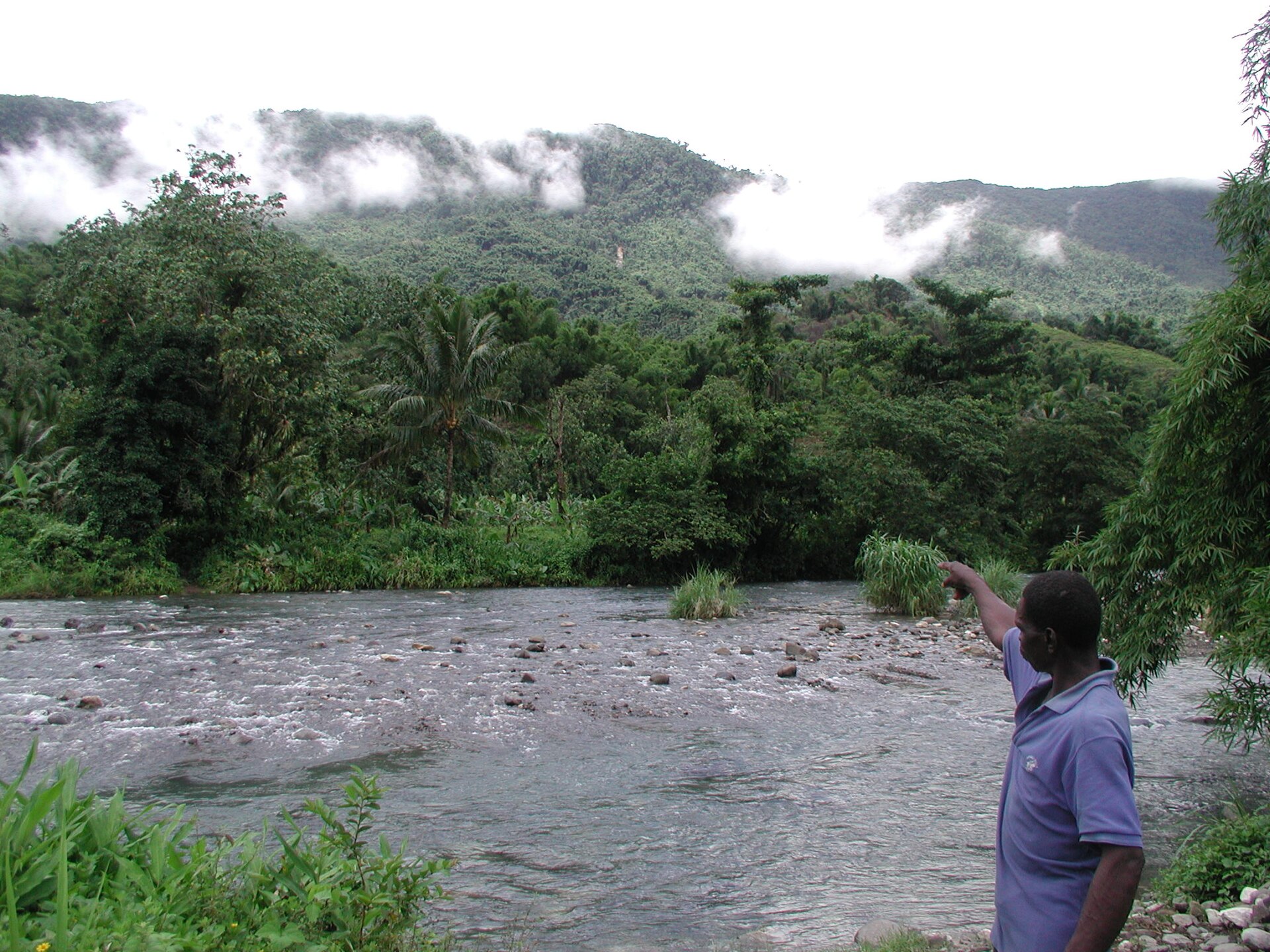
Rio Grande is one of those places that feels like it exists outside of time. Flowing from the misty heights of the Blue Mountains down to the Caribbean Sea near Port Antonio, the river winds through dense tropical forests where the air is thick with the scent of damp earth and ripe bananas. There are no crowded resorts here, no blaring music from beach bars—just the quiet murmur of water over stones and the occasional call of a bird hidden in the foliage. The river moves at its own pace, and so does everything around it.
Though not the longest or widest river on the island, Rio Grande has a way of making itself unforgettable. It begins high in the mountains, where the air is cool and crisp compared to the heat of the coast, then snakes through valleys and hills before emptying into the sea. Along its banks, towering bamboo sways in the breeze, their reflections rippling in the water like a living mirror. For generations, this river wasn’t just a waterway—it was a lifeline. In the early 20th century, when bananas were Jamaica’s most valuable export, the river served as a natural highway, carrying the fruit from inland plantations to the port at Port Antonio.
The history of Rio Grande is tied to the rise of Port Antonio itself. What was once a quiet fishing village transformed in the late 1800s when American and British investors saw potential in the area. They built banana plantations and used the river to transport their harvest, loading the fruit onto bamboo rafts steered by local men known as rafters. These rafts, woven from bamboo and lashed together with vines, became a defining feature of the river. Today, the tradition continues, though now it’s more about the experience than the trade. A ride down the river on one of these rafts is less about sightseeing and more about slowing down—letting the current dictate the pace while the rafter guides the journey with stories of the land and its people.
There’s something almost meditative about drifting along Rio Grande. The raft glides silently over the water, the only sounds being the dip of the rafter’s pole and the rustle of leaves overhead. Occasionally, the raft pulls ashore, offering a chance to stretch your legs on narrow paths that lead to hidden waterfalls or groves of ginger and cocoa. The river has a way of making time feel elastic—minutes stretch into hours, and the outside world fades into the background. It’s the kind of place where you might find yourself staring at the play of light on the water, lost in thought, only to realize you’ve been doing so for far longer than you intended.
For the people who live along its banks, Rio Grande is still very much a part of daily life. In villages near Port Antonio, the river provides fresh water, a place to fish, and even a means of getting from one place to another. Children learn to swim in its calm pools, while older generations sit on the banks, watching the water flow by as they share memories of years gone by. During the rainy season, the river swells, its waters turning a muddy brown, but even then, it retains a certain wild beauty. The locals know its moods—the way it rises after a storm, the spots where the current runs strongest—and they’ve learned to move with it rather than against it.
Like many places in Jamaica, Rio Grande is wrapped in stories. Some say the river is home to a spirit, a woman with long hair who appears on the surface to warn fishermen of coming storms. Others believe the water has healing properties, that bathing in it can restore vitality. There’s no proof, of course, but that doesn’t stop the tales from being told. They add a layer of mystery to the river, turning it into something more than just a body of water. It becomes a character in its own right, a silent witness to the lives of those who depend on it.
The area around Rio Grande is a haven for wildlife. The forests along its banks are home to rare birds like the Jamaican tody—a tiny, vibrant green bird with a splash of red on its throat—and orchids that cling to the trees. In the water, freshwater turtles glide beneath the surface, and small fish dart between the rocks. For anyone who enjoys nature, it’s a place where you can spend hours simply observing, undisturbed by the noise of modern life. The river and its surroundings feel untouched, as if they’ve been waiting for you to discover them.
Port Antonio, where the river meets the sea, has always been overshadowed by Jamaica’s more famous destinations. But that’s part of its charm. There are no sprawling resorts here, no tourist traps—just the quiet rhythm of a small coastal town. The streets are lined with pastel-colored houses, the air smells of fried fish and fresh coconut, and reggae music drifts from open windows. Rio Grande is the heart of this place, the thread that connects the past to the present. It’s where you go when you want to experience Jamaica beyond the postcards—where the real island still exists, unfiltered and unhurried.
If you ever find yourself on Jamaica and want to see something beyond the usual tourist spots, make your way to Rio Grande. Pack a light lunch, grab a cold drink, and find a rafter willing to take you down the river. There’s no schedule, no rush, no need to be anywhere else. Just the water, the trees, and the sky—and the quiet understanding that some places are meant to be savored, not hurried through. The river will do the rest.