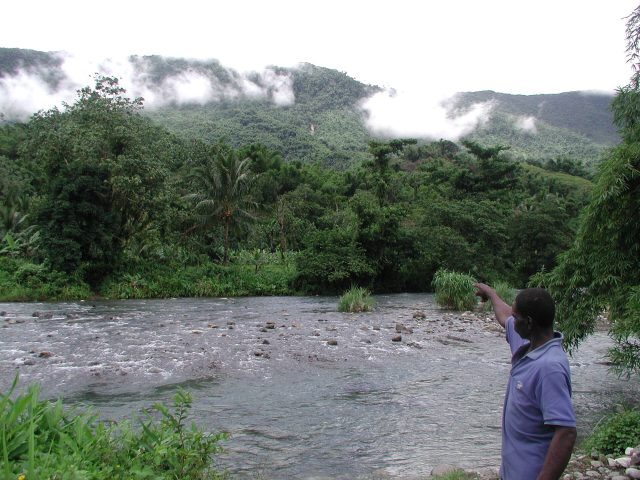
The Blue Mountains of Jamaica reveal the island’s wild beauty at its most dramatic. Rising along the eastern spine of the country, these peaks are covered in dense, mist-laced forests that shift between emerald and silver as clouds drift through the valleys. The Blue and John Crow Mountains National Park spans over seven hundred square kilometers of rugged landscape, where nature, history, and culture intersect.
The mountains may be modest by global standards—Blue Mountain Peak reaches just over two thousand meters—but their significance to Jamaica is vast. They serve as the island’s natural reservoir, feeding rivers and streams that supply water to much of the country. The forests here are a vital ecosystem, home to rare and endemic plant species, their air thick with the scent of damp earth and tropical foliage. The slopes also produce Jamaica’s famous coffee, grown in rich volcanic soil. The beans, ripened slowly by the cool climate, yield one of the world’s most sought-after brews.
The history of these mountains runs deep. The John Crow range, named after a local vulture, was once a refuge for the Maroons—escaped enslaved Africans who fled colonial plantations and built communities in the impenetrable forests. Here, they preserved their traditions, language, and knowledge of the land, resisting capture for generations. The park now protects both the ecosystem and the memory of this struggle. Some descendants of the Maroons still live in the area, maintaining a way of life that has endured for centuries.
There are no grand buildings here, no man-made monuments—just the mountains themselves. Trails wind through the trees, leading to hidden waterfalls, caves, and viewpoints where the Caribbean Sea stretches below. One of the most striking spots is Blue Hole Falls, where water plunges into a natural pool surrounded by sheer cliffs and lush vegetation. From certain vantage points, the entire island unfolds beneath you, the coastline dissolving into the horizon.
Hiking is the best way to experience the park. Trails range from gentle walks to multi-day treks. The most famous route leads to the summit of Blue Mountain Peak, where sunrise is one of the most spectacular sights in the Caribbean. As dawn breaks, the sky turns shades of pink and gold, and the clouds below glow. Many who make the pre-dawn climb describe it as unforgettable. Even shorter walks through the forest offer a sense of stepping into another world—one of quiet, towering trees, and crisp air.
The park’s biodiversity is remarkable. Rare birds, including parrots and hummingbirds, dart through the canopy, while unique plants thrive in the underbrush. Giant tree ferns and orchids bloom in season, turning the landscape into a vivid display. As you climb higher, the vegetation changes—damp rainforest gives way to drier shrubland and grassy clearings, each elevation hosting its own ecosystem.
The weather in the Blue Mountains is unpredictable. At the base, the air can be thick and warm, while the peaks are often cool and windy. Fog rolls in without warning, especially in the mornings, shrouding the slopes. Visitors should come prepared for sudden changes—sunshine can turn to rain in minutes, and the wind at the summit can be fierce. But that unpredictability is part of the appeal. There’s a thrill in not knowing what lies around the next bend.
Port Antonio, the nearest town, serves as the gateway to the Blue Mountains. Unlike the island’s busier resort areas, this small coastal city moves at its own pace. The streets are lined with pastel-colored houses, and the harbor is dotted with fishing boats. It’s a good place to sample Jamaican food—jerk chicken, fresh seafood, or ackee and saltfish—before heading into the mountains. Many tours start from Port Antonio, and local guides know the trails well, sharing stories of the land.
The Blue Mountains slow time down. There’s no rush here, no checklist of sights. The park isn’t meant to be conquered in a day—it’s meant to be felt. There are no crowds, no flashy attractions, just the quiet rhythm of the forest. That’s why so many who visit return—not just for the views, but for the way the mountains make them feel. Whether it’s watching the sunrise from the peak or standing on a ridge with the wind in your face, the Blue Mountains leave an impression that lingers.