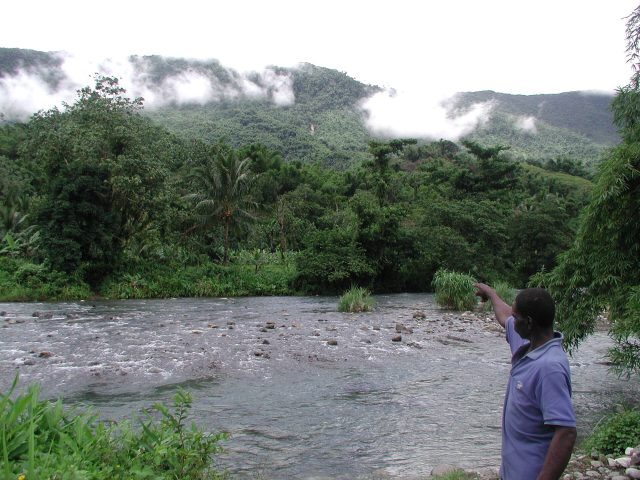
Frenchman’s Cove is one of those rare places in Jamaica where time seems to slow down, and the natural world takes center stage. Tucked away on the island’s northeast coast, just outside Port Antonio, it feels worlds apart from the bustling resorts of Negril or Montego Bay. There are no crowds here, no blaring music, no pushy vendors—just quiet, broken only by the rustle of palm fronds and the gentle lap of waves against the shore.
The beach is framed by dense tropical vegetation that spills right down to the water’s edge. The sand isn’t the blinding white of postcard-perfect shores; instead, it’s soft and golden, with a faint earthy hue, as if it’s been gently sifted from the land itself. Tall coconut palms line the shore, their trunks bent by the wind, their fronds forming a natural canopy that offers shade from the midday sun. The water in the cove is clear, with a subtle turquoise tint, and even on the hottest days, it stays cool, inviting you to wade in without hurry.
This stretch of coastline has a history that stretches back to Jamaica’s colonial era, when Port Antonio was one of the Caribbean’s most important ports. In the 18th century, French ships often anchored in this sheltered bay, giving the place its name—Frenchman’s Cove. Some say pirates and smugglers also used it as a hideout, slipping in under the cover of darkness or waiting out storms in its calm waters. Today, there’s little trace of that adventurous past, but the sense of seclusion remains, drawing those who prefer stillness over excitement.
The beach itself is small, just a few hundred meters long, and that’s part of its charm. There’s no need to stake out a spot or fight for a lounge chair—there’s enough space for everyone who comes here. Entry is free, though in recent years, a few private areas have sprung up with sunbeds and a small bar serving fresh cocktails or grilled local fish. Even these modest touches don’t disrupt the harmony; everything is arranged to let the landscape take the lead.
The water in the cove is calm, with no strong currents, making it perfect for swimming. The seabed is mostly sandy, with occasional rocky patches covered in seaweed. At low tide, you can wander along the shore, spotting small fish and crustaceans in the shallow pools left behind. Snorkeling here isn’t as vibrant as in Jamaica’s southern waters, but the mangrove-lined edges of the cove offer clear, untouched shallows where the underwater world feels almost untouched.
Surrounding the beach are low hills blanketed in thick forest. If you follow one of the narrow paths upward, you’ll be rewarded with a view of the entire cove—a small, sheltered inlet that looks like it was designed for solitude. From above, the water shifts in color throughout the day: silvery in the morning, bright blue at noon, and warm gold as the sun sets. Those who stay until evening might see the moon rise over the sea, its light shimmering on the water like scattered stars.
There are no large hotels or restaurants near Frenchman’s Cove, and that’s part of its appeal. Port Antonio is just a short drive away, and if you want a change of pace, you can head into town for shopping or a meal at a local café. The city still feels like old Jamaica, untouched by mass tourism—narrow streets, brightly painted wooden houses, and markets overflowing with tropical fruit and spices. But after a day in town, returning to Frenchman’s Cove feels like coming home, a place where you can sit on the sand, listen to the waves, and let your thoughts drift.
This isn’t a beach for those seeking nightlife or luxury. It’s for people who appreciate the quiet pleasures: warm sand between your toes, cool water on your skin, the whisper of leaves overhead. There’s no need to prove anything or rush anywhere. You could spend the whole day swinging in a hammock between two palms, or wandering the shore, collecting shells. Or you could just sit on a rock by the water and watch the sun dip below the horizon, painting the sky in shades of pink and orange.
Frenchman’s Cove isn’t the kind of place that leaves you with flashy memories. Instead, it lingers in a quieter way, as a sense of peace that stays with you long after you’ve left. It doesn’t demand attention; it simply exists, as unchanged as the landscape around it. And perhaps that’s why people keep coming back—to step into a world where time moves at its own unhurried pace, and the only thing that matters is the rhythm of the waves.