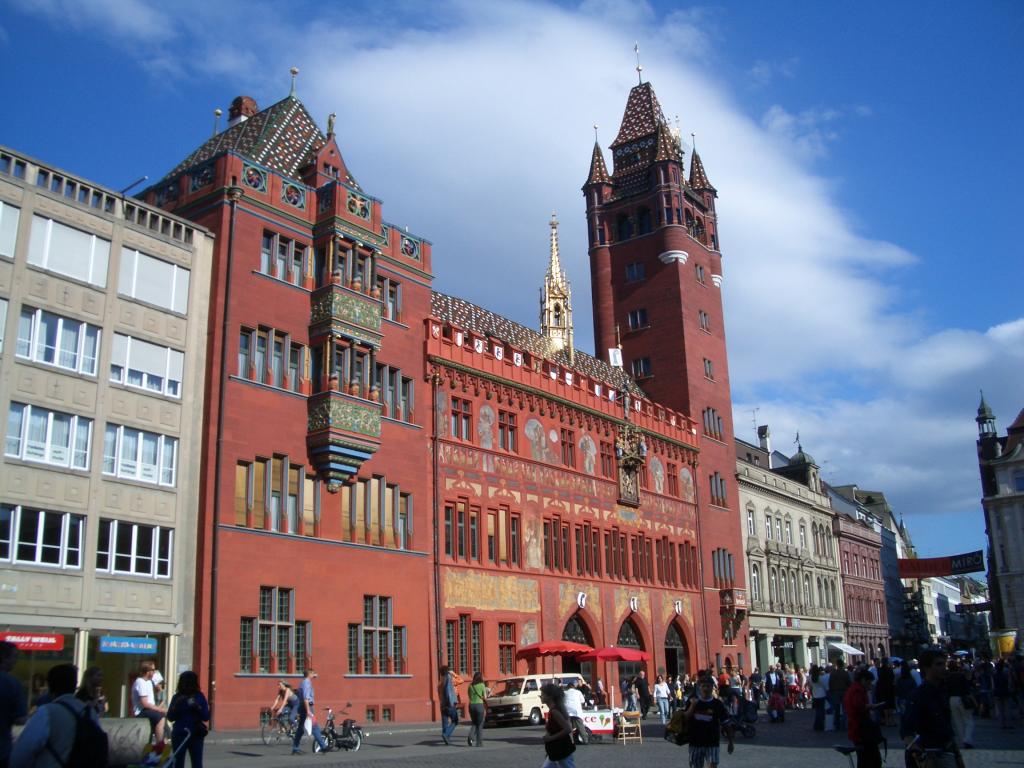
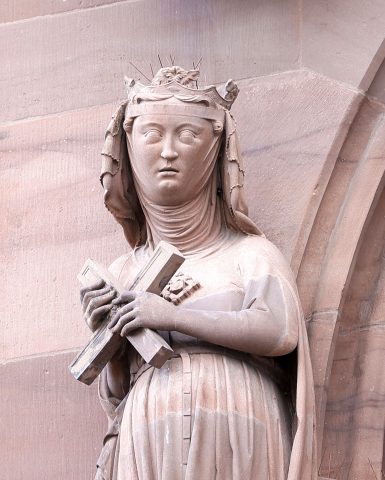
Basel’s Town Hall isn’t just another historic building—it’s where the city’s past and present intersect in a way that feels almost tangible. Standing on Market Square, it has witnessed centuries of trade, debate, and decision-making, its walls holding the echoes of Basel’s evolution from a medieval trading hub to a modern Swiss city. The building itself is a striking presence, its deep red sandstone facade and golden accents impossible to ignore. The intricate frescoes and statues adorning its exterior tell stories of power and legacy, from Roman emperors to local rulers, while the central clock tower looms over the square like a silent guardian of time.
The Town Hall’s history is deeply entwined with Basel’s own. After the devastating earthquake of 1356, the city rebuilt itself with determination, and the construction of the Town Hall became a symbol of that resilience. When Basel joined the Swiss Confederation in 1501, the building took on even greater significance, serving as the political heart of the region. Within its halls, treaties were signed, ambassadors were received, and speeches were delivered that shaped the course of history. Even today, it remains a working government building, where the city’s council continues to meet in rooms adorned with carved wood, painted ceilings, and antique furniture.
Architecturally, the Town Hall is a fascinating blend of styles, reflecting the different eras that have left their mark on it. Originally built in the Gothic style, it was later expanded with Renaissance elements, creating a harmonious yet dynamic appearance. The red sandstone gives the building a warm, almost inviting quality, while the gilded details add a touch of grandeur. The inner courtyard, surrounded by arched walkways, offers a quiet retreat from the bustle of the city. It’s easy to imagine medieval gatherings taking place here, the murmur of voices rising beneath the vaulted ceilings.
While much of the Town Hall is still used for official business, parts of it are open to visitors at certain times. Stepping inside feels like entering a different era, where the weight of history is palpable. The grand halls, with their ornate decorations and heavy wooden doors, hint at the ceremonies and discussions that have unfolded within them over the centuries. Outside, Market Square remains a lively space, especially during festivals and holidays. In winter, the Christmas market transforms the area into a festive wonderland, while summer brings open-air concerts and cultural events that breathe new life into the old stones.
For Basel, the Town Hall is more than just a landmark—it’s a reference point, a place where locals and visitors alike gather to orient themselves in the city. The square in front of it has always been a meeting place, a stage for public life. In the Middle Ages, merchants haggled over goods at its base, while townspeople gathered to hear the latest news. Today, it’s where tourists pause to take photos, where friends arrange to meet, and where the rhythm of the city can be felt most clearly. The past isn’t just preserved here; it’s still very much alive.
If you find yourself in Basel, take a moment to linger in front of the Town Hall. Look closely at the details—the way the light catches the gilded figures, the texture of the sandstone worn smooth by time. Step into the courtyard, where the air is cooler and the noise of the city fades into the background. If you’re lucky, you might hear the chime of the clock tower or see the heavy doors swing open as officials or guests emerge. In those small moments, it becomes clear that this isn’t just a relic of history. It’s a living part of Basel, still evolving, still shaping the city around it.