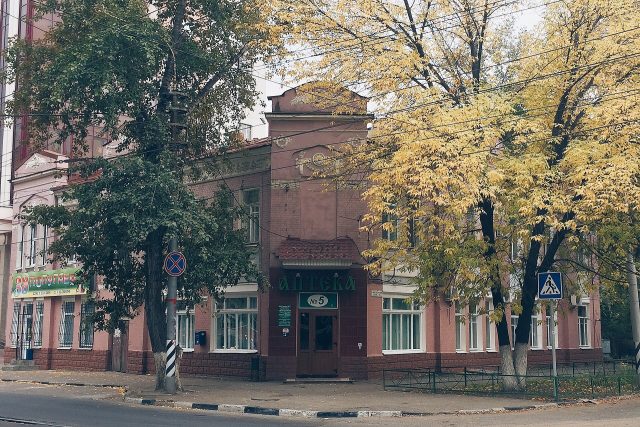
Kirov Avenue in Saratov is one of those streets that feels like the city’s spine—stretching through its history, its daily rhythms, and the quiet contradictions that make it real. It’s not just a thoroughfare but a kind of open-air museum where different eras coexist without fuss. Imperial-era mansions with their ornate facades stand shoulder to shoulder with Soviet administrative buildings, their stern lines softened by time. Wide sidewalks lead from old squares to modern shopping centers, and if you walk the length of the avenue, you’ll see how Saratov has grown and changed over two centuries without ever quite losing its character.
The street began as Moscow Street in the early 1800s, part of a grand plan to reshape Saratov into a proper provincial capital. Back then, the city was booming as a trade and industrial hub along the Volga, and the new road was meant to connect the center with the river docks. The first buildings here were classic examples of the era—columns, stucco details, and spacious courtyards. A few of them still survive, though often altered by time. The former Noble Assembly building, once the site of lavish balls, now houses the regional philharmonic. Its architecture still stands out, a quiet reminder of the city’s more formal past.
In the Soviet years, the street was renamed after Sergei Kirov, a prominent Bolshevik leader whose name was stamped across the country in those decades. The 1930s to 1950s brought dramatic changes: Stalinist architecture arrived in full force, with grand buildings, broad boulevards, and an emphasis on monumentality. Saratov State University’s main building, constructed in the 1950s, became one of the avenue’s defining landmarks. Its massive portico and sculptural groups give it a weighty, almost ceremonial presence. Around the same time, the first high-rise apartment blocks appeared, setting the tone for the city’s later development.
Today, Kirov Avenue is where Saratov’s daily life unfolds. It’s a place for business, shopping, and leisure, but also for the small, unplanned moments that make a city feel alive. In the evenings, the sidewalks fill with people—some heading home, others stopping for coffee, a few just sitting on benches, watching the street. Summer brings a particular energy: outdoor cafés spill onto the pavement, street musicians play near the metro entrances, and weekend markets draw crowds. Winter transforms the avenue into a different kind of gathering place, with an ice rink set up near the center, families skating under strings of lights.
The heart of the avenue is Theater Square, where the drama theater named after Karl Marx dominates the view. Built in the 1960s, the theater’s modernist design—with its mosaic facade—contrasts with the older buildings around it, yet somehow fits. Next to it, a small park holds a statue of Prince Fyodor Rtishchev, Saratov’s founder. This corner of the avenue is where people often meet, whether for a date or just to pass the time. The square feels like a natural pause in the city’s rhythm, a place where the noise of the street fades into something quieter.
For all its bustle, Kirov Avenue has its quiet corners. Near the philharmonic, a small park offers a respite from the crowds, where the sound of a piano sometimes drifts from the concert hall. In the courtyards of older buildings, wooden outbuildings and century-old poplars still stand, remnants of a time when Saratov was a slower, more provincial place. These spots don’t announce themselves—they’re easy to miss if you’re not looking—but they add a layer of depth to the avenue, a sense of continuity with the past.
The avenue also plays a central role in the city’s public life. Parades, demonstrations, and festivals often take place here, especially around holidays. On Victory Day, veterans and younger generations march down Kirov Avenue toward the war memorial at its beginning, a solemn reminder of the city’s history. During other celebrations, the street becomes a stage, with music, performances, and crowds filling the air. It’s one of those places where Saratov comes together, not just as a backdrop but as an active participant in the city’s story.
For visitors, Kirov Avenue is more than just a convenient landmark. It’s a way to understand Saratov—not through guidebooks or curated attractions, but through the way the city actually lives. The architecture shifts from block to block, reflecting different eras and priorities. The people move at their own pace, some hurrying, others lingering. The avenue doesn’t try to be perfect or polished; it’s a little worn, a little chaotic, and that’s what makes it interesting. It’s the kind of place that doesn’t need to explain itself—it just is, and in that way, it tells you everything you need to know about Saratov.