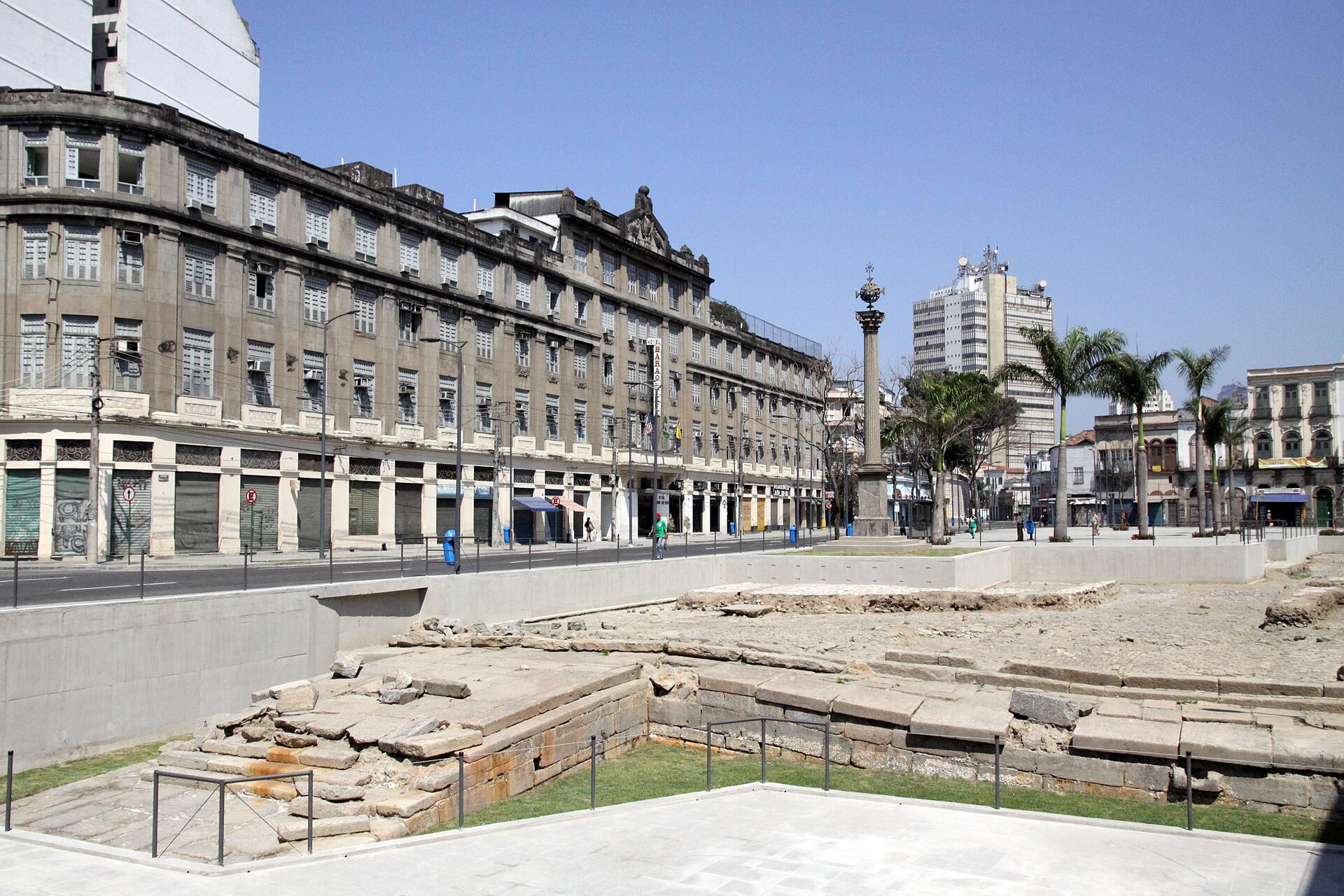
Valongo Wharf is one of those places in Rio de Janeiro where history doesn’t just linger in the stones—it seeps through the cracks in the pavement, stubborn and unshakable. Tucked away in the quiet neighborhood of Saúde, far from the usual tourist trails, it was once the heart of a trade that shaped Brazil in ways the country is still reckoning with. Built in the early 1800s, this was the main port for the transatlantic slave trade in Brazil, where hundreds of thousands of Africans were forcibly brought ashore, torn from their homelands and thrust into a life of bondage. Today, little remains of that era—just a few rusted mooring rings embedded in the ground and a handful of weathered stone steps leading down to the water. But even these fragments carry a weight that no textbook could ever convey.
The architecture of Valongo is stark and unadorned, stripped of any pretense. The walls are rough, built from local stone, and the wooden platforms that once served as unloading docks for slave ships have long since rotted away. In its time, the wharf was part of a vast complex that included warehouses, barracks, and even a hospital where enslaved people were held before being sold. Most of those structures are gone now, but the place itself retains a heavy, almost suffocating atmosphere. Walking along the waterfront, it’s impossible not to imagine the countless individuals who stood here, stepping onto Brazilian soil for the first time—and the last time they would ever set foot on their own land.
For decades, Valongo was a forgotten corner of the city, ignored even by locals. That changed in 2011, when archaeologists began excavating the site and uncovered the original cobblestone pavement beneath layers of asphalt and debris. The discovery of these stones, worn smooth by the footsteps of thousands of enslaved people, became a turning point. The wharf was designated a cultural heritage site, and efforts began to restore it. Today, it functions as an open-air museum, with fragments of the old structures preserved and informational panels explaining the brutal history of the place. There’s no grand monument here, no sweeping narrative—just the raw, unfiltered remnants of a past that refuses to be buried.
Valongo is more than just a historical landmark for Rio; it’s a stark reminder of how the city—and the entire country—was built on the backs of enslaved labor. Brazil was the last nation in the Western Hemisphere to abolish slavery, finally doing so in 1888, and Valongo is one of the few places where that legacy is still visible. There are no dramatic memorials or lofty inscriptions, just the quiet lapping of water against the shore and the wind sweeping in from the bay. It’s as if the place itself is whispering that history doesn’t vanish—it lingers, shaping the present in ways we often fail to notice.
Visiting Valongo isn’t like touring a typical attraction. There are no crowds, no guided tours with rehearsed scripts, and that’s probably for the best. This is a place that demands silence and reflection. Nearby, a small park offers a glimpse of everyday life—families strolling, children playing, people sitting on benches, unaware (or perhaps all too aware) that they’re walking over one of the most tragic sites in the city. The contrast is striking: the mundane and the monumental existing side by side, a reminder that history isn’t just something that happened long ago—it’s something we live with, whether we acknowledge it or not.
In recent years, Valongo has become part of a broader conversation about memory and reconciliation. In 2017, it was designated a UNESCO World Heritage Site as part of the "Slave Route," a recognition that helped bring global attention to the wharf. But more importantly, it served as a reminder that the history of slavery isn’t just an African or American tragedy—it’s a global one, with roots that stretch into every corner of the modern world. The inclusion of Valongo in this list wasn’t just about preserving a site; it was about acknowledging a shared past that continues to shape societies today.
What makes Valongo particularly powerful is its ability to connect the past to the present. Brazil still grapples with the consequences of slavery—systemic racism, economic inequality, and the marginalization of Afro-Brazilians are all legacies of the era when the wharf was a hub of human trafficking. Standing here, it’s hard not to draw parallels between then and now. The wharf doesn’t offer easy answers, but it forces visitors to confront uncomfortable questions about how history echoes through time. That, perhaps, is its greatest value.
If you find yourself in Rio and want to see the city beyond the postcard images, Valongo is a place worth seeking out. There are no vibrant colors here, no lively festivals or bustling markets—just a quiet, unassuming corner where the past feels almost tangible. It’s not a place for quick photos or casual visits; it’s a place for pausing, for listening, for trying to understand how the weight of history still presses down on the present. And maybe, in that stillness, you’ll catch a glimpse of how the past isn’t just a story we read about—it’s a living force, shaping the world we inhabit today.