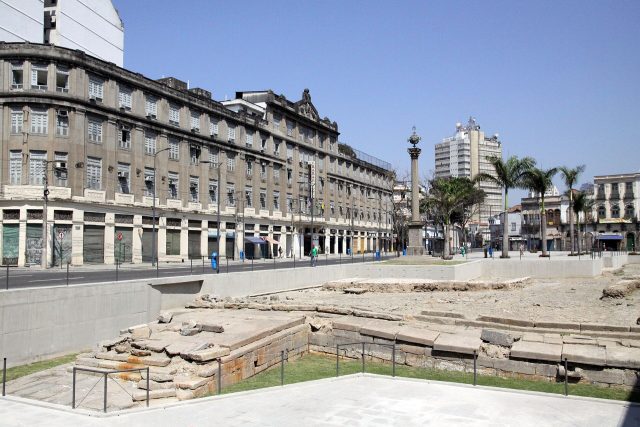
Perched on a hill in Rio de Janeiro’s Saúde neighborhood, the Church of Saint Anne stands apart from the city’s relentless energy. Built in the late 18th century, it has watched the area shift from a distant settlement to the residential district it is now. Saúde mixes old and new—narrow streets pass colonial houses and modern apartments, stitching together layers of the city’s past. The church doesn’t compete with Rio’s grand cathedrals. Its white facade and modest bell tower blend into the surroundings. It wasn’t built to impress but to last, a quiet witness to centuries of life around it.
The architecture follows Brazil’s colonial style—simple and functional. Whitewashed walls and clean lines reflect an era when resources were limited and a church’s purpose was to serve, not dazzle. Inside, wooden pews, a plain altar, and a few aged icons fill the space. The details tell their own stories. Faded murals on the walls, softened by time, suggest the hands that painted them. The altar’s carved elements, though worn, still show traces of their original colors. There’s no gold leaf or marble here, just the quiet authenticity of a place that has endured.
The church’s history is tied to Saúde’s. In the 18th century, the neighborhood was home to Rio’s working class—laborers, artisans, and formerly enslaved people who lived far from the city center. For them, the church was more than a place of worship. It was the heart of their community. Baptisms, funerals, and festivals happened here. The steps outside became a gathering spot for news and conversation. As Rio grew, Saúde was absorbed into the city, but the church remained, a reminder of a time when life moved slower and neighbors knew each other.
Today, the neighborhood has changed, but the church still draws locals, offering continuity in a city that never stops evolving.
A market once thrived near the church, where vendors sold produce and handmade goods. Though the market is gone, its spirit lingers in the streets. Old houses with wrought-iron balconies and wooden shutters still stand, their weathered facades echoing Saúde’s past. This part of Rio feels lived-in, not polished for tourists. There are no crowds, no souvenir vendors—just the quiet rhythm of daily life. You can wander without an agenda, sipping coffee in a corner café or watching the world from a bench. The absence of tourists makes it feel real, a chance to see Rio as it is, not as it’s sold to visitors.
From the church’s hill, the view stretches across the city. On clear days, mountains rise in the distance. Below, Saúde’s rooftops spill down the slope. The bay is visible too, its waters glinting in sunlight. The panorama is striking at sunset, when the sky turns gold and pink, and the city below glows with streetlamps. It’s a view that makes you pause, a moment to reflect on the history shaping this place.
The church isn’t just a relic. It’s still part of the present. Local festivals center around it, especially on Saint Anne’s feast day. On that day, the church fills with music, prayer, and the scent of flowers. Residents light candles, sing hymns, and share meals. For many, it’s not just tradition but a way to honor their roots, connecting them to those who came before. In those moments, the church feels like part of the neighborhood itself.
You could visit the church in half an hour, but that would miss the point. The real experience is in lingering—walking the nearby streets, stopping in a café where coffee is strong and conversation flows, or sitting on a bench to watch life unfold. Saúde isn’t a place to rush. It’s one of Rio’s rare corners where time moves differently. There’s no urgency, no pressure. Just stillness, a chance to step outside the city’s frenzy and simply be.
The Church of Saint Anne is a piece of Rio’s living history. It has stood through centuries of change, watching neighborhoods rise and fall. Today, it remains a quiet anchor in a city always in motion. For locals, its value isn’t in grandeur but in its steadfast presence—a reminder that even in a vast metropolis, some places keep the past close. It’s not on postcards, and that’s why it matters. Here, history isn’t something you observe. It’s something you feel.