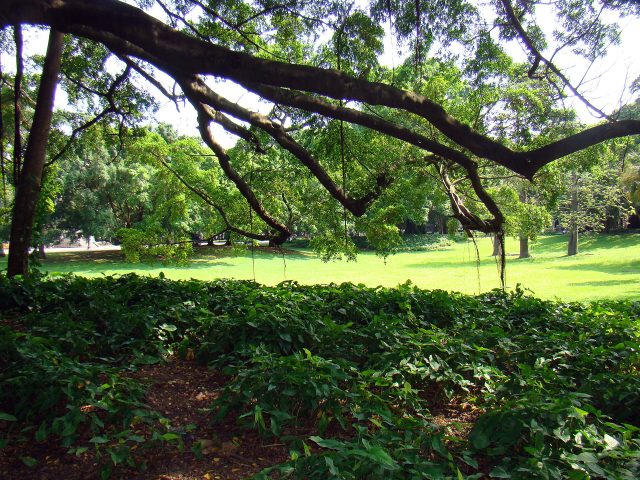
Madalena Park in the Saúde district of São Paulo is the kind of place that doesn’t announce itself with fanfare but lingers in memory long after you’ve left. Tucked away in a neighborhood where the city’s relentless energy gradually gives way to quieter, greener corners, it offers something rare in a metropolis: a sense of stillness. There are no flashy attractions or crowds of tourists here, just wide pathways shaded by mature trees, benches worn smooth by decades of use, and an atmosphere that makes it easy to lose track of time. For locals, the park is woven into the fabric of daily life—morning joggers trace its perimeter, families spread out picnics on weekends, and children chase each other across the lawns while parents watch from the sidelines.
The park’s history mirrors the evolution of Saúde itself. Once on the outskirts of São Paulo, this area was a place where land was cheap and nature still held its ground against the encroaching city. By the mid-20th century, as São Paulo expanded at a dizzying pace, the decision was made to preserve this patch of green—not as a grand gesture of urban planning, but as a practical refuge for residents. Over the years, the park has accumulated its own quiet lore. Some say the oldest trees once sheltered travelers during colonial times, while the wrought-iron lampposts lining the paths are relics of an era when electricity was still a novelty in these parts.
The park’s design is unassuming, even utilitarian, but that’s part of its charm. The main walkway is paved with tiles that have cracked and shifted over the years, their uneven surface a testament to the passage of time. Alongside it, benches with ornate ironwork—unchanged since they were first installed—offer a place to rest. Near the entrance, a modest fountain serves as a gathering spot for older residents, who while away the hours playing dominoes or simply watching the park’s rhythms unfold. In one corner, a playground with swings and slides, built during a period when social infrastructure was a priority, still draws children, though the equipment now bears the marks of generations of use.
A small lake anchors one end of the park, its surface reflecting the sky on clear days. It’s a magnet for visitors—some tossing bread to ducks, others sitting along the bank with their thoughts. In summer, the water shimmers under the sun, and a breeze off the lake offers relief from the heat. By winter, the surface is often covered in duckweed, but the spot remains just as popular. Locals recall that turtles once lived here, though urbanization has long since driven them away.
Beyond its role as a green space, Madalena Park serves as an informal cultural hub for the neighborhood. On weekends, it’s not uncommon to stumble upon impromptu concerts or small art exhibitions by local creators. Sometimes, the air fills with music as dancers of all ages gather for spontaneous samba or forró sessions. During festivals, strings of lights are draped between the trees, and food stalls appear along the main path, selling everything from crispy pastéis to fresh fruit juices. These moments give the park a festive, communal energy, even if they’re fleeting.
What makes Madalena Park special is its ability to bring together people from all walks of life. Students huddle in groups, debating ideas over coffee, while families with young children navigate strollers along the paths. Elderly residents, for whom the park may be their primary social outlet, sit on benches, exchanging stories or simply enjoying the quiet company of others. The park doesn’t try to be anything more than it is—it simply offers a space where people can step away from the city’s demands and connect, whether with nature or with each other.
Like many urban parks, Madalena faces the pressures of a growing city. The surrounding area has seen new development, bringing with it challenges like litter and occasional vandalism. Local authorities do their best to maintain the space, but resources are often stretched thin. Still, the community refuses to let the park fall into neglect. Residents regularly organize clean-up efforts, planting new trees and repairing worn-out benches, determined to preserve the space for future generations.
Visiting Madalena Park isn’t about ticking off a tourist checklist. There are no guided tours or souvenir stands, just the quiet hum of everyday life. If you find yourself in Saúde, it’s worth setting aside an hour or two to wander its paths. Sit on one of the benches, listen to the birds, and watch as the park’s rhythms unfold around you. In a city as vast and fast-paced as São Paulo, places like this offer a rare glimpse into what makes a neighborhood feel like home.