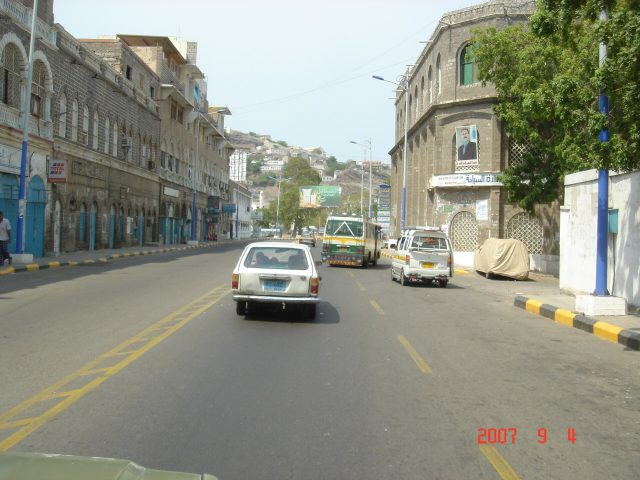
Tawra Square in Aden is one of those places where the city’s past feels almost tangible. Nestled in the heart of the old port district, it was once a bustling hub where merchants, sailors, and travelers from across the Indian Ocean converged. Today, the square stands as a quiet witness to the changes Yemen has undergone over the decades. Its name, which translates to Revolution, isn’t just a label—it marks the spot where, in the 1960s, protests and demonstrations helped shape the country’s future. Back then, Aden was under British protection, and this square became a stage for calls for independence, a place where the voices of change echoed through its narrow streets.
The architecture surrounding Tawra Square tells a story of layered history. The low-rise buildings, with their flat roofs and small windows, reflect the traditional style of southern Arabia, but traces of European influence linger in their design—a remnant of the colonial era. Some facades feature intricately carved wooden balconies, while others bear the marks of time: peeling plaster, cracks in the walls, and faded signs that hint at businesses long gone. There are no grand palaces or towering mosques here, just the unassuming charm of a place that has seen generations come and go. The square is framed by small cafes, workshops, and shops where artisans still practice their crafts, passing down skills that have been honed over centuries.
At the center of the square stands a modest monument to the revolution. Unlike imposing statues, it’s a simple stele adorned with bas-reliefs of people raising their hands, holding banners, and waving flags—a snapshot of a moment when Aden’s future hung in the balance. Locals often gather around it, some to rest on the benches, others to catch up on news or let their children play in the open air. The square empties during the hottest hours of the day, but as evening falls, it comes alive again. Lights flicker on, voices fill the air, and the scent of coffee and spices drifts from nearby stalls, blending with the salty breeze from the nearby port.
Aden has always been a city that looked outward. Perched at the crossroads of trade routes linking Africa, Arabia, and Asia, it drew merchants, explorers, and adventurers for centuries. Tawra Square lies just a short walk from the old harbor, where ships once set sail for India, East Africa, and even the Far East. It’s easy to imagine the scene in centuries past: the cacophony of different languages, the haggling over goods, the porters weaving through the alleys with bundles of spices and textiles. The port isn’t what it once was, but its legacy lingers in the air, a reminder of the days when Aden was one of the region’s most vital commercial hubs.
For those who live here, Tawra Square is more than just a historical landmark—it’s part of everyday life. Friends meet here, families stroll through in the evenings, and festivals bring the space to life with music, flags, and children flying kites. On ordinary days, it serves as a natural gathering point for anyone wanting to feel the pulse of the city. The surrounding alleys are lined with small shops selling everything from fresh fruit to handmade jewelry and old coins. Vendors sit on low stools, sipping tea, and are always ready for a long conversation about the quality of their goods. There’s no rush here, just the slow rhythm of a place where time moves differently.
Aden has seen its share of upheaval, and Tawra Square bears the scars of those turbulent years. Some walls still show bullet marks, and a few buildings remain unrepaired after past conflicts. Yet the square hasn’t lost its character. There’s no tourist hustle, no attempt to impress visitors—just the quiet resilience of a place that has weathered storms and continues to endure. The atmosphere is unpretentious, much like the city itself, where life unfolds without fanfare.
If you wander beyond the square into the surrounding neighborhoods, you’ll find small mosques with slender minarets rising above the low-slung houses. Their architecture is simple, but there’s a harmony in how they fit into the landscape. Every so often, the call to prayer rings out, and for a few moments, the square falls silent. It’s a reminder that Aden is a city where tradition and modernity coexist, where the past is never far from the present.
Tawra Square isn’t the kind of place that dazzles at first glance. There are no grand monuments or ornate fountains, no carefully curated tourist experience. Instead, it offers something rarer: a glimpse of Aden as it truly is. The square lives by its own rhythm, untouched by the expectations of outsiders, and that’s what makes it special. Here, you can sense the city’s contradictions, its history, and its unshakable spirit—not polished for visitors, but raw and real.