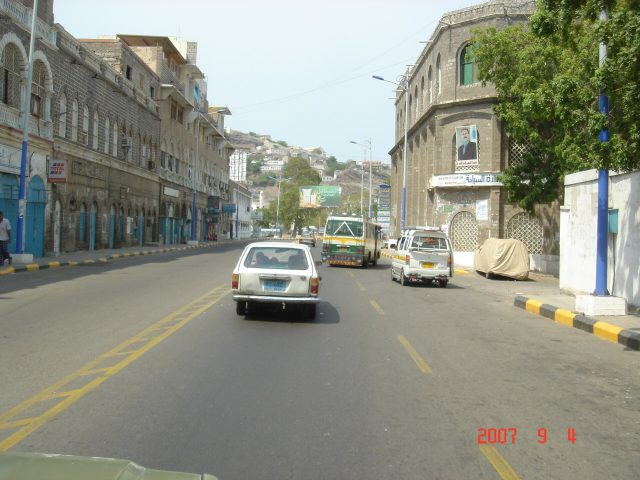
Aden Museum is one of those rare places where Yemen’s layered history feels almost tangible. Housed in a building from the early 20th century, when Aden was under British rule, the museum itself is part of the story. The structure’s thick stone walls, high wooden-beamed ceilings, and large windows filtering soft light create an atmosphere where the past doesn’t feel distant at all. It’s as if the building itself is holding its breath, preserving the echoes of the people who once walked these halls.
The collection spans millennia, beginning with artifacts from the ancient South Arabian kingdoms that once flourished here. Among the most striking pieces are relics from the Kingdom of Saba, the legendary land of the Queen of Sheba, and Hadramawt, where towering mud-brick cities once stood. Delicate inscriptions in long-forgotten scripts, coins worn smooth by time, and intricately crafted jewelry hint at the vast trade networks that once connected Yemen to India, Africa, and the Mediterranean. Some of the ceramics and metalwork are so fragile they seem to whisper of the hands that shaped them centuries ago.
A separate hall is dedicated to Aden’s Islamic era, when the city became a vital stop for pilgrims en route to Mecca. Here, handwritten Qurans, pottery adorned with Arabic calligraphy, and everyday objects reveal how life in the city transformed under the influence of Islam. The weaponry on display is particularly striking—daggers with ivory hilts, swords etched with elaborate patterns, and antique rifles that tell of Aden’s turbulent history as a battleground. These pieces aren’t just relics; they’re reminders of the city’s strategic importance and the conflicts that shaped it.
The British colonial period is documented through maps, photographs, and personal items that offer a glimpse into the lives of the officers and administrators who once governed Aden. One display features old telephones and typewriters, symbols of the rapid modernization that reached even this remote corner of the Arabian Peninsula. The exhibits don’t glorify empire but instead show how different cultures and faiths intersected in this bustling port city. A faded military uniform or a handwritten letter might seem ordinary, but here, they carry the weight of history, revealing the human stories behind the grand narratives.
The museum also dedicates space to Yemen’s more recent history, including the struggle for independence and the unification of North and South Yemen in 1990. Photographs, political posters, and personal belongings of those who fought for sovereignty are displayed without judgment, allowing visitors to form their own understanding of the country’s complex path. A newspaper headline announcing the first elections or a simple household item from the 1990s might not seem significant at first glance, but in this context, they become fragments of a larger story—one of hope, conflict, and resilience.
What makes the Aden Museum special is its intimacy. It’s not a vast institution trying to cover every era in exhaustive detail. Instead, each room focuses on a specific period, and moving between them feels like stepping through time. Ancient statues stand near yellowed photographs of British soldiers, while modern artifacts lie just a few paces away, still too fresh to be called relics. This juxtaposition creates a sense of continuity, as if all these eras coexist rather than replace one another.
There are no flashy displays or interactive screens here, and that’s part of the museum’s charm. The absence of modern distractions allows the exhibits to speak for themselves. A cracked coin, a rusted sword, or a crumbling document might not look impressive at first, but each one carries the weight of human experience. The museum doesn’t just present history—it invites you to feel it, to imagine the lives behind the objects.
Visiting the Aden Museum is less about ticking off exhibits and more about immersing yourself in the city’s soul. Aden has always been a crossroads—a place where traders, pilgrims, and conquerors left their mark. The museum captures that essence, not through grand gestures, but through the quiet power of its collection. It’s a place where history isn’t just observed; it’s experienced, one artifact at a time. And in a city as storied as Aden, that’s exactly as it should be.