Liberdade Square
Porto’s pulse quickens here. Liberdade Square is where the city’s past and present collide—not as rivals, but as neighbors. Office workers rush through on their way to the riverfront, elderly couples stroll arm in arm, and tourists tilt their heads upward, tracing the lines of grand facades. Some come for the architecture, others for the people-watching. Many simply arrive, pulled by the square’s restless energy.
From medieval streets to a symbol of change
The square took shape in the 18th century, as Porto shed its medieval skin and reinvented itself as a commercial hub. Originally called New Square, it was renamed after the Liberal Revolution of 1820, when Portugal broke from absolutist rule. The name stuck. Over the years, it has hosted military parades, political rallies, and spontaneous celebrations. Today, it remains the city’s default gathering spot—whether for protests, festivals, or the kind of joy that needs no reason.
A patchwork of time
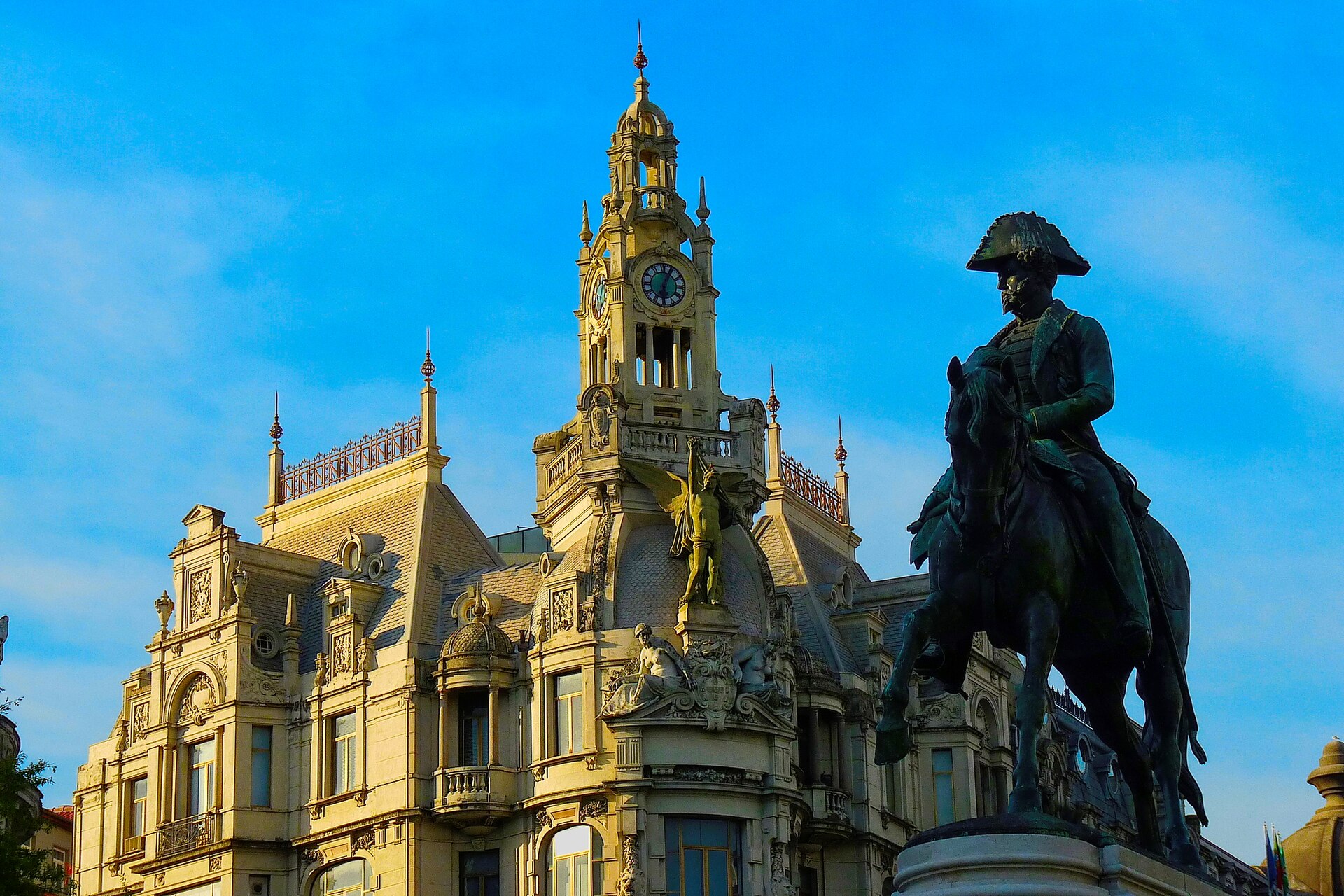
The City Hall dominates the square, its clock tower one of Porto’s most recognizable landmarks. Built in the early 20th century, its neoclassical facade features statues representing commerce, industry, and art. Nearby, the Cardosas Palace—once the first town hall—now houses cafes and shops. Its worn stone contrasts with the modern storefronts, hinting at the layers beneath. The square balances scale and intimacy; even on busy days, it feels human.
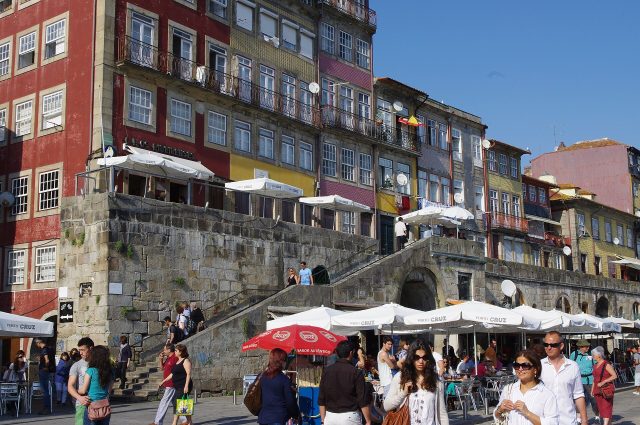
Beyond the buildings, the square spills into Porto’s daily rhythms. Avenida dos Aliados, the broad boulevard extending from it, mixes Art Deco and Beaux-Arts facades. But the real draw is Rua de Santa Catarina, the city’s main shopping street. It begins here, offering everything from century-old apothecaries to high-street fashion. Around the square, cafes fill with locals lingering over espresso and pastéis de nata. In the evenings, streetlamps soften the stone buildings, and the air hums with Portuguese, French, and English.
At the center stands the equestrian statue of King Pedro IV. The bronze figure gestures toward an invisible crowd. Pedro, who also ruled as Emperor of Brazil, never set foot here—his statue was erected in 1866, decades after his death, as a tribute to his role in Portugal’s constitutional monarchy. Office workers eat lunches in the small garden around it, and students sprawl on the grass. It’s a place to pause.
Where contradictions thrive
Liberdade Square absorbs Porto’s contradictions. A protest march might pass a street musician playing fado. A couple’s wedding photos could be taken against the backdrop of a political demonstration. The square isn’t just part of the city—it holds the city within it.
The Douro River is a ten-minute walk away. The Sé Cathedral’s fortress-like walls loom over the old town. Even the weather plays its part: Atlantic winds carry the scent of salt and roasted chestnuts in winter, while summer brings outdoor concerts and the clink of glasses from sidewalk cafes.
December transforms the square. Trees glow with twinkling lights, and the scent of vinho quente drifts from wooden stalls. By June, it’s alive with open-air performances and impromptu dances. But the quiet moments reveal the most—the way the pavement dips slightly in front of the City Hall, worn smooth by footsteps, or the faint echo of a tram bell from nearby streets.
Liberdade Square refuses to be just one thing. It’s a monument, a meeting place, a thoroughfare, a stage. You could spend an hour here or an afternoon. Either way, you’ll leave with the sense that Porto’s story isn’t just told here—it’s lived.