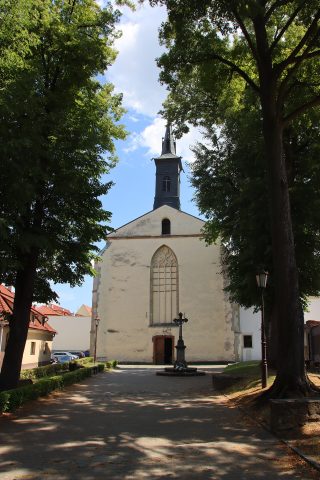
Námestie SNP in Krompachy isn’t just the town’s central square—it’s where the past and present quietly fold into each other. The low-slung buildings, with their weathered facades and tiled roofs, carry the marks of decades, even centuries, of small-town life. The square itself is modest in size, but that’s part of its charm. There’s nothing grand or imposing about it, just the easy rhythm of a place where people have gathered for generations, where the pace of life hasn’t been hurried by tourism or trends.
The name of the square pays tribute to the Slovak National Uprising of 1944, when resistance fighters and ordinary citizens rose against the occupying forces. Krompachy, like much of Slovakia, became a backdrop to that struggle, and though there are no monuments here to mark the event, the memory lingers in the way the square is used. It’s where the town holds its festivals, where speeches are made on national holidays, and where history isn’t just remembered but lived. The absence of overt memorials makes the connection feel more personal, as if the past isn’t something confined to plaques or statues but woven into the everyday.
The architecture here is unassuming, the kind you’d find in any small Slovak town. Two- or three-story buildings line the square, their facades a mix of plain plaster and the occasional decorative touch—carved shutters, a bit of stucco work, or a wrought-iron balcony. Some houses look like they’ve barely changed in a hundred years; others have been patched up over time, but all of them share that same quiet dignity. In the center, a few trees offer shade in the summer, and in winter, a small Christmas tree stands where locals gather for carols and mulled wine. When the weather’s warm, cafés spill out onto the pavement, and the scent of coffee mixes with the sound of conversation and the occasional clink of dishes.
Krompachy isn’t a place that draws crowds. It’s a working town, one that grew up around copper mining and industry, and the square reflects that. There’s no tourist infrastructure here, no souvenir stalls or guided tours. Instead, it’s a place where the town’s history—its industrial past, its role in the uprising, its Soviet-era years—meets the present. On weekends, kids kick footballs across the cobblestones, while older residents sit on benches, watching the world go by. Markets pop up now and then, selling local honey, fresh bread, or handmade crafts, and in the evenings, you might hear a band playing folk music or see a group of teenagers hanging out by the fountain.
What makes the square special is how it fits into the landscape. Krompachy sits in the foothills of the Spiš region, surrounded by rolling hills and forests. From the edge of town, you can look down and see the square as a small, lively patch in the middle of all that green. In summer, the air is thick with the scent of blooming chestnut and linden trees, and in the evenings, when the heat fades, people come out to walk, talk, or just enjoy the quiet. It’s the kind of place where you can sit on a bench and watch the light change over the rooftops, where the only urgency is the slow turning of the seasons.
For visitors, the square isn’t a destination in the usual sense. There are no must-see sights, no lines to wait in, no entry fees. Instead, it’s a place to get a sense of how small Slovak towns actually live. The rhythm here is unhurried—shops open late, lunchtime stretches into the afternoon, and in the mornings, you’ll see people stopping to chat on their way to work. It’s the kind of place where you can spend an hour doing nothing in particular and still feel like you’ve experienced something real. A cup of coffee at one of the cafés, a walk around the perimeter, a conversation with a shopkeeper—these are the things that make the square feel alive.
If you’re staying in Krompachy for more than a day, the square is a good starting point for exploring. From here, it’s a short walk to the local museum, where exhibits trace the town’s history, from its mining roots to its role in the uprising. The streets leading away from the square take you past old houses, a few small churches, and eventually down to the Hornád River, where the water moves slow and steady, just like life in the town. Beyond Krompachy, there are abandoned mines to explore, or you could head into the surrounding villages, where time seems to have stood still. But even if you don’t venture far, the square gives you a sense of what Slovakia is like away from the tourist trail—a country where history isn’t just preserved in museums but lived out in the open.
In the end, Námestie SNP isn’t a place you visit for the sights. It’s a place you come to for the feeling of it—the way the light hits the cobblestones in the afternoon, the sound of voices carrying across the square, the way the buildings seem to lean in just a little, as if sharing a secret. There’s no grand narrative here, no dramatic story to tell. Just the quiet accumulation of days, the way a town remembers itself, and the way people make a place their own. If you ever find yourself in Krompachy, don’t come looking for something to photograph. Come to sit on a bench, listen to the conversations, and realize that sometimes the most interesting stories aren’t the ones written in guidebooks, but the ones that unfold right in front of you.