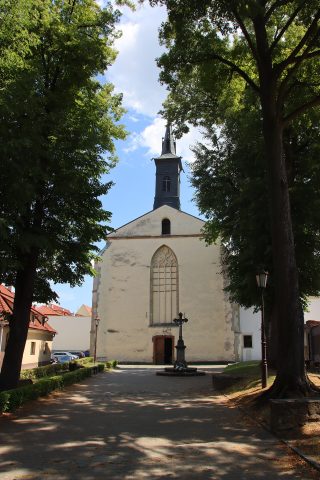
Krompachy’s town park doesn’t announce itself with grand gestures but lingers in memory. Tucked into the heart of this small Slovak town, it feels like part of the landscape, as if it has always been here, shaping the rhythm of local life. It moves at its own pace, offering refuge from noise—among trees, winding paths, and the slow passage of time.
The park took shape in the late 19th century, when public green spaces became a mark of civic pride across Europe. Krompachy was then booming due to its metallurgical industry, and local businessmen invested in making the town more livable. Old photographs show how it has changed: paths have grown over, new ones have emerged, and corners have taken on different roles.
Now, it’s a green oasis of gentle curves and mature trees—lindens and chestnuts that cast deep shade in summer and carpet the ground with golden leaves in autumn. At its center lies a small meadow, a favorite spot for picnics or afternoons with a book. There are no grand fountains or monuments, just a few modest memorials: one honors the park’s founders, another marks the hardship of World War II. These quiet markers are easy to miss, but they add meaning.
The park blends with the town around it. On one side, you’ll see early 20th-century houses with simple, sturdy facades. On the other, modern apartment blocks rise in the distance. This contrast gives the park its character. In summer, children play across the meadow; in winter, the same space becomes an ice rink. Spring brings the scent of blooming cherry and apple trees.
A small Victorian-style gazebo, its wooden railings carved with patterns, offers shelter from rain or a quiet spot for conversation. Its moss-covered roof suggests decades of use. Nearby stands an old well with a hand pump, preserved as a relic of the park’s early days. These details make the place feel lived-in, as if the past is still present.
This isn’t a park for dramatic views or guided tours. It’s for slowing down, for watching the unhurried rhythm of a small town. Locals come here with dogs, strollers, or to meet neighbors on benches. On summer weekends, you might find a small concert or a market selling homemade preserves. In winter, frost dusts the trees, the rink buzzes with movement, and the air is crisp.
The park holds a special place in Krompachy’s identity. It’s where children learn to ride bikes, where older residents reminisce, and where history is quietly preserved. There are no crowds, no lines, no pressure—just a space for the people who call this town home.
If you ever visit Krompachy, don’t rush past it. Wander its paths, sit on a bench, and listen to the leaves overhead. You might not find anything extraordinary, but you’ll see what matters to those who live here.