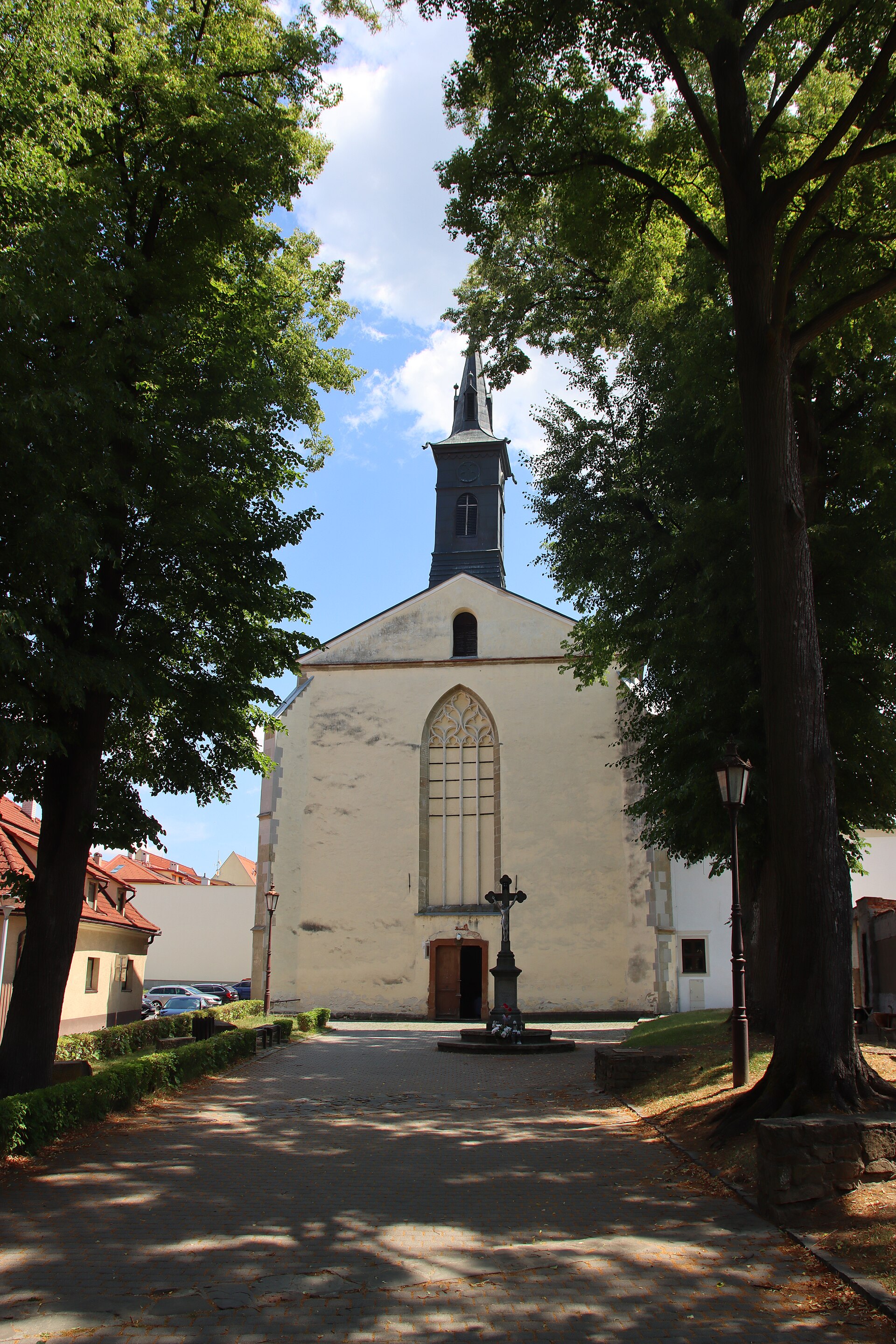
The Church of St. John the Baptist in Krompachy is a quiet place that stays with you long after you leave. It stands on a gentle hill, surrounded by low-roofed houses, as if preserving the slower pace of life once lived here. The building is modest, yet its proportions and shape reveal a history tied to the people who built and used it.
The earliest records mention the church in the 14th century, though its exact beginnings are lost. Back then, Krompachy was a small settlement in the Spiš hills, and the church was more than a place of worship—it was the center of community life. Medieval churches often stood on higher ground, partly to avoid floods that swept through the valleys. This slope was probably chosen for that reason.
The church has changed over time, absorbing different architectural styles. Originally Gothic, it was later altered in the 17th and 18th centuries, when Baroque elements appeared. The interior is simple, without the grandeur of cathedrals. No gilded altars or elaborate frescoes—just a wooden pulpit, old pews, and a few icons on the walls. The space feels still, as if time has slowed.
The bell tower, attached to the main structure, is striking in its solidity. Though not tall, its thick walls once offered protection from storms and threats. The bells inside are soft, their sound drifting over the countryside, calling people to prayer or marking the hours. Before clocks, these bells were essential—they gathered people for worship, warned of danger, and signaled important moments in village life.
The church is part of Krompachy’s history and the broader Spiš region. In the Middle Ages, Spiš was known for mining copper, silver, and later iron. Though Krompachy was never a major town, it shared in this legacy. The church saw the rise and fall of the mines, the changing rulers, and the hardships of wars and epidemics. In the 18th century, during an economic revival, it was renovated again. By the 19th century, its facade had taken on the appearance it has today.
Today, the church is still in use. Locals gather for services, especially on holidays, while travelers who wander off the usual paths might step inside. Around the church, old gravestones stand as reminders of those who once lived here. Some date back to the 18th century, their inscriptions worn by time, but they still carry the weight of past lives.
Visiting the Church of St. John the Baptist isn’t about checking off a tourist stop. It’s about stepping into the quiet rhythm of a Slovak village. No crowds, no guides, no rush. Just the wind in the trees and the distant sound of bells. If you walk through Krompachy’s narrow streets, you’ll see old houses, gardens, and small plots where people still grow their own food, as they have for generations.
This isn’t a place that attracts busloads of tourists. Maybe that’s why it feels real. It doesn’t try to impress. It simply is—steady, unassuming, like the life around it. If you’re looking for more than just a pretty view, this church offers something rare: a sense of authenticity. Sit on a bench by the entrance, look at the hills, and think about all the people who have passed through these doors over the centuries, leaving behind their prayers and stories.