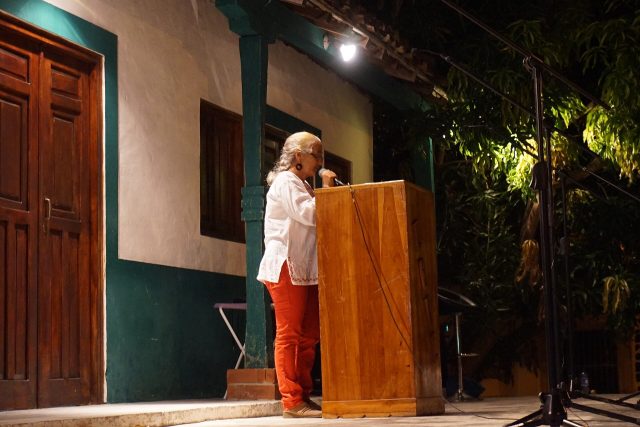
Penonomé’s Plaza Simón Bolívar is one of those places where Panama’s history feels tangible, not like a story in a book but something woven into the air itself. It’s not just the town square—it’s where life has unfolded for generations, a quiet stage for daily rituals and small celebrations. The space isn’t grand; its charm lies in its modest scale, the way it invites you to slow down rather than overwhelm you. Here, families stroll in the evenings, friends gather on benches, and even strangers passing through often pause to take in the surroundings.
Named after the liberator of Latin America, the plaza carries the weight of shared ideals, though Simón Bolívar never set foot in Penonomé. His statue stands at the center, unassuming but dignified, a focal point for the life that swirls around it. Children dart between the trees, older men play dominoes at shaded tables, and visitors snap photos without ceremony. The monument doesn’t demand attention—it simply belongs here, as much a part of the square as the benches or the rustling leaves.
The architecture framing the plaza is unpretentious but distinctly Panamanian. Low-slung buildings with brightly painted facades, wooden shutters, and terracotta roofs line the edges, their colonial influences softened by time and modern touches. There are no grand cathedrals or palaces, just the kind of buildings that feel lived-in, their walls holding decades of stories. The streets branching off the square lead to markets, small eateries, and shops where vendors sell everything from fresh fruit to handmade crafts. It’s the kind of place where you might linger over a cup of coffee, watching the rhythm of the town unfold.
Penonomé isn’t a tourist hub, and the plaza doesn’t exist to impress visitors. It has its own pace, unhurried and steady. Mornings bring the clatter of domino tiles and the murmur of old men debating moves; afternoons see schoolchildren rushing past on their way home; evenings belong to groups of teenagers laughing by the fountain. The fountain itself is small, its gentle trickle a soothing backdrop, especially in the heat when the sound of water feels like a small relief.
The town sits in the province of Coclé, a region known for its crafts and traditions. Penonomé is often called the cultural heart of the area, and the plaza plays its part in that reputation. During festivals—especially around Independence Day in November—the square transforms. Flags flutter from buildings, music spills into the streets, and folk dancers perform in vibrant costumes. Even on ordinary days, the plaza hums with a sense of community, a place where people naturally gather.
A handful of cafés and restaurants surround the square, serving up simple, hearty dishes. You might try *sancocho*, a rich chicken soup with root vegetables, or *carnitas*, crispy pork that falls apart at the touch of a fork. Empanadas stuffed with cheese or meat are a common snack, best eaten fresh from a street vendor. The food isn’t fancy, but it’s honest—just like the town itself. Locals will happily recommend their favorites, and if you’re lucky, they might share a story or two about Penonomé’s past.
This isn’t a place you’ll find on most travel itineraries. There are no crowds, no souvenir stalls hawking trinkets, no guides herding groups from one attraction to the next. Instead, there’s the quiet pulse of a provincial town where life moves at its own pace. The plaza is the center of it all, a spot where you can sit on a bench, watch the world go by, and get a sense of how things work here.
If you find yourself in Penonomé, don’t rush off. Wander the plaza, duck into a café, listen to the conversations drifting from the tables. You won’t find grand monuments or luxury hotels, but you will find the real Panama—the one that exists for its own sake, not for visitors. That’s the beauty of this place: it doesn’t try to be anything other than what it is. And sometimes, that’s more than enough.