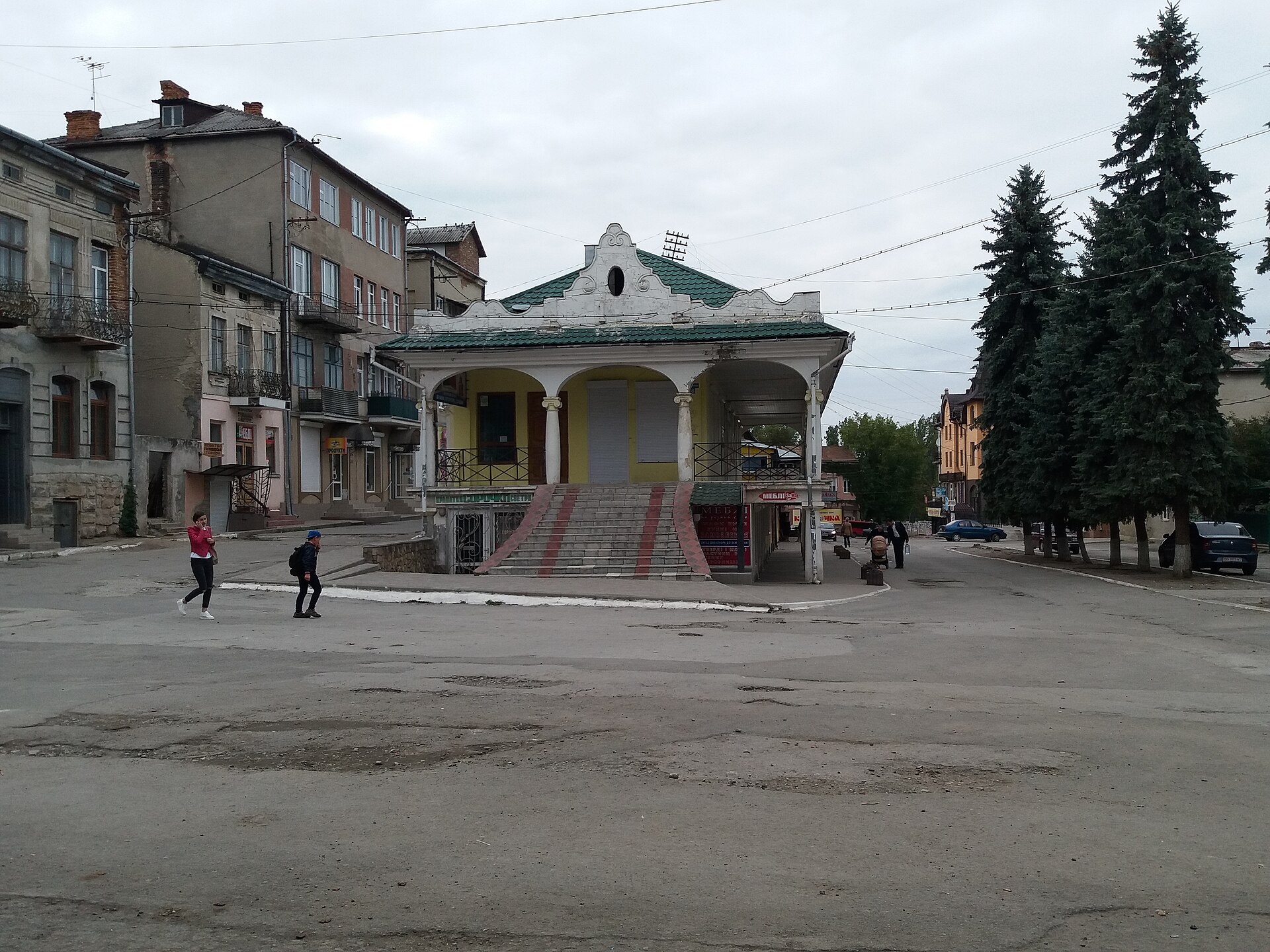
Market Square in Kudryntsi feels like a place where time has settled into the cracks of the cobblestones. This small town in western Ukraine is known for its castle, but its heart is here, in the unassuming square at its center. No tourist crowds, no neon signs—just the creak of wooden shutters and the murmur of locals.
The architecture is modest. Low two-story buildings with tiled roofs line the square, their facades marked by traditional Galician design. Some still have delicate stucco or carved window frames; others bear faded coats of arms or dates etched into stone. These structures date back to the 18th and 19th centuries, when Kudryntsi thrived as a trading hub. Merchants sold grain, livestock, and handmade goods. Farmers from nearby villages gathered on weekends to trade and share news.
Where a wooden market hall once stood, there’s now a small park with benches and old linden trees. Their branches offer shade in summer. During the Soviet era, this space hosted parades and rallies. A Lenin monument stood here until the early 1990s. Today, a simple cross marks the spot, a quiet nod to the town’s return to its roots.
St. Nicholas Church, built in the 17th century, is one of the square’s most striking features. Its thick walls and narrow windows were designed to serve as shelter during raids. Inside, 18th-century frescoes still cover the walls. The iconostasis, though restored, feels old. The bell tower offers a view of rolling fields and distant hills.
Life on Market Square hasn’t stopped. While the grand markets are gone, smaller fairs still happen on Sundays. Locals sell fresh produce, homemade preserves, and baked goods. In warmer months, folk music concerts and festivals fill the square. In winter, children skate on an ice rink lit by strings of lights.
The square changes with the time of day. Mornings are quiet, with only a few people hurrying past. By afternoon, visitors might wander through, taking photos or stopping for borscht in a small café. As evening falls, the square empties, and streetlamps cast long shadows.
Kudryntsi doesn’t draw crowds. That’s part of its appeal. The beauty is in the details—the weathered shutters, the cracks in the plaster, the scent of fresh bread from the bakery on the corner. The square doesn’t tell its stories loudly; it lets them unfold for those who notice.
For locals, Market Square is where life happens. People meet here. Children play. Holidays are celebrated. Weddings are photographed. Even those who’ve moved away return to show their children where they grew up. The square is part of daily life, a constant in a town that has seen centuries of change.
Market Square in Kudryntsi is a reminder that history isn’t always grand. Sometimes it’s in the quiet corners of a town, in the way light falls on an old wall. The square doesn’t seek fame. It simply endures, a place where past and present coexist. It’s a living piece of history, waiting for those who take the time to see it.