Taras Shevchenko Park in Kudryntsi is one of those quiet places where time seems to move at its own unhurried pace. It’s small, just a pocket of green tucked away in the village, but that only makes it feel more intimate. The trees here were planted decades ago, their branches now stretching far beyond the original plans of the landscape architects. What was once a carefully designed public space has grown into something closer to a natural grove, with dappled sunlight filtering through the leaves in summer and a thick carpet of fallen foliage in autumn that no one bothers to sweep away. The air stays cooler here than on the streets outside, as if the park holds onto its own private shade.
The central path leads to the monument of Shevchenko, a modest bronze figure seated on a low pedestal. He sits with his head slightly bowed, as if lost in thought, and there’s something unassuming about the way he’s portrayed—no grand gestures, no heroic posturing. Locals leave fresh flowers at the base, sometimes on holidays, sometimes for no reason at all. Next to the statue, an information board displays quotes from Shevchenko’s works, though the letters have faded over the years, and some are barely legible now.
The park is woven into the fabric of Kudryntsi’s history. Long before it existed, this land was the outskirts of the village, where old cottages stood and wild pear trees grew. In the 1930s, a school was built nearby, and later, in the postwar years, the decision was made to create a small park in honor of the centennial of Shevchenko’s birth. That’s when the first trees were planted—poplars, maples, lindens—some of which still stand today, though they’ve grown gnarled with age. By the 1990s, the park had fallen into disrepair: benches were broken, paths overgrown, and the monument had become a perch for pigeons. But gradually, the villagers restored it, and now it’s a place where people can walk without tripping over cracked pavement.
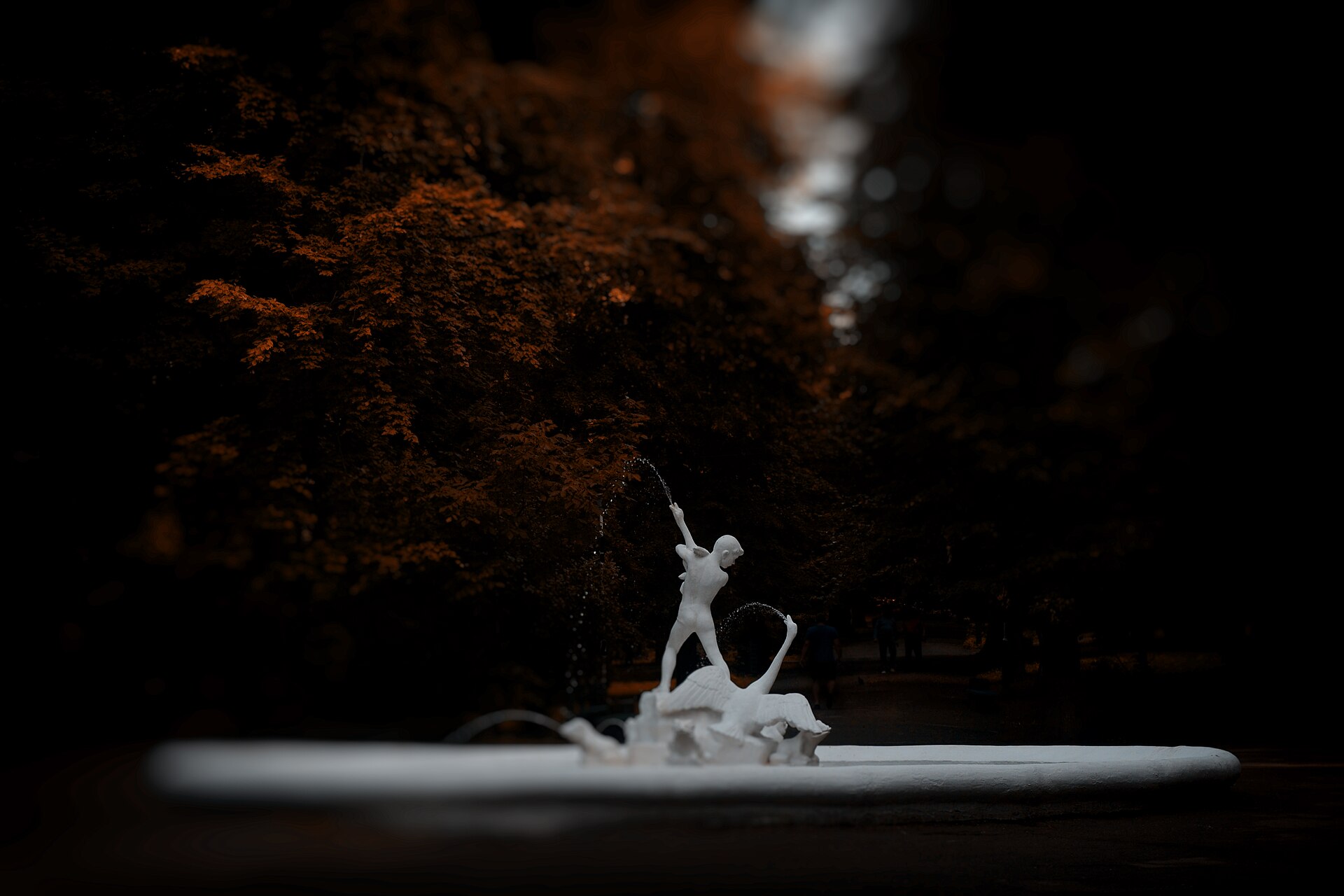
There’s nothing elaborate about the park’s design. No fountains, no ornate sculptures, no manicured flowerbeds. Instead, there are old wooden benches with hand-carved backs, their paint chipped but still sturdy. They line the paths, and in the warmer months, you’ll often find elderly men playing chess or watching the world go by. Sometimes, local musicians gather here to play guitars and sing Ukrainian folk songs. In winter, the park empties out, though children still come to sled down the small hill near the entrance, their laughter cutting through the quiet.
For the people of Kudryntsi, Shevchenko isn’t just a name on a plaque. Though the poet never set foot in this village, his words about the struggles of peasants and the love of the land resonate deeply here, where farming has always been a way of life. Schools often hold events in the park—poetry readings, art exhibitions, performances tied to Shevchenko’s legacy. Teachers bring their students here so they can see the monument in person, not just in the pages of a textbook.
The park’s mood shifts with the seasons. In spring, it bursts into color as cherry and apple trees bloom, filling the air with the scent of fresh greenery. Summer turns it into a gathering place: teenagers linger near the monument, children dart between the trees playing hide-and-seek, and older residents settle in for games of dominoes. Autumn brings a quieter, more reflective atmosphere, with rustling leaves underfoot and a sky often heavy with clouds. Winter transforms the park into something out of a fairy tale, the trees dusted with frost and the snow untouched except for the tracks of birds and the occasional passerby.
Kudryntsi doesn’t boast about its park the way big cities do about their grand landmarks. Here, it’s simply a place to escape the noise, to breathe, to think. It doesn’t demand admiration or glowing reviews. It just exists—unassuming, a little worn around the edges, but still very much alive. And perhaps that’s what makes it special. It’s not a place you visit to check off a list or take a perfect photo. It’s a place where life unfolds quietly, where the past and present coexist without fanfare.