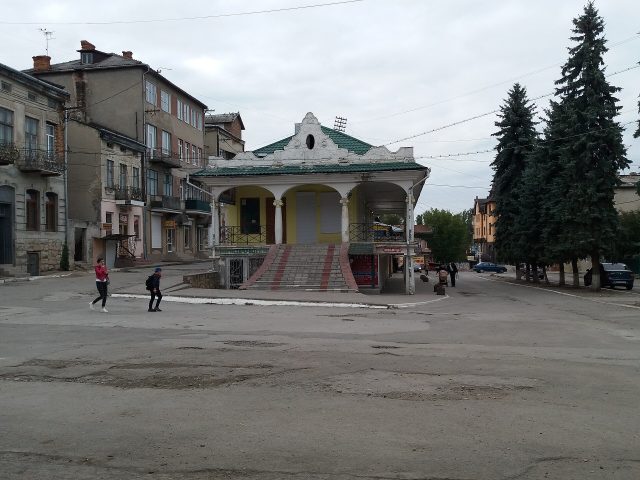
Kudryntsi is one of those quiet Ukrainian villages that rarely appear on tourist maps. There are no bustling streets, neon signs, or crowds of visitors here—just the kind of stillness that feels like it has been settling over the land for centuries. Time moves differently in places like this, where the past isn’t just remembered but lingers in the air, in the old houses with their tiled roofs, in the way the wind carries the scent of fields and woodsmoke. At the heart of the village stands a modest building that holds the stories of generations. This is the Kudryntsi Local History Museum, a place where history isn’t just displayed but somehow comes alive through the everyday objects that once belonged to the people who lived here.
The museum itself is housed in a building that has witnessed more than a hundred years of change. Constructed in the late 19th century, it has survived shifts in power, wars, and the slow march of time. Its walls have seen the rule of the Austro-Hungarian Empire, the interwar years under Polish administration, the Soviet era, and finally, independent Ukraine. The architecture is typical of western Ukrainian villages from that period—thick stone walls, high ceilings, and large wooden-framed windows that let in soft, diffused light. The attic, once used for storing grain, now holds something less tangible but just as valuable: the memories of those who called this place home.
Inside, the collection is small but deeply personal. Each item feels like a page from a family album, a fragment of a life that once unfolded here. There are wooden spinning wheels, clay pots, and embroidered towels—objects that speak of the daily rhythms of rural life in the 19th century. Tools of the trade are everywhere: scythes, plows, looms, and other implements that tell of the hard, unrelenting work that shaped the lives of generations. Nearby, yellowed letters, school notebooks, and old newspapers offer glimpses into the concerns and dreams of people who lived through wars, revolutions, and the quiet, ordinary moments in between.
One room is dedicated to the village’s experience during the world wars. Photographs of soldiers, letters from the front, and medals line the walls, each one a reminder of lives interrupted. Some of the most moving exhibits are the personal belongings of local men who fought and never returned: soldier’s identification tags, crude lighters fashioned from bullet casings, diaries filled with hurried, desperate entries. These objects don’t just document history—they make it feel immediate, as if the weight of those years is still present in the room. Alongside them are images of churches reduced to rubble, houses burned to the ground, and stories of the slow, painful rebuilding that followed.
But the museum isn’t just about the past. There are also displays that trace the evolution of village life into the 20th and 21st centuries. Photographs capture local festivals, traditional crafts that are still practiced here, and the tools of modern farming—old tractor parts, seeds of rare wheat varieties, and the handmade instruments of local artisans. These exhibits show how the village has changed over time, how some traditions have faded while others have endured, and how the connection to the land remains unbroken.
Perhaps the most striking part of the museum is its collection of folk art. Hand-embroidered textiles, wooden toys painted in bright colors, and clay whistles that once delighted children are all on display. These aren’t just decorative objects—they’re tangible links to a way of life that valued craftsmanship and creativity. Some pieces are particularly rare, like the old icons painted by local artists or the traditional costumes worn during festivals. They serve as a reminder that even in a small village, a distinct culture could flourish, shaped by the land and the people who lived on it.
What makes the Kudryntsi museum special isn’t the size of its collection or the grandeur of its exhibits. It’s the way the place feels alive with stories. There are no dramatic plaques or sweeping historical narratives here—just the quiet power of objects that have been touched by real lives. Visitors often leave with a different sense of the village, as if the houses and streets around them are no longer just buildings but part of a larger, living history. The museum doesn’t just preserve the past; it makes you feel it in a way that’s hard to describe but impossible to forget.
Kudryntsi isn’t a place that draws crowds. There are no luxury hotels or tourist traps here, just the kind of quiet that lets you hear your own thoughts. But that’s part of its charm. In a world that moves too fast, this village offers something rare: a chance to step back, to breathe, and to remember that history isn’t just something that happens in books. It’s in the old houses, the worn tools, the letters tucked away in drawers. The museum is like a window into that history, a way to see how people lived here a hundred, two hundred, even three hundred years ago. And maybe that’s why places like Kudryntsi feel so important—they remind us that the past isn’t as far away as we think.