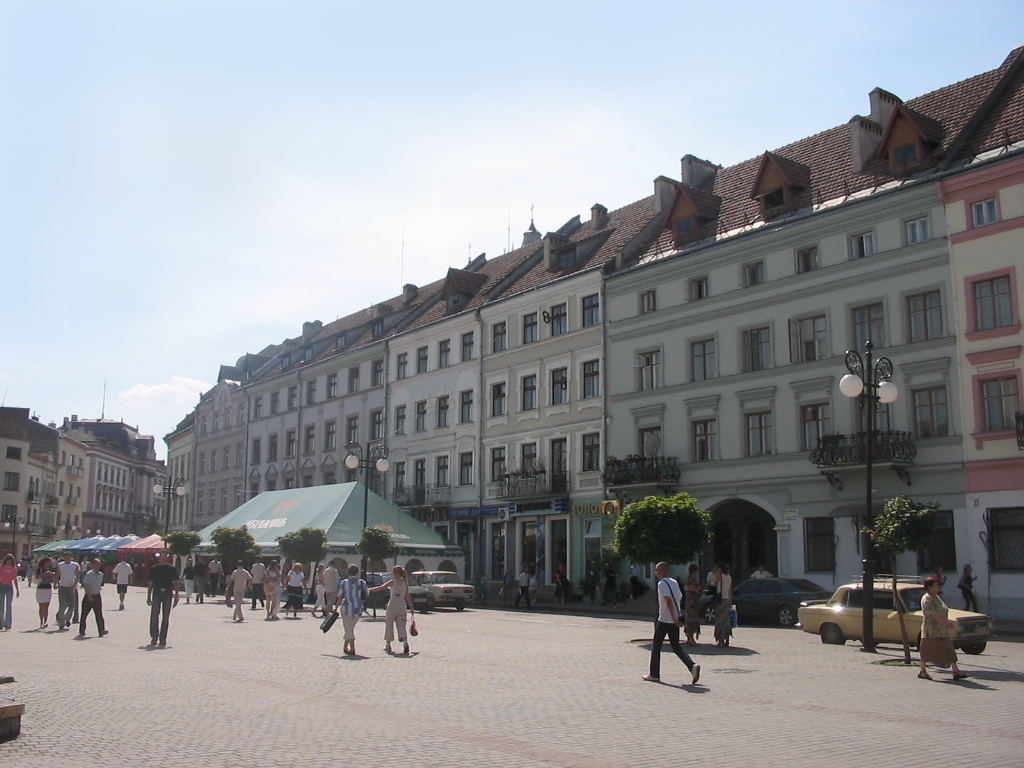
Market Square in Kolomyia is one of those places where the city reveals itself slowly, without the rush or the polished sheen of tourist hotspots. There are no grand landmarks demanding attention at first glance, but something deeper lingers here—something that makes the square feel truly alive. It’s the rhythm of daily life, the layers of history, and that unmistakable atmosphere that emerges when people gather not for photos, but because they always have.
The square itself is small, yet its shape and position hint at its ancient purpose. Like many old towns in Galicia, this was once a bustling hub of trade, not just local but also transit, as Kolomyia stood along a key route from Europe to the East. In the Middle Ages, goods from across the region flowed here—salt from the Carpathian foothills, timber, grain, and later, the famed Hutsul crafts of wood and metal. The long rows of market stalls that once lined the square are gone, but its layout remains nearly unchanged. Rectangular and elongated, framed by low-rise buildings, it feels suspended in time, a reminder of when the city was more than just a dot on a map—it was a vital trading post.
The architecture of Market Square tells the story of Kolomyia in miniature. Buildings from different eras stand side by side, each narrating a fragment of the past. There’s the former town hall, built in the late 19th century when the city flourished under Austro-Hungarian rule. Its façade, blending Neo-Renaissance and Neo-Gothic elements, exudes a quiet authority—typical of provincial Austrian towns of the time. Nearby, more modest two-story houses with wooden balconies and carved window frames date back to the early 20th century. These belonged to artisans and small merchants, their designs reflecting the practical yet cozy spirit of Galicia. Then there’s the corner building with its mansard roof and wrought-iron window grilles—a Soviet-era addition that somehow fits seamlessly into the ensemble, not disrupting its harmony.
At the heart of the square stands St. Ignatius of Loyola Church, a small but striking structure built by the Jesuits in the 18th century. Its Baroque façade, with pilasters and volutes, feels unusual for this region, where Orthodox churches with onion domes are more common. The Jesuits arrived in Kolomyia in the 17th century, when the city was part of the Polish-Lithuanian Commonwealth, and their influence left a lasting mark on local culture. The church has been rebuilt over the years but retains its original character—solemn yet dignified. Inside, visitors can see old icons and frescoes, and sense the quiet that comes from centuries of prayer.
The church was once surrounded by a market, and while trade here isn’t as lively as it once was, the square remains a gathering place. In the mornings, elderly women with baskets arrive to buy fresh bread or homemade cottage cheese from local vendors. On weekends, small fairs pop up, offering everything from hand-knit socks to antique coins. By evening, the square empties, and the glow of streetlights on the cobblestones—laid down in Soviet times—creates a peaceful scene, with shadows from the trees stretching across the walls.
Kolomyia moves at its own unhurried pace, and Market Square embodies that rhythm. There are no crowds of tourists rushing from one attraction to the next, no souvenir shops selling identical magnets and postcards. Instead, there’s ordinary life unfolding as it always has: people hurrying to work, others sitting on benches with newspapers, or lingering by the fountain, watching children play. The fountain itself is a recent addition, modest and unassuming, but on hot days, it’s where people gather to cool off or simply rest.
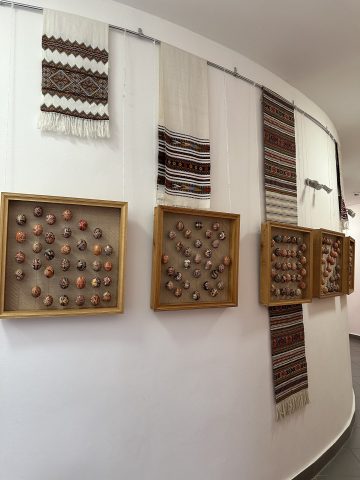
The square comes alive during city festivals. At Christmas, a nativity scene is set up, filling the air with the scent of pine, candles, and roasted chestnuts. At Easter, intricately decorated pysanky—traditional Ukrainian Easter eggs, for which Kolomyia is famous—are brought here. On such days, the square becomes a true center of attraction, drawing locals and visitors alike. But even on ordinary days, there’s a quiet magic here, born from the blend of history, architecture, and the simple, enduring pulse of life.
A stroll around the square reveals small details that hint at its past. On one building, a plaque with German text remains—a relic from the Austro-Hungarian era. Another house displays its construction date, 1903, laid out in brick. In a corner stands an old well, once the neighborhood’s water source. Though no longer in use, locals treat it with care, as if preserving a piece of their history.
Market Square isn’t just a location on Kolomyia’s map; it’s the city’s living heart. There’s nothing forced or artificial here, just an authenticity that can’t be replicated or restored. It’s a place where you can feel the city breathe, where different eras and cultures intertwine, and where everyday life becomes part of something much larger.